

I just had to get this off of my chest. It’s been nagging at me for a while now, and I thought I should get it out into the open so that there can be the start of a legitimate dialogue on the subject: it’s about how atheists engage in argumentation. It has struck me that atheists often do not have very good, solid arguments that actually address the Catholic position: they simply play off shallow crowd sentiment and popular perception of religion, the “minimum standard” of empiricism, or a circumvention of actual points in favor of straw men. This is not to say that Catholics and other Christians do not do similar things during debates at times, only that I always see popular atheists like Sam Harris and Richard Dawkins do this quite frequently.
 |
| Sam Harris |
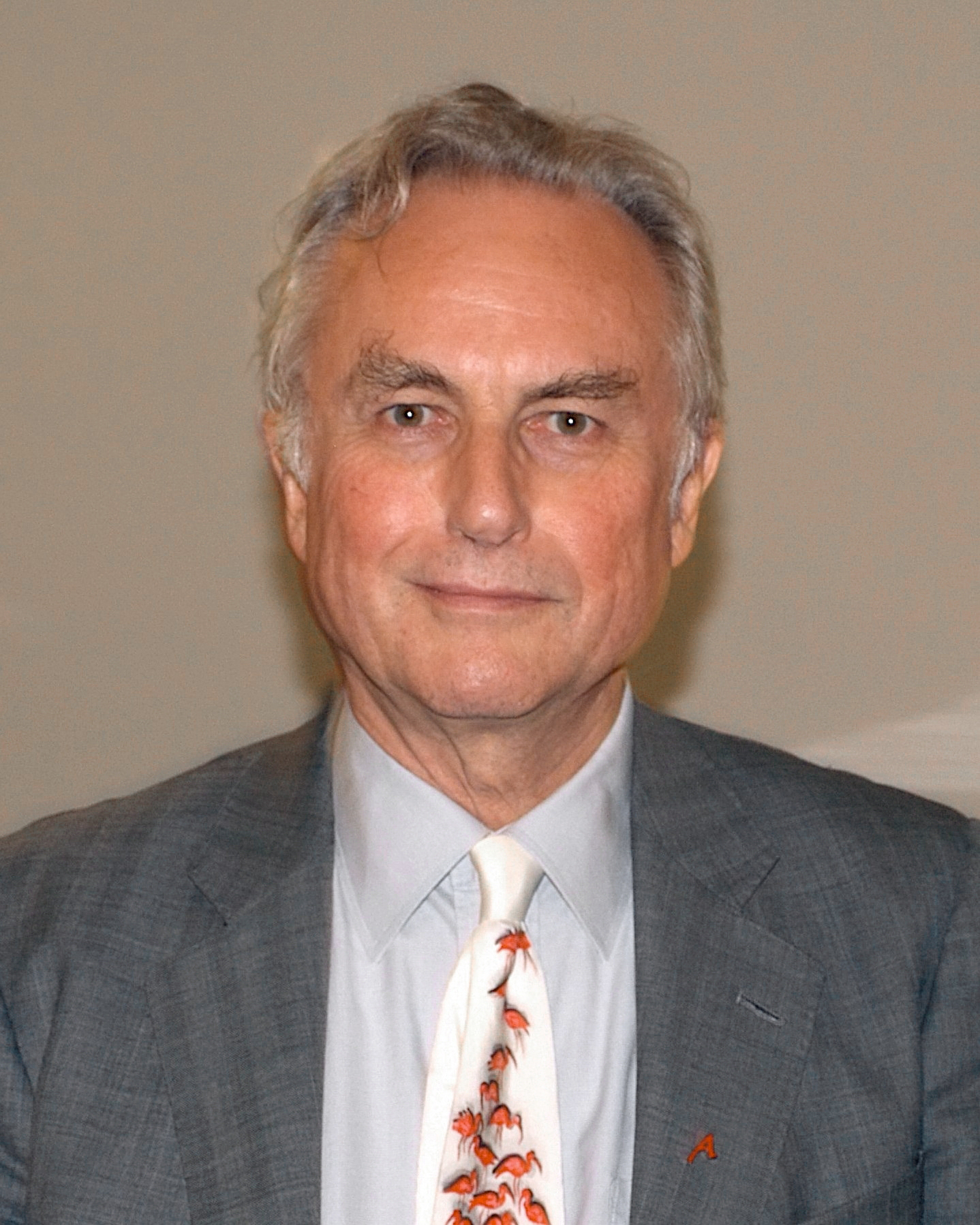 |
| Professor Richard Dawkins |
Shallow Crowd Sentiment and Popular Perception of Religion
You’ll notice in this clip of Sam Harris v. William Lane Craig that Harris simply makes emotional appeals in his attempt to “disprove” Christianity. He says nothing of substance and only makes the standard non-believer’s appeal to mass suffering as evidence of God’s utter fakeness (didn’t’cha know?) as well as the supposed “impossibility” of transubstantiation, in the process dismissing Catholics as loons and morons.
He cares nothing for
the explications of Augustine, and, more recently, of Dr. Peter Kreeft, on the so-called “problem of evil,” nor does he care for the rich exegesis of Scripture and long
and rich theological tradition of the belief in transubstantiation. Nope.
No sirree. He is after the
zinger. The one line or two that’ll get
the Internet fired up with irrational Catholic-bashing. I suggest you watch the full debate.
Now, you will notice
that Craig makes it known that Harris must meet certain benchmarks in order to
make his case for atheism. He must show
that 1) Craig’s arguments are flawed—cast a negative pallor upon Christianity
and Craig’s arguments—AND 2) put forward a positive argument FOR atheism. Harris does neither. He simply avoids Craig’s arguments and plays
off of supposed “self-evident” truths about how stupid religious beliefs are.
Harris essentially
latches on to something that appears “awful” or contradictory of God to do (“If
you believe in the wrong god, you are doomed, in Dr. Craig’s universe.”) and
then (metaphorically, of course) flaps his arms and exaggeratingly expresses
his utter disbelief and disdain for the thing.
Imagine Harris, upon finding some doctrine or teaching or practice of
Catholicism (like the Trinity or transubstantiation), yells really loudly in a
drawn-out tone, “Hey guys [atheists, skeptics, agnostics, non-believers, et
al]! Look at how dumb this thing
is! I can’t believe any sane person
actually believes in any of this mumbo jumbo. Haha!”
He allows his degrees and scientific
background to speak for him, while playing off of a shallow and misinformed
crowd hankering for its next superstitious idea to lambaste. There’s only one problem, Harris: Catholicism
is not a superstition or a myth: it is TRUE, and until you actually demonstrate
otherwise, just cut the shenanigans.
 |
| Harris, frantically flagging down his supporters so they can all engage in a therapeutic religion bashing session together. |
Science Alone!
Another tactic atheists use nowadays is to demand that all knowledge must pass muster with *drum roll please!* the scientific method.

Here’s the problem with this worldview: atheists say that something must be proven via the scientific method for them to accept that that something is true. There are two problems with this view:
1) The statement and standard, “I will only believe what science tells me is true” cannot itself be validated by science or by the scientific method. Said another way, the statement, “The only true things are those which can be proven by science” can in no way be validated by precisely the only thing (supposedly) that can be trusted to give us accurate information: science. How can atheists rely solely on science to lead them to truths if the only thing that can lead them to said truths cannot even tell them that it itself is indeed the only thing that can do so? Methinks there’s a problem there….
2) The worldview is also circular in validation. Atheists only accept scientific findings as true; therefore, anything outside of science is false. This is obviously circular logic: I will only accept what science can prove as true, and science cannot prove anything outside of science; therefore, all things outside science are false. Their worldview leaves no room for anything outside of science, but it was chosen essentially arbitrarily so as to rid themselves of the pesky reality of the supernatural. Plain and simple: science can NEVER disprove God because He is, by definition, SUPERnatural: science can only deal with that-which-can-be-found-and-experimented-upon-in-the-natural-realm.
Furthermore, just
because God cannot be tested for scientifically does not mean that He is not real. That’s like using a ruler to measure the
temperature of a pot of boiling water and then claiming with certainty that trees can swim
because the ruler isn’t giving you a darned temperature reading.
There are many things
that science simply cannot speak to, or if it can, we don’t employ it for that
purpose in practical matters. For
example, science cannot adequately explain, beyond the hormones and chemicals
involved, love and beauty. Why the two
have almost transcendent elements intrinsic to them is beyond the scope of
science. Additionally, let’s assume
science could speak to love. Even if it could, what good is it, really? Ask yourself: does Dawkins really go home
every night, and before even speaking to or kissing his wife, perform the
requisite scientific test to determine if she still loves him? Of course not! The bottom line is that this sole reliance on
empiricism is a self-fulfilling prophecy: science will never find God. I only trust science. Therefore, God is not real. Juvenile reasoning at best.
 |
| That darn pot.... |
Avoiding the Actual Topic at Hand
Finally, a last favorite tactic of atheists is the simple circumvention of an actual point in favor of a foray into foggy emotionalism or simple wrong-headedness. Some examples are in order.
First, we have the Kalām Cosmological Argument, popularized by Dr. Craig, which proceeds thusly:
Premise-1: Nothing can begin to exist without a cause.
Premsise-2: The universe began to exist (some 13.75 billion
years ago).
Premise-3: Therefore, the cause of the universe would have
to be something transcendent and extraordinarily—infinitely—powerful. This being is classically referred to as God.
This argument relies on
the “hidden” premise of the definition of God, or at least of one of His
attributes. God, as He has always been
classically understood by Catholics, is He Who Must Exist, He Who Is Being Itself,
He Who Cannot Not Exist, Ipsum Esse.

So, what do atheists love to do in the face of this argument? Simply ask the wrong-headed question: “Well, then who or what created God?” The problem here is that atheists fundamentally misunderstand WHAT God is. They view Him as just another trumped up being or a really, really, really, powerful creature. This is simply not the case.
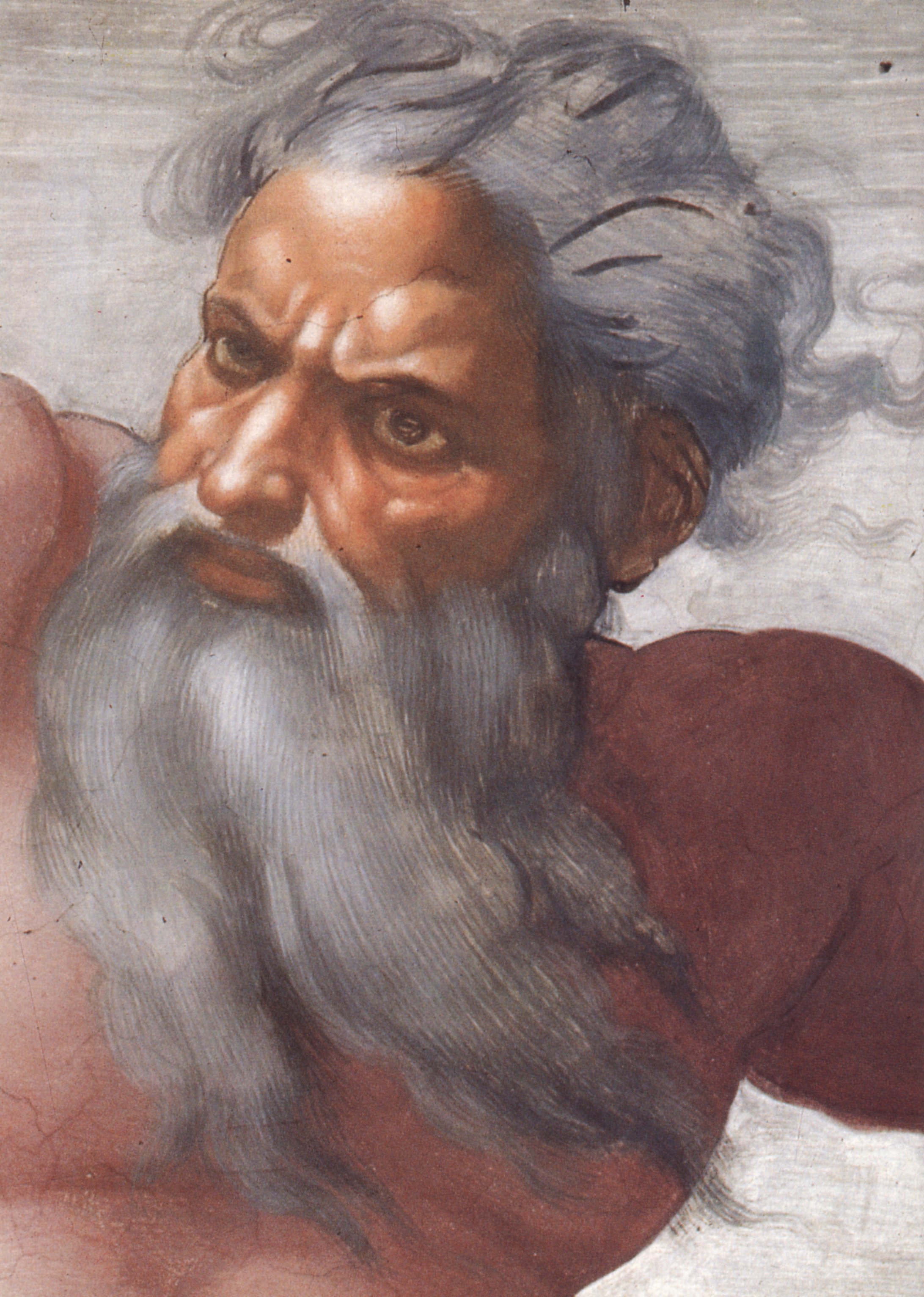
So, what do atheists love to do in the face of this argument? Simply ask the wrong-headed question: “Well, then who or what created God?” The problem here is that atheists fundamentally misunderstand WHAT God is. They view Him as just another trumped up being or a really, really, really, powerful creature. This is simply not the case.
To ask, “What created
God?” is as misguided and ignorant as asking, “Why can’t we have a five-sided triangle—in
Euclidian geometry—with more or less than 180°?” You can
see why this is a nonsensical question: bound up in the definition, in the
reality of a Euclidian triangle itself, is that it has exactly 180°
and is three-sided: no more, no less.

If it were to have five sides, it would be a pentagon, not a triangle; if it were to have more or less than 180°, then it would lose one of its essential properties. The same logic applies to God. God must exist; it is His nature as much as it is the triangle’s “nature” to be three-sided and contain precisely 180°.
(Nota bene: this last line of reasoning also does not even speak to the impossibility of an infinite regress, a necessary fixture of metaphysics if God is removed from the picture.)

If it were to have five sides, it would be a pentagon, not a triangle; if it were to have more or less than 180°, then it would lose one of its essential properties. The same logic applies to God. God must exist; it is His nature as much as it is the triangle’s “nature” to be three-sided and contain precisely 180°.
(Nota bene: this last line of reasoning also does not even speak to the impossibility of an infinite regress, a necessary fixture of metaphysics if God is removed from the picture.)
Dawkins has said:
“If you believe this is the only life you're going to get,
it’s a precious life. We should live to
the full. Where if you believe in
another life, you don’t live this life to the full because you think you’re
going to get another one. That’s an
awfully negative way to live a life.”
Here’s the problem: what
Dawkins mistakenly believes (either willfully or out of ignorance, the world
may never know) is that the afterlife is simply more of an Earthly existence,
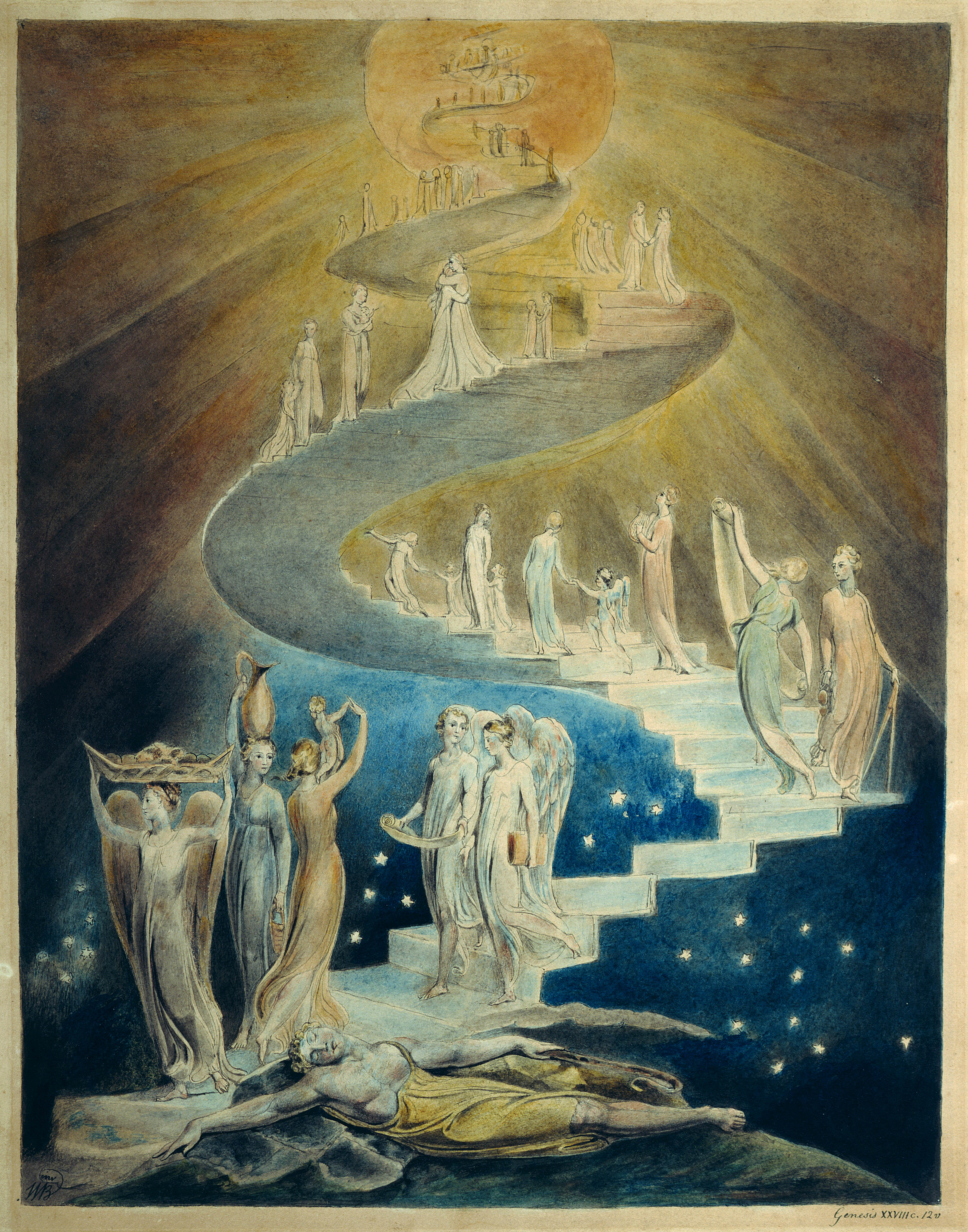
or perhaps that it is some kind of “cosmic do-over.” He is fundamentally wrong on this point. The afterlife is a quantum leap, so to speak,
in degree of difference from Earth and this mortal life.
You can see all the ways Dawkins goes wrong in his assessment of the afterlife in this post regarding the nature of Heaven.
He simply avoids the necessary background study in Catholic theology and
then makes bold, sweeping conclusions about the faith. I suggest he study more of that which he is
attempting to discredit and/or mock before he actually attempts to discredit and/or mock the thing.
 |
| Jacob's Ladder |
So those were just
some of the annoying bits of the ways atheists argue concerning God and
religion. Let me know what you guys
think in the Comments section! Did I
miss anything? Was I spot-on or nah?
Follow @DeionKathawa







.JPG)

