

Take a moment to watch the
video below by Jaclyn Glenn. (She doesn’t omit anything important
from the original.) I’ll wait.
Seriously, watch the video so that what you’re about to read makes sense.
Finished?
Good!
For
starters, I am less disgusted with how she attempts to slander Christianity
(extremely ineptly) and more disgusted with how poor her logic is in the
attempt. For a self-professed “logical” person (she even wears snazzy
LOGIC tees for gosh sake’s) to use so many poor comparisons, poor logical
connections between points of information, and just downright false information
is astounding to me. She should be ashamed of herself and strive to live
up to her calling to be “logical” more faithfully next time around.
Now, for
starters, it seems to me that her opening the video using the term “Christian
propaganda” is just a ploy to indicate her disagreement with the message in the
video. I wonder if I would be similarly permitted to call her channel
“atheist propaganda” because I disagree with the things that she says?
She simply tosses in the word “propaganda” (something with a blatantly negative
connotation) and lets that word’s ugly subtext do her arguing for her, but this
is disingenuous, and she knows it.
She should actually address the video instead of leading off her own video response by poisoning the entire discussion with a nasty (and in this case, untrue) word like “propaganda” when it so obviously doesn’t apply.
But on to
her discussion. She begins with this nonsense:
“I’m not saying that even if the Jesus character were real that He would have deserved a crucifixion, but what He did was an uprising against the government; anyone would have been killed for that! It had nothing [she’s quite emphatic here] to do with who He was or who His followers thought He was.”
She then
goes on to say:
“Oh, and not to mention that Holocaust victims are actually real people and so are Holocaust survivors’ descendants.”
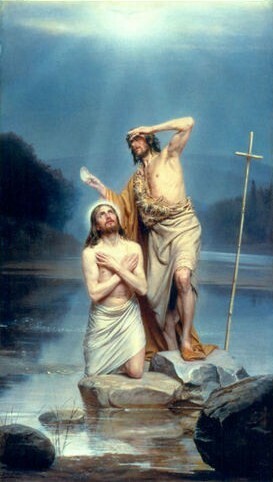 |
| Seems pretty real to me. How about for you guys?
It seems
to me that she is making the ludicrous assertion that Jesus is somehow less
real than Holocaust victims. Sorry to disappoint you, Jaclyn,
but no one sane actually believes that Jesus never existed. It is a
widely accepted fact that the man was a historical figure who actually
did roam the land of Galilee 2,000 years ago,
and only the most foolish of lunatics believe otherwise. In fact, Bart
Ehrman, a former Fundamentalist Christian turned agnostic, wrote a book detailing how Jesus (a
man) “became” God, but actually demonstrates that the man himself
existed in order to build his case.
|
And yes,
His execution totally did have something to do with who He claimed to be, who
He was, and who His followers thought that He was. The Sanhedrin (the
council of Jewish leaders) had Him brought in at night to question Him, and
when asked if He was the Christ, the Messiah, the Son of the Blessed One [God],
Jesus replied “I AM.” For this crime of blasphemy, the Jewish leaders had
Him brought before Pilate to be killed.

Jaclyn’s
main argument is that anyone would have been sentenced to
death for causing unrest in the Empire, and she is probably right. But
here’s the problem with her “logic”: while it is most definitely true that
Jesus was the source of much unrest in the land at this time, the primary
reason that He was sent to Pilate to be crucified was because of who He claimed
to be. The unrest was a natural outgrowth of that assertion by Jesus and
belief by His followers. This is what caused the unrest,
but that unrest would never have happened if He had not claimed to be the Son
of God. So, actually, His crucifixion did in fact have just about
everything to do with who He claimed to be, who He was, and who His followers
thought that He was. Nice try Jaclyn; close, but no cigar.
Yet
another gem from the powerful mind of Ms. Glenn:
“And just because His followers thought that He was saving them from sin, it doesn’t mean that He actually [again, super emphatic for whatever reason] saved them from anything. A belief doesn’t make something a reality.”
And yet
she does exactly this when she talks about Hitler later on in her video!
Hitler believed that he was acting in accord with Almighty God
in exterminating the Jews, and he believed that this was in
accord with Christian teaching and tradition, but the fact of the matter is
that it was not—far from it, in fact. She is right: belief in something
does not necessarily equate to that something’s truth. She, however, ignores
this obvious fact (one that she had just stated) and
essentially makes this nonsensical assertion: when Jesus’ followers “believed”
that He saved them from sin, they are crazy and worthy to be maligned and
ridiculed as such, but when Hitler “believes” just as intensely that he is
acting in a Christian way in starting WWII and the Holocaust, well, shit, he
must be doing just that! She contradicts herself big time here.
She then
goes on a whole spiel about the death and Resurrection of Jesus (as if she
actually knows a thing about Christianity other than what the Amazing
Atheist’s Douchebag Bible has told her). She says:
“Jesus—God Incarnate—knew what was going to happen. He knew that He was going to *“die”* and then rise from the dead again three days later. So… I’m sorry: He didn’t actually die; that’s not really that big of a sacrifice, knowing that you’re just gonna be in a coma for a few days and then wake up. It’s not really the same thing as being dead.”
Well,
you’re right on the first bit: congrats. Jesus was, and is, fully God and
fully man. And yes, He did have divine foreknowledge concerning His
eventual death and Resurrection. How you start there and then jump to the
next bit of your argument really is baffling to me, however.
So the
fact that the Son of God, the Word, God Incarnate, “knew” that He would suffer,
die, and rise again three days later somehow diminishes both 1. His
sufferings and 2. His death? I’m not buying it.
As for
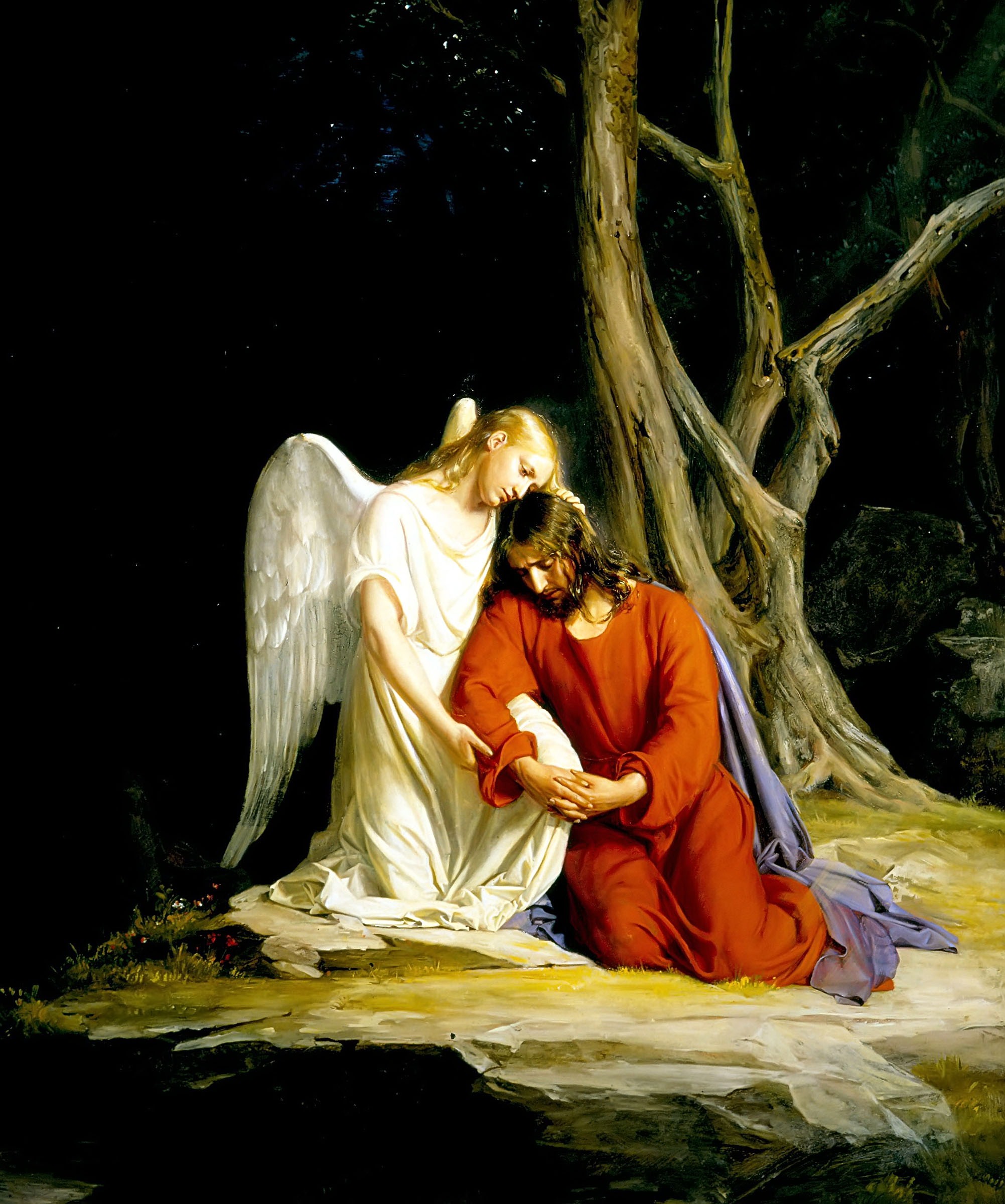
point number one: just because He knew that He would suffer and die, but then
later rise, in no way diminishes the terrible pain and anguish that He
underwent. Remember: this is God we are talking about. He had no
need to come down and suffer and die for us: He is perfectly sufficient without
us. But the fact that He did so while we were set against God in our sins—enemies
of God—is a testament to the true love and commitment that Jesus had for us.
 |
| "And the Word became flesh and made his dwelling among us." |
In
addition, it seems that knowing in advance the agony and pain that awaited Him
would be all the more reason to flee such a dismal future, right? Doesn’t
the fact that He persevered in the face of torture make His act even more praiseworthy
than if He didn’t have foreknowledge of what was awaiting Him?
 |
| Jesus, just casually moving freely toward impending death. But no biggie, right? |
| Finally, it seems that Jaclyn is forgetting the very important detail that Jesus was, and is, fully God and fully man. What man relishes the thought of his future prosecution, persecution, and eventual execution? None. What man wants to die a gruesome death? None. As a man, He feared death and pain just like any other man, yet He persevered. She is unfair in her criticism of the sufferings Jesus would have to undergo with attempted appeals to His foreknowledge (which in no way diminishes the act itself, and in fact, probably increases the laudability of it), and with her disregard of Jesus’ true humanity. |
As for
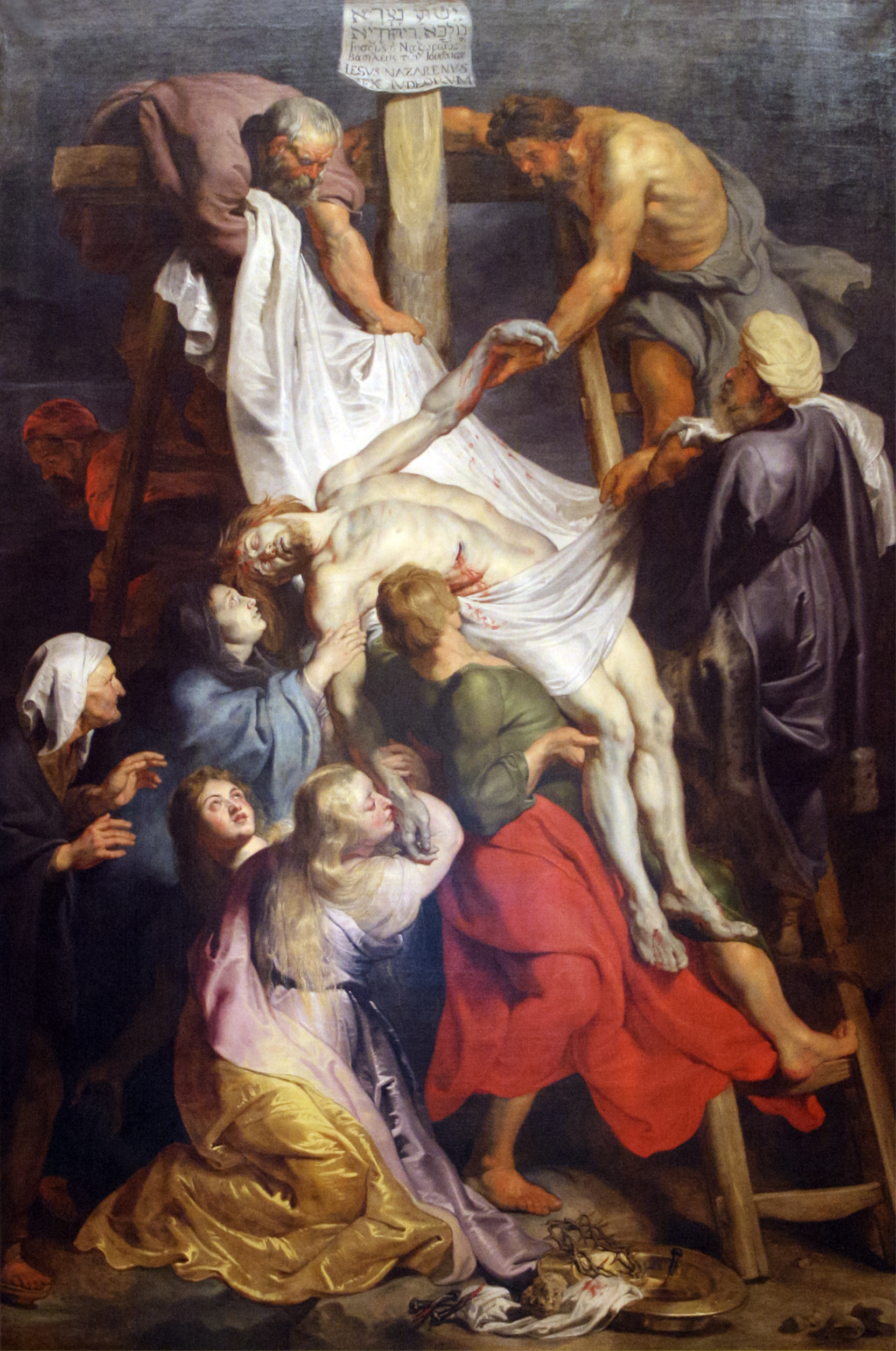
point two: I am honestly shocked that she could even say that He did not
actually die! So because He rose three days later, He was never actually
dead before that...? From what was He rising? A nap? He
was dead, Jaclyn! The Romans made sure that everyone they were
charged to execute actually died; they were known for their record-keeping,
organization, and dedication to seeing a job through. People put on
crosses always died, Jaclyn. The Roman soldiers would never have let live a man
that the leaders of the Jews wanted dead so badly. This is just plain
silliness.
She also
makes the claim that she does not want to get into an “elementary school level
debate” about whether or not Hitler was an atheist or a Christian because she
“gets annoyed” when people say that she “has so much in common with Hitler”
when they find out that she’s a vegetarian because “apparently Hitler was also
a vegetarian.”
It is
funny how she absolves herself from any association with Hitler with both of
them being vegetarians—“there is no possible way that this
links me and Hitler together in any way” she thinks to herself—yet she will go
on to slander an entire group of believing Christians for the actions of a
single madman just because they allegedly share the same
belief. I smell hypocrisy: anyone else?
Having
authentic black and white pictures of WWII scenes (especially with Hitler and
the pope) while she voices-over does not give her “point” any more credibility,
and I really do wonder why she thinks that it does any such thing.
Hitler’s being “baptized a Roman Catholic, being an altar boy, wanting to
become a priest, attending Catholic monastery school, and later expressing his
‘Christian support’ to the German citizenry and soldiers” all have absolutely
nothing to do with whether or not Hitler was actually a
Christian.
Just like
Jaclyn used to be Catholic and did all the things little Catholic kids do does
not mean that she is today a Catholic, right? In fact, I know that she
would vehemently resent that label. So why ignore this same reasoning
with Hitler? What’s the matter? Don’t wanna claim him as your fellow
atheist? Because that is what he was, Jaclyn: he rejected Christian
teaching wholeheartedly. It was just an effective way to galvanize
power and support for himself in the early years of Naziism.

Notice
when he did these things: was it in the early years or later years of his rise
and rule? He obviously needed to employ Christianity as he tried to gain
power because he knew that people would gravitate toward it, since it was
familiar. After he had consolidated all the power of the State and had
literally become the State, the teachings were never
thereafter heeded in any serious manner but were kept in place as a mere convenience
and prop for use by the Nazis.

Finally,
she brings up Mein Kampf, Hitler’s autobiographical
manifesto. (I was wondering how long it would take her to do that.)
Here are the two quotes she utilizes: “Hence today I believe that I am acting
in accordance with the will of the Almighty Creator: by defending myself
against the Jew, I am fighting for the work of the Lord” and “We tolerate no
one in our ranks who attacks the ideas of Christianity. Our movement is
Christian.”
This just
goes back to my previous point about belief and the truth of a belief.
This was also Jaclyn’s point: “A belief doesn’t make something a reality.”
So Hitler believes that by exterminating Jews he is doing
God’s will and that his Nazi movement is Christian… so what? Who
cares? Does this mean that he is in fact doing God’s
will and that the movement is in fact Christian? Crazy
people believe a lot of crazy things; do we regard every utterance by a sadistic
madman as Truth Itself? No, but apparently we’re willing to make an
exception for Hitler because, well, because everyone hates Christianity, right?
She
closes with this utterly scathing remark: “How dare you use the death of
millions of people to propagate your beliefs, especially whenever those
beliefs—Christianity—is what played a major role in this happening to the
Jewish people to begin with. How dare you!”
|
I think
that I have shown that this is not what happened in the video at all. But
I do have a counter remark: How dare you, Jaclyn Glenn, use a video that is
attempting to evangelize as a prop to spread your hate, pettiness, and
illogic. You make this a habit: picking on people (and doing it poorly)
in order to spread your vicious brand of atheism. It’s time someone
called you out on it. This is the first time that I’ve been in a position
to do so; otherwise, it would have come from me sooner.
Let me
know what you guys think in the Comments section! Was I off-base?
Is Jaclyn actually right, or am I?


.JPG)


