• WELCOME!

    Read, comment, spread the word, come back for more!
Showing posts with label contraception. Show all posts

14. Iggy-Igg: Secret Catholic?


I know what you’re thinking: what the heck is he thinking?!  There is literally no way that an Iggy song can possibly relate to anything even remotely associated with religion.  Fist-pumping awesomeness?  Maybe.  But Catholicism and all of its ancient institutions and doctrines?  Fat chance.

The Iron Lady is not impressed with your lack of confidence.
Margaret Thatcher says: Prepare to be proven wrong you nay-sayer, you.

Now, to anyone who is not aware, here’s the 411 on Catholicism: it’s all about love.
Plain and simple.  All practices, beliefs, institutions, doctrines, etc. are motivated by love.  Catholics say that love is the greatest thing ever, and ya know what?  They would be right.

Nietzsche believed the greatest thing ever was the will to power,
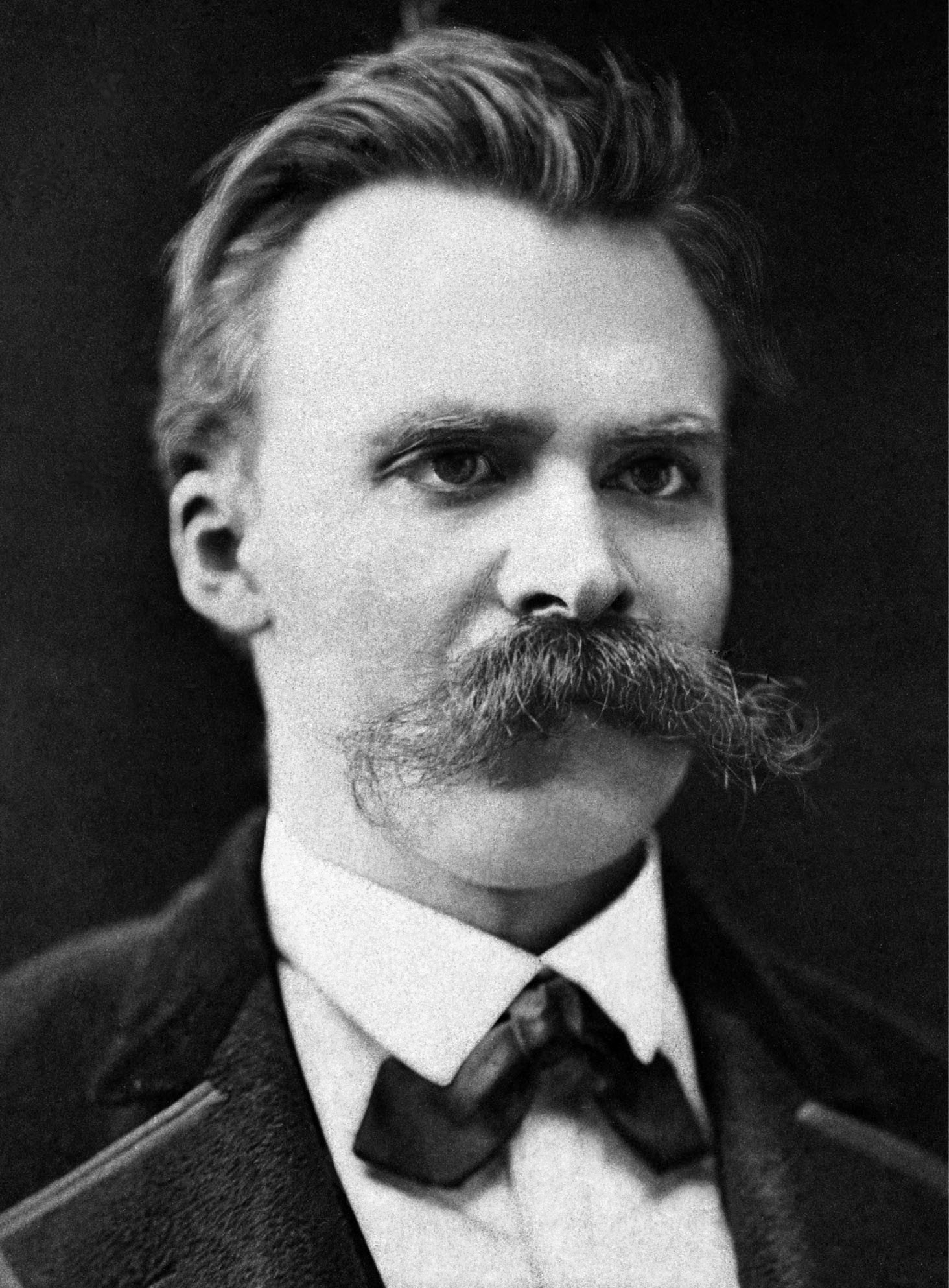
While I think he was dead wrong on many things,
I must admit: his mustache is quite breathtaking.
Hindus and other eastern religions believe it is enlightenment and its accompanying cosmic connection with the one All,

The symbol of Hinduism.
Muslims believe that it is submission to the will of Allah (“Muslim” means “one who submits”).  Out of all of these, it is perhaps the Muslims who are the closest;

The symbol of Islam.
Catholics, however, refer to it as surrender to the Holy Spirit, Who calls us to a daily conversion of our hearts and minds to God.


The Holy Spirit, in all its dove-like badassery.
(Yes, that's a word....  Okay, not technically, but who cares?)
Anyone who claims that the Catholic Church is really just secretly (or not so secretly, depending on your particular suasion on the topic) all about oppression is simply wrong.  Human flourishing?  For sure.

Anyone who says that the Catholic Church is in the business of “turning back the clock” in a fit of all-encompassing reactionism is likewise wrong.  The Church holds fast to philosophically sound principles concerning the human person and Man’s inherent dignity.  It is our world, not the Church, which is confused because of its embrace of modernism, radical individualism, and its spurning of objective truth and moral soundness.


Anyone who claims that the Church needs to “get with the times” has it all backwards: the “times” (whatever that really means, I likely will never know) need to get with the Church, as Catholic blogging titan Marc Barnes so eloquently writes.

One need look no further than love for an explanation of anything Catholics believe.  Why did God become man in Christ Jesus?  “For God so loved the world…”


Why did He die on the Cross for us?


Out of love for us and out of a desire to save us from our brokenness and stubbornness and hardness of heart and addictions and jealousies and tempers and anything that separates us from Perfect Love Itself.

We can apply this same interiorly consistent logical framework to any number of issues.  Abortion unmakes the self-giving love of the couple; contraception frustrates the total and fully loving self-giving-ness of the act; pornography perverts the sexual act to one of base pleasure for all parties involved and turns the mystical, loving sex act into a mere commodity; gay “marriage” is a simple confusion in terms: it’s not about love at all—more on that in a later post, for sure—and euthanasia ends the life of a person whose suffering we cannot bear, not out of any kind of authentic love.  One can easily see now that love is the fabric from which the beautiful tapestry of all of the Church’s doctrine and rituals is woven.


Now, enter Iggy, and her hit “Black Widow.”  I would draw your attention to the first verse, specifically these parts I have reproduced for our analysis:
We went from nothing to something, liking to loving /
It was us against the world and now we just f****** / …
/ I wanted all or nothing for us ain’t no place in between / …
/ Like it’ll last forever but now forever ain’t as long

Iggy and her partner, separately, she has come to realize, were “nothing”—until they came together as a couple.  She has also seen that their relationship was “nothing” while it was in its nascent—beginning—stages.  She sees that there is much more in store for the two of them if the bond holds, as it should, she feels, implicit in the meaning of the term “relationship” itself.  (She seems to feel that the bond was made to last forever and feels cheated when it falls short of this “mystical standard”: “Like it’ll last forever but now forever ain’t as long”.)  In addition, their love is appropriately exclusive (“us against the world”) as well as properly ordered to the infinite, as evidenced by the most important line—the last one: (“I wanted all or nothing for us ain't no place in between”).  Iggy realizes that true love is as the traditional understanding has it: “to have and to hold, from this day forward, for better, for worse, for richer, for poorer, in sickness and in health, until death do us part.”  

She realizes that this relationship that she is so serious about is an effective bridge burning to all of her past history with anyone else and any and all future encounters with anyone else.  That she should remain with this person forever, and that the only thing that will separate them is Death, but that, even then, her hope is that love will transcend death, is the defining ethos of her song, “Black Widow.”  This holds even as her hopes are dashed by the separation.  Just because she has fallen short of the standard does not mean that the ideal does not exist; it simply means that she—we—must try harder to reach it.

The second verse is appropriately intense and scary, for it reveals to us the full meaning of the phrase “Hell hath no fury like a woman scorned.”
It is the natural human reaction when a good thing goes very, very bad.  Oftentimes, the bad things that happen to us and that we do ourselves (sin) are not truly bad: they are merely very good things and desires gone sour, perverted until they hurt (see pornography, contraception, etc.)

There are other themes for sure.  The feminists will read female empowerment out of the song—“I'm-a make you beg for it, plead for it”—spurned lovers will get their fill as well.  Throuple union supporters (“throuple”: marriage, but just with three people; how do you NOT know that?) will see all the failings of only having one person to explore and live with (what a drag), and open marriage supporters will see the frailties and *obvious* limitations of monogamy.

But not Iggy.  No, Iggy-Igg, like a good and faithful Catholic warrior, sees the foolishness of entering a union without total permanency, exclusivity, and a yearning for the ocean of the infinite, like a soldier without his weapons or an explorer without a map.  Only then will she be sated.

So, in light of all this, I ask anyone and everyone who reads this post: is THE Iggy Azalea Catholic?  Christian?  Searching?  And if she is not, in fact, a Catholic, I wholeheartedly invite her to become one!

Come on Iggy: try the zeal!
After all, in my estimation, she understands this love business better than most people I have met—Catholics included.

12. Christianity, The Modern-World, and Decision-Making

If I could but etch in stone one of the most prominent, yet unspoken,
mores of our age, this would be it.

I’m always on the lookout for new and provocative content to read.  I like to keep abreast of the vast number of moral and social issues that emerge in our world.  This incredibly interesting article that I stumbled upon recently had an interesting biological perspective on pregnancy, an interesting look into sociological factors contributing to society’s changing mores regarding pregnancy, and interesting and important moral components as well: all components integral to the functioning of our world at large as well as for my enjoyment of a piece.


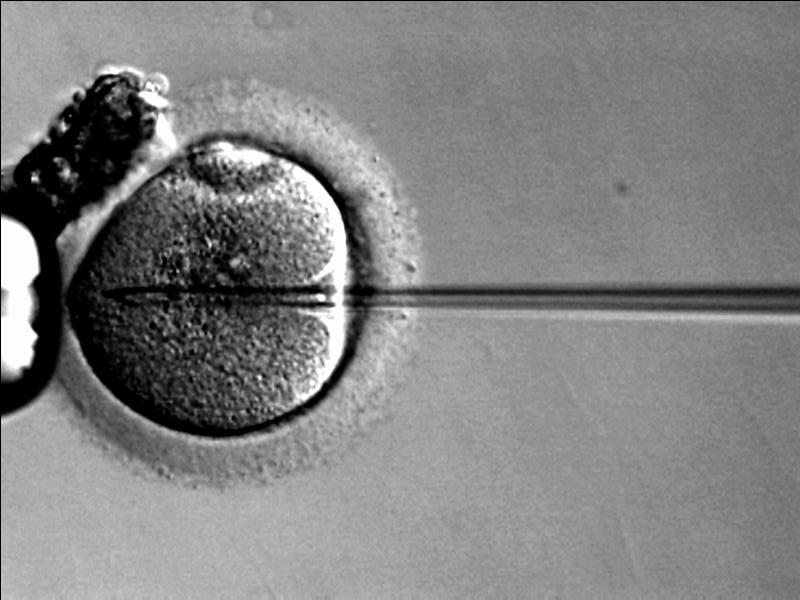
The article talks about how women are attempting to “beat biology”—their biological clocks in regard to their fertility—by freezing their eggs so that they can become mothers later in life: an interesting concept for sure and one with many dimensions.  The first that springs to my mind is the moral dimension and the practice’s obvious flaw: it is deeply offensive to and beneath human dignity.

The eggs will need to be thawed out, and the impregnation process will require in vitro fertilization, a practice the Church condemns.  The action is contrary to natural law, for it separates the gift of husband and wife, sex, from the natural fruit of the act, a child.  A child is created, yes, though not in an intimate exchange of total, self-giving love, but in an economic transaction.

It prompted thought about our world’s perception of pregnancy, motherhood, and family.  That women feel the need to advance their careers at the expense of a fulfilling family life because of a so-called “pressure” is shameful.  The feminism of yore and in our own day has degraded the mystical quality of femininity and swapped it out for a cheap view of woman as an organism that must choose between society and family—children or success in the workplace.  Oftentimes, however, the choice is framed so negatively against domestic life and motherhood that these incredibly fulfilling options are shunned outright, though perhaps chosen begrudginglyas a mere after-thought—if they are ever chosen at all, that is.

Perhaps one of the greatest joys of this life.
It is indeed a testament to the branding power of this movement—as well as the incredible fumble by Catholic leadership for the last several decades—that this procedure is quickly gaining credibility.

I will not be discussing the moral, social, or political factors as they relate to this procedure; rather, I would like to make a simple connection between the growing legitimacy of this procedure and our everyday lives—what this procedure says about us as a society and as people, more simply.

Fact of the matter?  We are paralyzed by indecision.  Our modern world offers so many enticements and pleasures and distractions and whatnot that, in the pursuit of “keeping our options open,” we never actually make a single meaningful decision.  We are not decisive.  We are wishy-washy and weak.  Don’t get me wrong: I’m all for keeping my options open as much as the next guy.  What I am not for, however, is a society that so praises and enshrines and validates keeping our options open—of living in a potential state, rather than in a determined and convicted state—an actual state—that we never actually shape our lives and destinies.  We live in a dimly real present, saturated with visions of future pleasures and advancements and improvements.  We live passively, and, in waiting for, as the first article says, “Mr. Right” to come along, we lose our nerve, our grit, or whatever you want to call it, to actually do something meaningful.

I keep hearing that he may fit the bill, but I don't know to be honest.
We freeze our eggs, waiting for the “perfect moment” in which to take the plunge of motherhood, fatherhood, parenthood. We live in extended adolescences, never truly rising to the occasion of our destiny to be providers and nurturers—adults. We cohabitate, a fanciful euphemism for “extended dating,” never biting the bullet (so to speak) of finally admitting that this person is “the one.” We contracept away our most fruitful child-bearing years, in favor of frivolous, and, ultimately, unfulfilling sex. We abort away our futures willy-nilly because we cannot face the fact that our actions (sex) have consequences (babies and diapers and formula).


As Pope Francis said to a crowd of millions of young people while in Rio de Janeiro for the World Youth Day 2013: “I am asking you to rebel against this culture that sees everything as temporary and that ultimately believes that you are incapable of responsibility (emphasis mine).”

Now, what does authentic Catholic Christianity have to do with this shameful paralysis of our culture, of our world?  A paralysis so gripping it threatens to destroy everything it touches? It means living with conviction! With purpose, with drive, with that mystical something that changes potentiality to actuality, inaction to action, fear of acting and messing up to courage in the face of doubts about the outcome of our actions. In essence, indecision and the endless trope of “keeping our options open” and “waiting for something better to come along” are incompatible with an authentic Catholic life.


Look to the Apostles, the early Church Fathers, the martyrs, the saints, our recent popes: all are men and women of conviction, of resolve, of determination, of grit, of action!  They see the will of God, and they do it.  Sure they are afraid, or feel that they are unworthy, and yes, even they hesitated, but they ultimately acted, and when they acted, they acted decisively.  They saw the goal, and when they had brought themselves to act, it was with purpose, with a single-minded dogmatism that is one of the most glorious attributes of a true Catholic.  The ability to pursue any number of tasks, all for a single endthe further glorification of God Almightyis a characteristic of the greatest men and women of the Church.

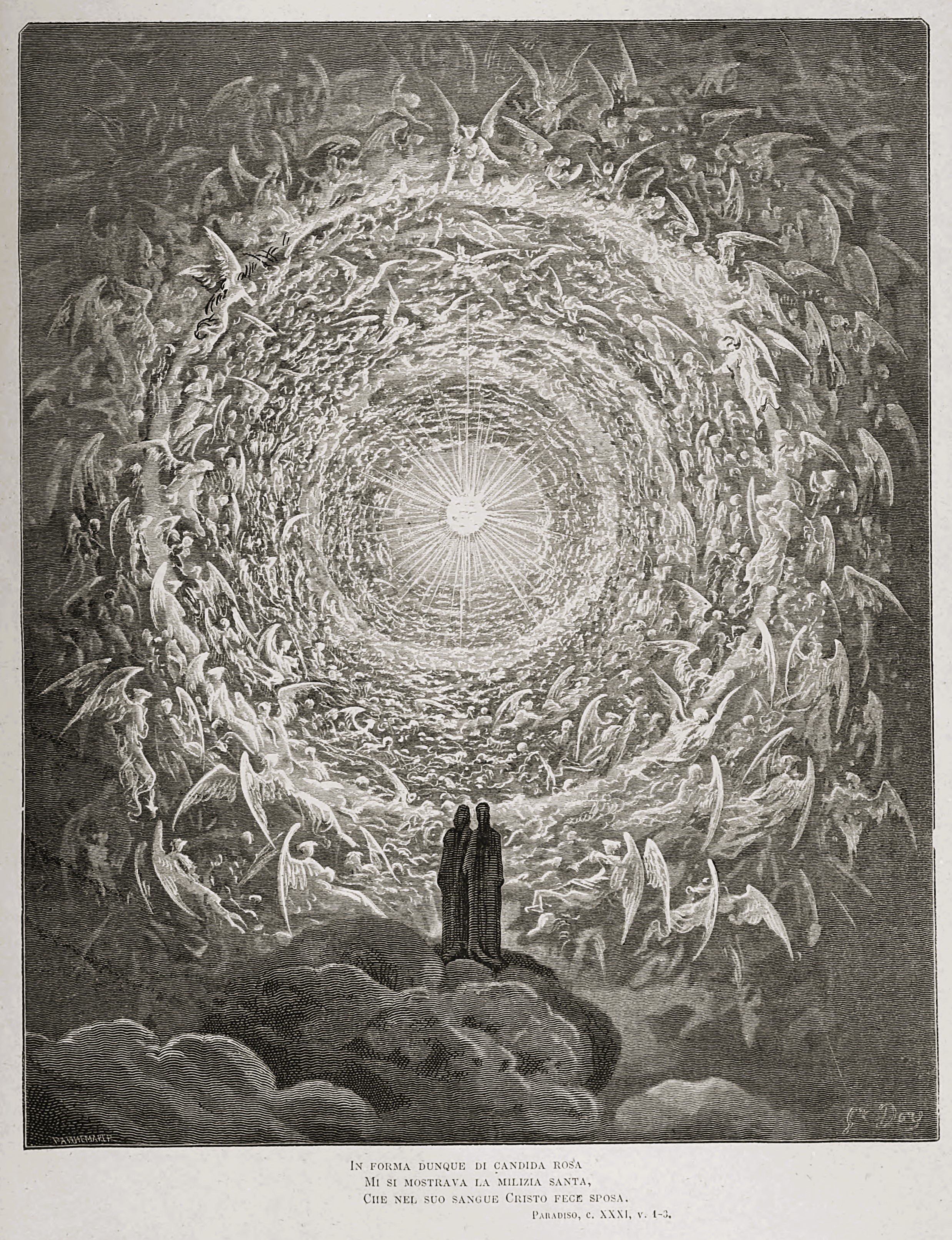
But no: our culture praises the floater, the one who can do all things at all times because he has never chosen anything to the exclusion of anything else.  He has never started to truly live!  We are creatures of potential.  We are always moving from one state to another.  We are either advancing or falling back, improving or devolving—this is our nature.  As such, choices must be made, otherwise, we do not truly live and reach our goal.  And what is our goal, ultimately?  To reach God!  To come to the Beatific Vision in fulfillment of all of our desires.  We are to be partakers in the divine nature, to return home to our Father and His Son, Christ Jesus.

Trust me; this picture doesn't do Heaven justice at all.
So get out there people! Live with fire! Run reckless through life and make decisions as if your eternal futures depended on it—because they do! Because as St. Augustine said “Love God and do whatever you please: for the soul trained in love to God will do nothing to offend the One who is Beloved,” and as Christ says in Revelation 3:16, “So, because you are lukewarm, neither hot nor cold, I will spit you out of my mouth.”

A wispy, weak, and undisciplined will is our worst enemy.


tl;dr Carpe Diem!

11. THE Commandment


Everyone has heard of the Ten Commandments.  They have been lauded, mocked, and ignored.  They are the bedrock of Christian morality and a subset of now-orthodox Jewish morality.  Love ‘em or hate ‘em, they most likely inform a decent chunk of your morality too (or at least of the society in which you live).

“Thou shalt not kill” is a pretty important one, and just about everyone agrees that killing is wrong except in cases like abortion or euthanasia, but I digress.  “Thou shalt not bear false witness” at least still applies in our cultures in terms of court proceedings and the oath taken therein to “tell the truth, the whole truth, and nothing but the truth so help you God.”  “Thou shalt not steal” and “Thou shalt honor thy father and mother” are both pretty much universally accepted as well.

“Thou shalt not commit adultery” is basically ignored and derided as the result of—to us forward thinking and open-minded moderns—tiny-mindedness, jealousy, and general primitiveness of the ancient Israelites who were only concerned with keeping women as property and with no rights and on and on and on.  It is clear we no longer respect this very simple commandment when the Internet is littered with sites set up for the express purpose of facilitating adulterous affairs among married folk.

“Thou shalt not covet thy neighbor’s wife” and “Thou shalt not covet thy neighbor’s goods” are probably largely ignored and superseded in today’s day-and-age by the fifth commandment (adultery) and the seventh commandment (stealing).  The word “covet” is largely lost on modern-day society, and is indeed different from the actual acts themselves.  But this distinction—subtle though it may be—is lost on modern man, who is most definitely not in the habit of censoring his thoughts when they turn out to be evil or ill intentioned.

We now come to worst treated of the lot: the first three commandments.  All of these have to do with our relationship to God.  And guess what?  Today’s typical educated, liberal Westerner does not believe in God as Catholics understand Him.  Sure, they might believe in some kind of vague “Force” pulsating with vitality throughout the universe.

Analogous to God, who supposedly tweaked the universe into
existence--like this watchmaker.
Maybe they even believe in a Deistic conception of God, a kind of cosmic Watchmaker; a God who, after the universe was made, just let it all run like a human watchmaker does with his watches.  More likely, however, is that this typical Westerner disbelieves in anything beyond the natural realm, by definition, what we would call the supernatural—and this would surely include God.


Unless it can be empirically proven, they say, it is not real; therefore, God is not real: plain and simple.

We Catholics, however, do not have this problem.  We have a healthy dose of respect for the supernatural, and we see it at work in our lives (at least when we are paying sufficient attention).  I would like to propose a way that we can consolidate all Ten Commandments; that with this one conception of God’s Law, we will be in right standing with Him, the world, our neighbor, and ourselves.


The commandment is simple.  In fact, it is the First Commandment: “I AM the LORD your GOD… you shall have no other gods before me.”

Guess what fellow Catholics (and Christians)?!  This is it!  This is the mother lode that you were all waiting for!


This commandment is the “skeleton key” unlocking all that we need ever do in order to follow God’s Law and be in as good a standing as we ever can as creatures now predisposed to sin.


Think about it: God is the sovereign Author of life, death, the universe, the angels, morality, roses, coffee, sunlight, everything.  Sin is the free rejection of this fact.  All sin is a rebellion of our wills against the reality that we owe God our will, lives, thoughts, bodies, everything, because everything that we have—all that we are, even—is a free gift from Him who IS perfect Goodness, Truth, and Beauty.

Imagine it.  If we all were acutely aware at all times of the fact that this is who God is and what we are to Him, creatures full of sin (though now adopted sons of the Father and joint-heirs with Christ by His Passion, death, and Resurrection), we would never sin.  The idea of sinning would never be heeded with any seriousness, let alone acted upon.  We would recognize that to steal, snap at our mothers, rape, or whatever, are all affronts to God: He who is offended by all sins.

All sin is disorder.  When we are in order, we are doing the will of God.  Sin is a disordering of our persons; it is putting the creature or created thing before the Creator, He who should be praised above all, for He gave all things being. Sin is, simply put, an “idolization” of that-which-is-not-God; and what could be worse than to adore, venerate, and worship a mere created thing in lieu of the Creator Himself?

Essentially, all sin is, in some way or another, a placing of ourselves above and ahead of God, He who deserves all of our very selves because it is Him alone who is worthy of any adoration as the sovereign Creator of everything.  He holds all things in being; without His constant willing of all things to have their being there would be nothing.  As St. Augustine wrote, These things [created things] kept me far from thee; even though they were not at all unless they were in thee.


St. Augustine thoroughly bossin' it up with his heart on fire for God.
He tried the zeal!

Pornography is the elevation of the naked form of human persons and their consequent sexual activity above God, who designed sex and the human person.  It removes love and goodness from the sexual act, divorcing it to invested third parties which seek to profit from the enslavement of men and women and the perversion of their sexuality; it is thus an affront to the Creator.

The Rape of Lucretia
Rape is the objectification of another person, placing one’s own selfish desires for sensual and carnal pleasures, as well as a disordered sense of power, ahead of the dignity of the raped.  S/He has this immutable dignity first and foremost because it is in God’s image and likeness that s/he is made.  Rape elevates power and sensuality above God and is thus an affront to the Creator.

Stealing deprives another of his right to have whatever it was that was stolen from him.  It is a lessening of another man’s dignity in his legitimate right to maintain his possession for the selfish furthering of our own ends.  It treats the person stolen from as less than a person made in God’s image and likeness and is thus an affront to the Creator.

To practice the illicit use of contraception is to place the pleasure of sexual intercourse ahead of one of the dual purposes of the act itself: bearing and rearing children.  It places selfish desires ahead of the God who designed sex to be selfless and is thus an affront to the Creator.

Abortion is a terrible evil because it robs a child of the right to life, a life given him by His Creator.  It makes man out to be a god, deciding if this or that person should live or not.  We have, at the time of an abortion, forgotten that we are mere stewards of the earth and our own lives, not the master of them.  Abortion taints Man’s purpose, elevating him above God on issues of life and death, and is thus an affront to the Creator.

Euthanasia is likewise an affront on the matter of life and death.  We have made ourselves out to be God, misusing our wills and rational natures in the pursuit of a perverted sense of the good.  We seek death for an elderly person and deprive them of the legitimate right to suffer and die with dignity.  Contrary to popular belief, suffering is not inherently wrong.  To suffer is to redeem, to sanctify, and to make whole once again.  Our own Lord and Savior Jesus Christ, the Son of God, was not Himself above suffering; why should we be?  Euthanasia is an affront to the natural process of God’s Law for a person to suffer and atone in some way for the sins of mankind by uniting his/her suffering with the Cross of Christ and is thus an affront to the Creator.

Homosexual acts place sex above God, who created sex and the human person.  It is an elevation of a created good to the point of perversion and vilenessfor it has been elevated far beyond its proper place.  We must never forget that sex is a created good, subordinate to God.  Homosexual acts are closed to the gift of life and do not proceed from genuine affective and sexual complementarity between the actors; they are a misuse of our sexual powers and are thus an affront to the Creator.

This movie was rife with fornicating teens.
Fornication is likewise offensive to the Most High because it disassociates the unitive, or lifelong, dimension of the sexual union from the procreative (because it is more often than not corrupted further by contraceptive agents and barriers).  Fornication treats the sexual act as that-which-is-to-be-desired for its own sake, or that which is good in itself.  Only God fulfills this desire in our lives.  Fornication places illicit, pre-marital sex before God who made the institution of marriage, sex, and the human person and is thus an affront to the Creator.

The list goes on forever and is as long as the possible sins that Man could ever commit. What is the underlying mechanism and commonality among the multitude, however?  It is that they all elevate Man or a created good above God, Him who deserves ALL of our attention, worship, and obedience.  Each and every sin is an affront to God because when we sin we mistake ourselves or a created good for God.  We confuse our relationship to the world and with God each and every time we sin.


St. Ignatius of Loyola (one of my personal favorites), at the outset of his Spiritual Exercises, also wrote on this principle.  (Just an aside, I probably love him more than is healthy for someone addressing the perils of placing something that is not God above God.)


First Principle and Foundation

Man is created to praise, reverence, and serve God our Lord, and by this means to save his soul,

The other things on the face of the earth are created for man to help him in attaining the end for which he is created.

Hence, man is to make use of them as far as they help him in the attainment of his end, and he must rid himself of them in as far they prove a hindrance to him.

Therefore, we must make ourselves indifferent to all created things, as far as we are allowed free choice and are not under any prohibition.  Consequently, as far as we are concerned, we should not prefer health to sickness, riches to poverty, honor to dishonor, a long life to a short life.  The same holds true for all other things.

Our one desire and choice should be what is more conducive to the end for which we are created.