• WELCOME!

    Read, comment, spread the word, come back for more!
Showing posts with label homosexual. Show all posts

15. Surprise! More Fear-Mongering and Misinformation from The Advocate


*For evidence of the title’s claim, see The Advocate’s Pope Francis “Person of the Year” December 2013 issue.


(They really show once again that they have—at best—a superficial familiarity with Christianity.)


LGBT people and allies are consistently showing that they neither know, nor care to understand, the particulars of essential Christian doctrines, like, say, love (in this case), and sports writer for The Advocate, Annie Hollenbeck, is no exception, unfortunately.  I will probably never know the joy of mischaracterizing and misrepresenting the force and appeal of an opponent’s argument, but that is exactly what Ms. Hollenbeck does from as early as her second paragraph.  But you see, there’s the rub: many of these people—the Leftists, LGBT people and allies, atheists, secularists, humanists, non-theists—don’t think that we actually have any legitimate points on the issue of same-sex marriage (among other things, let’s not forget).

Hey, there I am!  (Not really: It's a joke.  Calm down.)
To them, we are the rough equivalent of white supremacists, neo-Nazis, segregationists, and the rest of their ilk (maybe even all rolled up into one nasty, sludgy pool of bigoted-ness?)—to be tolerated for now, but only because polite society hasn’t yet found the nerve to banish us from its presence like those other, now illegitimate, groups.
Ooh!  Ooooh!  Those are my friends!  Those were the days....
(Another joke.  Calm down.  Yeesh.)

If you don’t believe me, just read The Daily Signal’s recap and analysis of the Twitter exchange between Ryan T. Anderson (a research fellow at the Heritage Foundation and proponent of the conjugal, man-woman view of marriage) and Josh Barro (a writer for The New York Times and proponent of same-sex marriage).  Teaser: he wants us “stamped out.”

Anyway, to the article.  You can read it here.  I will take the title and sub-header to be Ms. Hollenbeck’s thesis of sorts.  It reads: “Hating the Sin Is Hating the Sinner: An executive for the Baltimore Ravens invokes the tired ‘hate the sin, love the sinner’ philosophy, but is that truly Christlike?”


Hmm, are the Ravens homophobic and deserving of our ire?
In a word, yes. Yes, it is in fact extremely Christlike.  In fact, it may just be the most Christlike thing about Christ (next to His being the Son of God, Savior of the world, and the Bread of Life, of course).  Allow me to explain.  You see, Christ came to separate sins from sinners.  That was essentially the whole point of His atoning sacrifice on the Cross.


In the Old Testament, to a certain extent, we saw people lumped together with their sins.  That was why there were prescriptions for stoning, banishments, ritual cleansing ceremonies, etc. for the Israelites, who, last I checked, were indeed sinners just like the rest of humanity, past and future.  The sin was bound up with the sinner, the actor, and there was just no way to separate the two—not yet anyway.

When Christ came, His sacrifice acted as a kind of “reverse epoxy” (as Peter Kreeft puts it): We could now repent, and be truly forgiven, as Christ covered our infinite debt to the Father.  He now pleads eternally before the Father, advocating on our behalf and displaying His wounds as a never-ending display of love and fidelity to us, thereby placating the Father’s just judgment.


So yes, Ms. Hollenbeck.  Loving the sinner but hating the sin is Christlike.  Sorry to rain on your parade.  Now, to the rest of the op-ed.

She is definitely correct when she writes, “you simply will find no instance where Jesus Christ looks a gay person in the eye and tells him that he is going to hell.”  Hell, I agree 110% with that statement (play on words most definitely intended).  But I am confused when she writes (not even one sentence earlier): “As a Christian, I am floored when I hear people like Swayne claiming that while they are taught to love and accept everyone, Jesus Christ teaches against homosexuality.”  Why is this hard to believe, exactly?


Christ elevated marriage to the level of sacrament: an indissoluble union recognized by God as binding on both parties involved for all time.  And Christ confirms the reality of the union as orthodox Christians now understand it when He says, “Have you not read that from the beginning the Creator ‘made them male and female’ … ‘For this reason a man shall leave his father and mother and be joined to his wife, and the two shall become one flesh’?”

It would seem that Ms. Hollenbeck is attempting to make a case from Jesus’ silence on the issue of same-sex marriage.  “Since Jesus never preached against homosexual unions,” her reasoning goes, “he must be in support of them, or at the very least, neutral toward them.”  Well, Jesus never spoke out against genocide or racism, but I am confident that Ms. Hollenbeck would say that Jesus would not support those particulars ills.  And one has to wonder if Ms. Hollenbeck has ever considered the reality that Jesus likely never spoke out against same-sex marriage because it was just so radical and unrealistic—both politically and morally—that it just never crossed His mind to explicitly condemn it—it was just understood implicitly as being out of the question.

A parallel example might look something like this: Jesus’ explicit condemnation of same-sex marriage would be like a cultural elite or politician today condemning traditional slavery in America.  No one is seriously advocating for it; if they are, they are not taken seriously; it is most definitely not being practiced; and it has no real chance of making a comeback (as far as I can tell, though I could be wrong).  Essentially, it is so far removed from reality that if, say, a 2016 presidential candidate called for us as a nation to never again own slaves (in the sense of pre-Civil War America), we would rightly ask if s/he needed his/her head checked.  I can see it now.  Aide: “Maybe some water and shade will do you good Mr./Ms. Candidate?  It is awfully warm out here,” as he dials for a psychiatrist.

The rest of the op-ed consists of thinly veiled attacks upon Christianity and intimations that faith and religion should just be private endeavors and/or something that you leave at the door of the church, synagogue, or mosque when you leave there at 10 am—“Swayne is more than entitled to his opinion, and he has the right to practice his faith as he sees fit.  However, considering the times, and particularly the state of affairs this season with Michael Sam in the NFL, this message isn’t as innocuous as Swayne and others may try to claim it is.”  Because, really, enlightened society is clearly not in your favor; how can you bear to be so in the minority and actually live out your faith considering “the times” (whatever the heck that means)?  That’s so passé!  So 12th century!  Basically, you are entitled to your opinion and can live out your religious faith and convictions… except where it matters: in the public square.  Because, really, you’re making a scene and upsetting the children.

Next up, the conflation of homosexuality and homosexual acts: “Being gay isn’t something you do.  It’s something you are.”  Here, she seems to imply that being gay is one and the same as acting on those impulses, as if gays and lesbians must act upon them—that they have absolutely no say in the matter.  Not only does Ms. Hollenbeck imply that these people have no self-control, but she also makes a critical error: Christians do not oppose gays, never have, in fact.  What we are opposed to are homosexual acts, based upon natural law theory, a 2,500 year-old tradition of thought (ctrl/Command+F “2,500” for the tweet in question) and philosophy stretching all the way back to Sts. Augustine and Aquinas, running through such titans as Plato, Aristotle, Cicero, Locke, and Kant, and, recently, Dr. Martin Luther King Jr.  Disagree with the theory or the thinkers’ employment of it if you so choose, but don’t insinuate that we don’t love gay people as a way to take the moral high ground, Ms. Hollenbeck.  Thank you, from Christians everywhere.

Ms. Hollenbeck ends her op-ed with a reference to St. Paul’s description of love and a sobering observation: “Love is patient, love is kind. It does not envy, it does not boast, it is not proud. It does not dishonor others, it is not self-seeking, it is not easily angered, it keeps no record of wrongs.’  You may love the homosexuals, Mr. Swayne, but love with judgment isn’t love at all.”


The man himself, ready to boss it up.
Here’s the problem: I would assume that she is appealing specifically to the “does not dishonor others” bit of that passage in order to vindicate active homosexuals in their pursuit of marital and moral “equality”/liberation and simultaneously disparage Christians who make life so difficult for these people by telling them what they think about their future goals.  That’s all well and good, except that Christians do no such thing when they express the truth about human sexuality and its purpose, ordered toward married life.  Telling people the truth is part of loving them, Ms. Hollenbeck; lying to them to keep them comfortable while they do what is contrary to the moral order is not.

As for her final pronouncement, I would argue that love minus judgment is not only anti-love but that for love to be true, it necessitates that judgment be involved.  Judgment is simply discrimination (selection and preference, not hate) among ideas, actions, and persons.  If I love you, I will tell you when I believe that you are acting contrary to good sense and upright moral behavior.

Let me know what you guys think in the Comments section!  And share this post with your friends as well!

11. THE Commandment


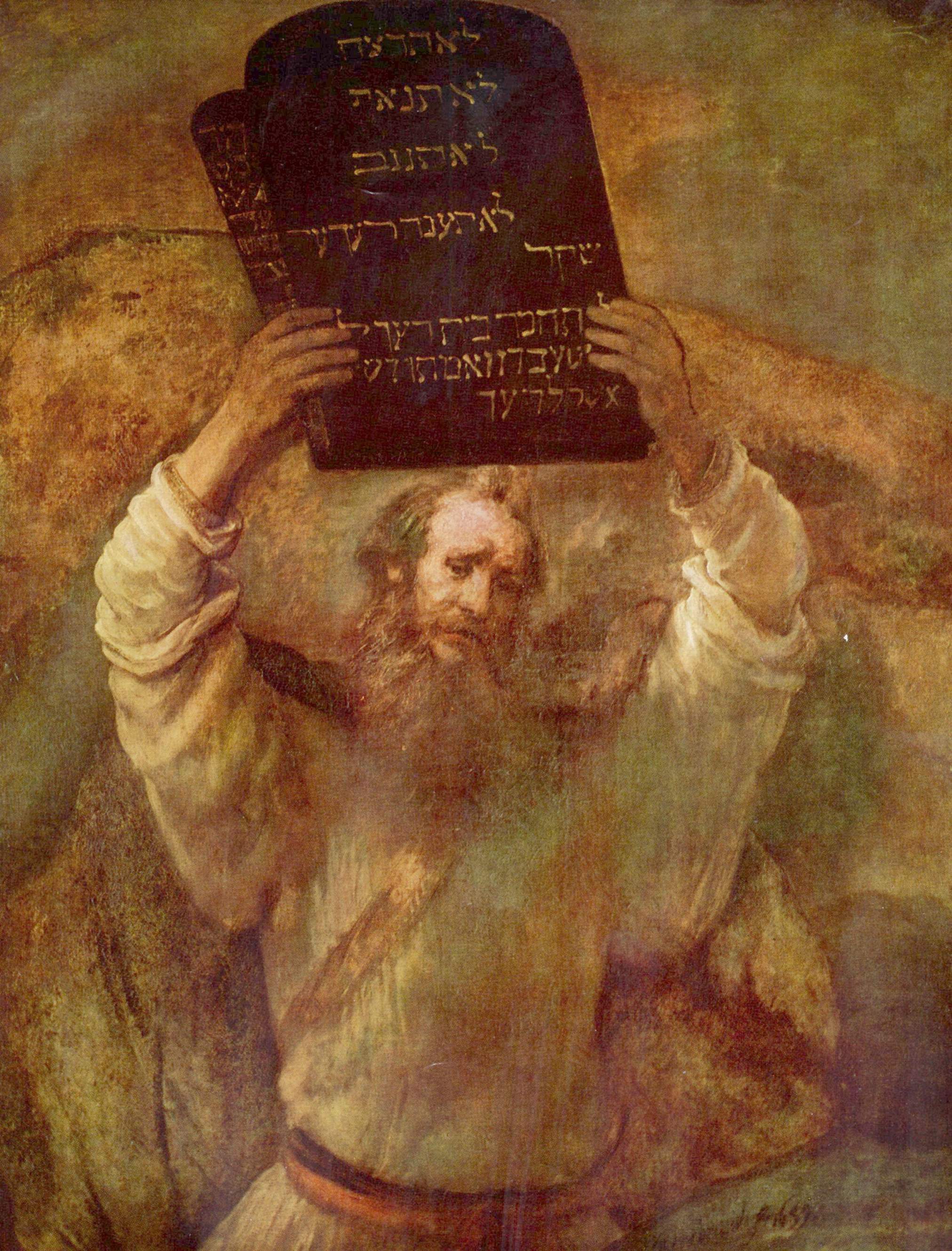
Everyone has heard of the Ten Commandments.  They have been lauded, mocked, and ignored.  They are the bedrock of Christian morality and a subset of now-orthodox Jewish morality.  Love ‘em or hate ‘em, they most likely inform a decent chunk of your morality too (or at least of the society in which you live).

“Thou shalt not kill” is a pretty important one, and just about everyone agrees that killing is wrong except in cases like abortion or euthanasia, but I digress.  “Thou shalt not bear false witness” at least still applies in our cultures in terms of court proceedings and the oath taken therein to “tell the truth, the whole truth, and nothing but the truth so help you God.”  “Thou shalt not steal” and “Thou shalt honor thy father and mother” are both pretty much universally accepted as well.

“Thou shalt not commit adultery” is basically ignored and derided as the result of—to us forward thinking and open-minded moderns—tiny-mindedness, jealousy, and general primitiveness of the ancient Israelites who were only concerned with keeping women as property and with no rights and on and on and on.  It is clear we no longer respect this very simple commandment when the Internet is littered with sites set up for the express purpose of facilitating adulterous affairs among married folk.

“Thou shalt not covet thy neighbor’s wife” and “Thou shalt not covet thy neighbor’s goods” are probably largely ignored and superseded in today’s day-and-age by the fifth commandment (adultery) and the seventh commandment (stealing).  The word “covet” is largely lost on modern-day society, and is indeed different from the actual acts themselves.  But this distinction—subtle though it may be—is lost on modern man, who is most definitely not in the habit of censoring his thoughts when they turn out to be evil or ill intentioned.

We now come to worst treated of the lot: the first three commandments.  All of these have to do with our relationship to God.  And guess what?  Today’s typical educated, liberal Westerner does not believe in God as Catholics understand Him.  Sure, they might believe in some kind of vague “Force” pulsating with vitality throughout the universe.

Analogous to God, who supposedly tweaked the universe into
existence--like this watchmaker.
Maybe they even believe in a Deistic conception of God, a kind of cosmic Watchmaker; a God who, after the universe was made, just let it all run like a human watchmaker does with his watches.  More likely, however, is that this typical Westerner disbelieves in anything beyond the natural realm, by definition, what we would call the supernatural—and this would surely include God.


Unless it can be empirically proven, they say, it is not real; therefore, God is not real: plain and simple.

We Catholics, however, do not have this problem.  We have a healthy dose of respect for the supernatural, and we see it at work in our lives (at least when we are paying sufficient attention).  I would like to propose a way that we can consolidate all Ten Commandments; that with this one conception of God’s Law, we will be in right standing with Him, the world, our neighbor, and ourselves.


The commandment is simple.  In fact, it is the First Commandment: “I AM the LORD your GOD… you shall have no other gods before me.”

Guess what fellow Catholics (and Christians)?!  This is it!  This is the mother lode that you were all waiting for!


This commandment is the “skeleton key” unlocking all that we need ever do in order to follow God’s Law and be in as good a standing as we ever can as creatures now predisposed to sin.


Think about it: God is the sovereign Author of life, death, the universe, the angels, morality, roses, coffee, sunlight, everything.  Sin is the free rejection of this fact.  All sin is a rebellion of our wills against the reality that we owe God our will, lives, thoughts, bodies, everything, because everything that we have—all that we are, even—is a free gift from Him who IS perfect Goodness, Truth, and Beauty.

Imagine it.  If we all were acutely aware at all times of the fact that this is who God is and what we are to Him, creatures full of sin (though now adopted sons of the Father and joint-heirs with Christ by His Passion, death, and Resurrection), we would never sin.  The idea of sinning would never be heeded with any seriousness, let alone acted upon.  We would recognize that to steal, snap at our mothers, rape, or whatever, are all affronts to God: He who is offended by all sins.

All sin is disorder.  When we are in order, we are doing the will of God.  Sin is a disordering of our persons; it is putting the creature or created thing before the Creator, He who should be praised above all, for He gave all things being. Sin is, simply put, an “idolization” of that-which-is-not-God; and what could be worse than to adore, venerate, and worship a mere created thing in lieu of the Creator Himself?

Essentially, all sin is, in some way or another, a placing of ourselves above and ahead of God, He who deserves all of our very selves because it is Him alone who is worthy of any adoration as the sovereign Creator of everything.  He holds all things in being; without His constant willing of all things to have their being there would be nothing.  As St. Augustine wrote, These things [created things] kept me far from thee; even though they were not at all unless they were in thee.


St. Augustine thoroughly bossin' it up with his heart on fire for God.
He tried the zeal!

Pornography is the elevation of the naked form of human persons and their consequent sexual activity above God, who designed sex and the human person.  It removes love and goodness from the sexual act, divorcing it to invested third parties which seek to profit from the enslavement of men and women and the perversion of their sexuality; it is thus an affront to the Creator.

The Rape of Lucretia
Rape is the objectification of another person, placing one’s own selfish desires for sensual and carnal pleasures, as well as a disordered sense of power, ahead of the dignity of the raped.  S/He has this immutable dignity first and foremost because it is in God’s image and likeness that s/he is made.  Rape elevates power and sensuality above God and is thus an affront to the Creator.

Stealing deprives another of his right to have whatever it was that was stolen from him.  It is a lessening of another man’s dignity in his legitimate right to maintain his possession for the selfish furthering of our own ends.  It treats the person stolen from as less than a person made in God’s image and likeness and is thus an affront to the Creator.

To practice the illicit use of contraception is to place the pleasure of sexual intercourse ahead of one of the dual purposes of the act itself: bearing and rearing children.  It places selfish desires ahead of the God who designed sex to be selfless and is thus an affront to the Creator.

Abortion is a terrible evil because it robs a child of the right to life, a life given him by His Creator.  It makes man out to be a god, deciding if this or that person should live or not.  We have, at the time of an abortion, forgotten that we are mere stewards of the earth and our own lives, not the master of them.  Abortion taints Man’s purpose, elevating him above God on issues of life and death, and is thus an affront to the Creator.

Euthanasia is likewise an affront on the matter of life and death.  We have made ourselves out to be God, misusing our wills and rational natures in the pursuit of a perverted sense of the good.  We seek death for an elderly person and deprive them of the legitimate right to suffer and die with dignity.  Contrary to popular belief, suffering is not inherently wrong.  To suffer is to redeem, to sanctify, and to make whole once again.  Our own Lord and Savior Jesus Christ, the Son of God, was not Himself above suffering; why should we be?  Euthanasia is an affront to the natural process of God’s Law for a person to suffer and atone in some way for the sins of mankind by uniting his/her suffering with the Cross of Christ and is thus an affront to the Creator.

Homosexual acts place sex above God, who created sex and the human person.  It is an elevation of a created good to the point of perversion and vilenessfor it has been elevated far beyond its proper place.  We must never forget that sex is a created good, subordinate to God.  Homosexual acts are closed to the gift of life and do not proceed from genuine affective and sexual complementarity between the actors; they are a misuse of our sexual powers and are thus an affront to the Creator.

This movie was rife with fornicating teens.
Fornication is likewise offensive to the Most High because it disassociates the unitive, or lifelong, dimension of the sexual union from the procreative (because it is more often than not corrupted further by contraceptive agents and barriers).  Fornication treats the sexual act as that-which-is-to-be-desired for its own sake, or that which is good in itself.  Only God fulfills this desire in our lives.  Fornication places illicit, pre-marital sex before God who made the institution of marriage, sex, and the human person and is thus an affront to the Creator.

The list goes on forever and is as long as the possible sins that Man could ever commit. What is the underlying mechanism and commonality among the multitude, however?  It is that they all elevate Man or a created good above God, Him who deserves ALL of our attention, worship, and obedience.  Each and every sin is an affront to God because when we sin we mistake ourselves or a created good for God.  We confuse our relationship to the world and with God each and every time we sin.


St. Ignatius of Loyola (one of my personal favorites), at the outset of his Spiritual Exercises, also wrote on this principle.  (Just an aside, I probably love him more than is healthy for someone addressing the perils of placing something that is not God above God.)


First Principle and Foundation

Man is created to praise, reverence, and serve God our Lord, and by this means to save his soul,

The other things on the face of the earth are created for man to help him in attaining the end for which he is created.

Hence, man is to make use of them as far as they help him in the attainment of his end, and he must rid himself of them in as far they prove a hindrance to him.

Therefore, we must make ourselves indifferent to all created things, as far as we are allowed free choice and are not under any prohibition.  Consequently, as far as we are concerned, we should not prefer health to sickness, riches to poverty, honor to dishonor, a long life to a short life.  The same holds true for all other things.

Our one desire and choice should be what is more conducive to the end for which we are created.


9. Y’all Just Don’t WANT God to Be Real


Have you ever been in a situation where you just did not want something to be true, and no matter how much evidence was brought before you, you would do whatever it took to ignore what was so plainly in front of you?  Maybe you had a vested interest in keeping whatever it was false, maybe you just could not bring yourself to accept the evidence, whatever; it really doesn’t matter why it happened, just that it happened.  I am not ashamed to say that I am part of this club; it’s an element of our behavior that makes us human: we have a hard time accepting new information and assimilating it into our existent worldview.  Now, I’m not saying that this stubbornness of not believing something based upon evidence presented plainly to one’s face completely and accurately describes our atheist friends, but its contemplation does bring up some interesting parallel scenarios.

Listening to the impassioned rantings nowadays of Internet and professional atheists alike, one gets the sense that they do not just disbelieve in God and disbelieve in the evidence and arguments provided for His existence, but that they really just do not want Him to be real!  It seems that they are willing to do and think anything to ensure that God “doesn’t exist” (as if their beliefs about His existence could make Him any more or less real).

The universe is too big!  Er, wait, or is it too small? I don’t know: it doesn’t matter!

Many atheists today will claim that the universe is simply too vast for God to care about us human beings and our well-being, beliefs, and actions.  “Why would this supreme Being care about a tiny speck of dust in the vastness of the universe?” is a very common inquiry.  As the Amazing Atheist once said in a video concerning the death of Fred Phelps, the founder of the Westboro Baptist Church: “Because God really cares about a bunch of primates on a backwater speck of a planet in the cosmos and where they stick their genitalia?!”

This strikes me as a false dichotomy though.  Theological complaints aside—specifically concerning the nature of God as Love Itself and the fact that from reality this stems all of the Catholic Church’s teachings on sex, end of life care, poverty, and a whole host of other issues (all worthy topics for future posts)—it seems as though the atheist’s position is merely one of stubbornness and not of reason; it appears internally inconsistent.  To prove my point, let’s take a parallel scenario and see where we end up.


Suppose everything in this new, alternate reality is exactly the same as it is now, except that our universe is only the size of our Milky Way galaxy, or even only as large as our solar system.  (This obviously calls for us to suspend our disbelief regarding the expansion of the universe and how science tells us that it actually needs to be this big for the force of gravity not to have collapsed the whole thing shortly after the Big Bang.)

Can anyone guess what the line from your typical aware-of-the-cosmology-debate atheist would be?  I have an idea: “Gee fellas.  You know what?  When I look at the universe, you know what I think?  I think that if the Christian God were real—this all-powerful, all-knowing, Supreme Being those whack-job Christians are constantly blathering on about—the universe would be bigger.  If He was real, He would have created a bigger, more majestic universe!”


Notice the problem: when the universe is too big, God is not real, because, well, why would this Divine Being care about lil old us, huh?  But, when the universe is too small?  Ah!  Isn’t this God I keep hearing about all-powerful?  Whaddup with this janky small-ish universe?  Shouldn’t He be proving to me that He is real with majesty and grandeur and whatnot?

It really seems to me that atheists are not thinking clearly when they say these things.  It seems to me that their responses are more akin to an emotional reaction whenever God is brought up and not grounded in any kind of sense.

You just wait and see: when we find aliens, you’ll realize that we’re not special at all.


Astronomers and physicists are obsessed with finding other planets with intelligent life.  It seems as though every other article I come across on my daily Internet strolling is about extraterrestrials and how we’re literally *this close* to discovering intelligent life *holds pointer finger and thumb really, really close together to demonstrate how close we really are*.  (No, for real though: it’ll be any day now, just you wait and see.)  This frenzy was even more fervent in the decades of old.  The Drake equation is a famous example. 


Developed by Dr. Frank Drake, an American astronomer and astrophysicist, it was designed to estimate the number of active, communicative extraterrestrial civilizations in the Milky Way galaxy.  These scientists’ insinuations were that if we found extraterrestrial life, then the meaning of human life and intelligence would be of less value and importance: after all, we would simply be one among many, and this was not even accounting for the many other billions of galaxies in the universe at large!

That equation was developed in 1961, and after all this time, guess how much intelligent life we’ve found in the Milky Way, or anywhere for that matter?  Nothing.  Zip.  Zero.  Nada.


This is not to say that no such life exists at all, only to contrast it with the mentality of today’s scientists and intellectuals.  (I personally would not be shocked one way or another: the Catholic Church’s teachings will not be contradicted one iota if there is intelligent life out there in the universe or if we are all alone; it really does not matter.)

Now, the thinking is much less optimistic.  Many scientists nowadays are conceding that we may very well be alone in the cosmos, though the recent discovery of Kepler-186f—a rocky exoplanet about 500 million light years away, roughly equivalent in size to Earth, and in the “Goldilock’s Zone (not too close and not too far from its sun)—is sparking new optimism in the search.


But again, you will notice the internal inconsistencies with atheists’ views on the matter of extraterrestrial life.  When we are confident in the 1960s and 1970s that we will indeed find intelligent life in the universe other than human beings, well, isn’t it terribly obvious?  We’re not special!  God did not create all this for us, and we do not have a special place in the grand scheme of things; we share the universe with a bunch of other intelligent beings.  But now, when the prospects of finding such extraterrestrial life are much more dismal, well, isn’t it obvious?  God obviously cannot exist!  He is not even powerful enough to create more than one species of intelligent life: some “Intelligent Designer” this shmuck is!


Again, this smacks of hypocrisy and doublethink, and I really cannot wrap my mind around how atheists get through their days holding these so obviously contradictory views.

You know what?  God doesn’t help people who are being raped or anything like that, so yeah: if He was all-powerful He would.

This is always a fun one.  Atheists look at the state of the world around them and they see suffering, evil, and death, and it is ugly—and I agree with them.  From this dismalness, however, atheists see a lack of God—they see God’s nonexistence, whereas I see God and His Providence bringing good even out of the most horrendous of evils.  This is a fundamental disagreement between the two camps, and not an issue that I wish to concern myself with in this particular post.  (Is it a topic for another post?  Most definitely.)  The point of this observation of how atheists respond to the evil so very present in the world around them is to contrast it with how they view the Old Testament.  In modern times, atheists see God’s lack of intervention in the sufferings endured and evils committed by men as proof of His nonexistence, yet this contrasts interestingly with how they view the God of the Old Testament, YAHWEH.

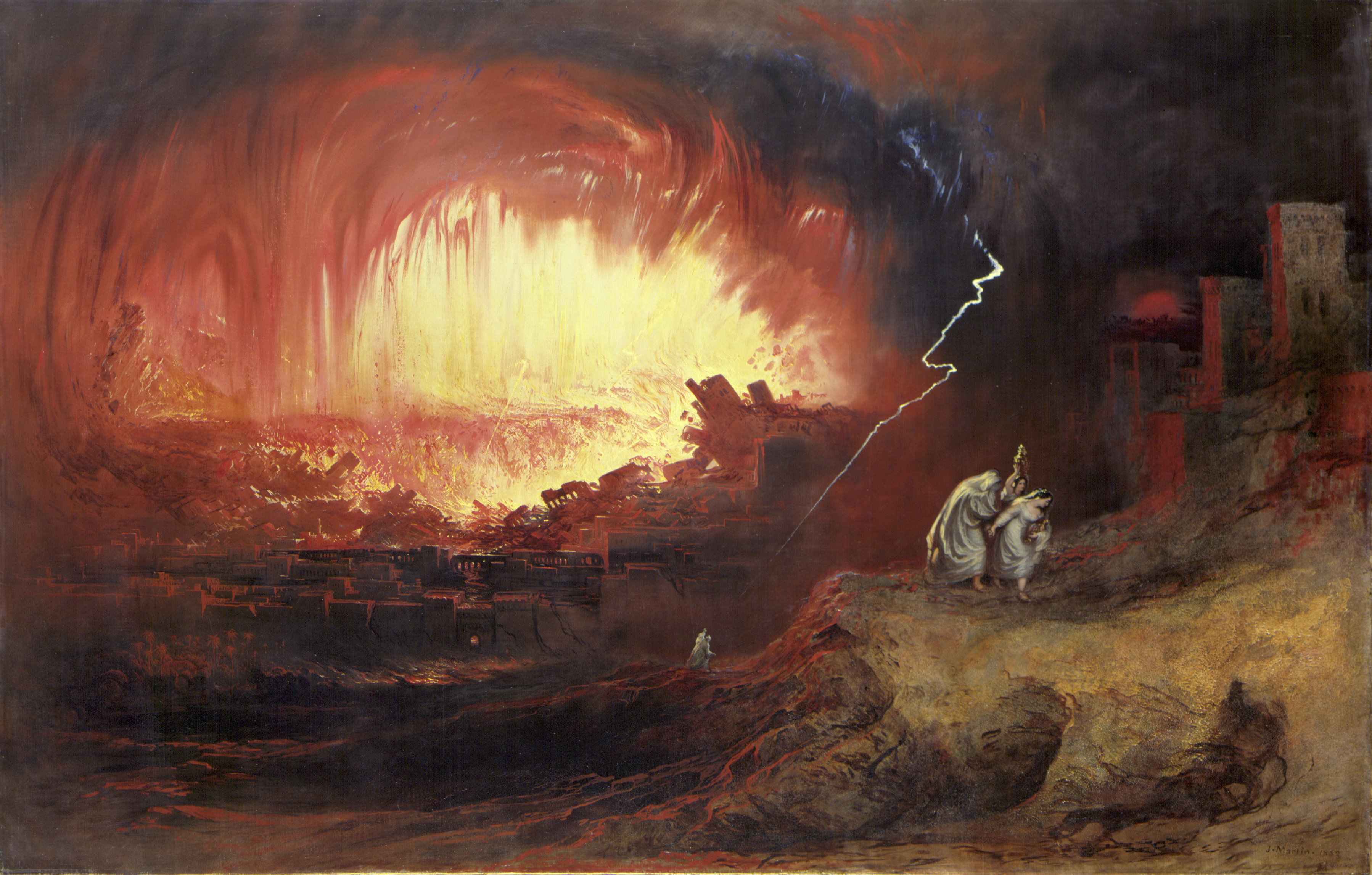
I have yet to hear of an atheist who did not complain about, have a major beef with, or cite the Old Testament as rock solid evidence attesting to the cruelty of YAHWEH, and why this prevents any so-called “rational” person from believing in the Christian God: hence, why they do not.  Now, this post does not concern itself with the information present in the Old Testament and how it fits into Christian Tradition (again though, a post for another time), but I cannot help but take notice of the irony of the situation.  These same atheists who complain that God is so very distant and inactive in our modern times then turn around and viciously condemn YAHWEH when He is near and active in righting wrongs committed by the people of Sodom and Gomorrah and in the heathen nations in the land of Canaan: nations which offered children in sacrifice, committed horrible offenses like infanticide, and ran rampant in sexual immoralities in their frequent participation in orgies and homosexuality, among others.


The bottom line is that these peoples were not very… “wholesome,” and that’s putting it mildly.

The point is that the atheist complains when God is seemingly distant (like today), but also complains when He is active and near to His people during Old Testament times.  Sounds like a recalcitrant child to me, and not an über-rational secular humanist or however it is that they identify.


The fundamental observation is this: the atheist is determined not to believe in God no matter what.  The universe is too big; therefore, God’s not real.  The universe is too small; therefore, God’s not real.  We’re gonna find so much life in the universe; therefore, God’s not real.  We’re probably alone in the vastness of space; therefore, God’s not real.  God allows rape; therefore, God’s not real.  God punishes deeply evil and immoral nations in the Old Testament; therefore, God’s not real.

In what scenario will atheists concede that God is real, I honestly do not know.  It seems to me that the atheists have crafted a kind of lose-lose situation for God: He’s damned if He does and damned if He doesn’t.  I think it is more likely that the atheist—who professes to keep an open mind about God—is really more in the business of avoiding God.

“The atheist can't find God for the same reason that a thief can't find a policeman.”

-Author Unknown

5. I Spy… Numerous Contradictions in the Christian Faith!


One of the most fundamental complaints of non-believers is the supposed contradictions between the Old Testament and the New Testament.  It is a commonly espoused view of the uninitiated that the Old Testament represents Yahweh’s cruelty, unshackled justice, and so forth, whereas the New Testament introduces to us Jesus, God’s mercy, love, turning the other cheek, thou shalt not judge, and so forth, until we have what seems to be two completely different religions and faith traditions.  It may be legitimately asked: is God bi-polar?  What is the nature of the madness that presents itself to us in the Bible?  On the face of things, it appears plausible; however, this assessment is wrong: the Old and New Testaments are simply two sides of the same coin, and they contradict each other inasmuch as a mother and father’s different parenting styles contradicts their love for their children.


I would like to target the issue of homosexuality in this post, as well as direct it toward your average Reddit-using atheist/agnostic—may God bless them all the days of their lives—whose posts concerning this issue often run along these lines: “Leviticus also says ‘no haircuts,’ but I guess we’re skipping that one!?”  These posts are directed toward Christians—Catholics in particular—who oppose gay marriage,” marriage equality, as it is so charmingly referred to now.  These cynics list a number of supposed offenses that Christians breach, Leviticus being their favorite whipping boy.  They claim that we arbitrarily pick and choose which rules and commands we would like to follow; therefore, the accusations go, we Christians maliciously choose to quote Leviticus 18:22—“You shall not lie with a male as with a woman; it is an abomination” (in my opinion, a pretty clear ban on homosexual relations as far as bans on homosexual relations are concerned)—whilst ignoring some 60+ other bans, ranging from getting a tattoo to even touching a sea animal without fins or scales.  (The full list is here if you care to see just how badly we are all breaking the rules.)

Now, as much as these hecklers would love to hear me sputter and say what your typical Christian would: “Well, the Old Testament doesn’t count anymore because of Jesus!”(whatever that actually means is beyond me)I will (sadly?) do no such thing.  The simple fact of the matter is that I need not backpedal in the face of these “Free Thinkers” onslaughts, for there exists no contradiction between the two testaments of the Bible: they are in perfect unity with one another and with God.  Two reasons: first, the proper context—ah, that wrench that gets thrown into just about every argument!  Curse it till the sun shineth no more!—must be had in order to accurately understand both testaments in conjunction with one another; and second, Catholicism does not encounter the same problem with reconciling the Old and New Testaments as the numerous non-Catholic Christian faiths of the world do.

Now, the Old Testament can be clearly placed during a certain time period in recorded history.  No need to dig too deeply into the details, but, suffice to say, it is set several thousand years ago in humanity’s history.  The Old Testament essentially chronicles God’s plan of salvation for the Israelites.  He promises a vast number of descendants to Abraham, leads the Israelites out of Egypt, guides them in the desert, sends numerous prophets to them to lead them back to Him when they stray, and so forth.  The Old Testament is a kind of record of the Jewish people’s exploits during a specific period of time.  God wishes to make the Israelites His own special people, a nation set apart from all the godless heathens in the land of Canaan.

This is the backdrop against which the various laws of the Old Testament can be properly understood.  Why weren’t the Israelites allowed to cut the hair on the sides of their heads or trim their beards?  Because God wished to set them apart from the nations in the land which He was to give to them!  They were to be special.  All the odd rules?  Well, they would have indeed been quite odd, and that was the whole point!  God wanted a people for His own: “For you are a people holy to the LORD your God; the LORD your God has chosen you to be a people for his own possession, out of all the peoples that are on the face of the earth” (Deut. 7:6).

Now the New Testament, at first glance, appears to cast off these seemingly small-minded and arbitrary rules.  Those who oppose Christianity love to quote Jesus’ words on not judging” and turning the other cheek,” yet ignore the painfully inconvenient fact that these admonitions by Christ do not in any way behoove Christians to simply lie down on the proverbial train tracks of sin and allow a train of a particular sin” (in this case, homosexual marriage) to destroy them.  Sorry world! The Church will forever be a “sign of contradiction” because Christ, the True Contradiction of the world (Luke 2:34), personally established it and promised that it would remain so until the end of time (Matt.16:18).

And like I said, the New Testament actually does no such thing.  What Christ accomplished, by the merits of His birth, life, death, Resurrection, and Ascension (The Paschal Mystery) was a de-exclusification of the Old Covenant between God and the Israelites.  He has invited all peoples to celebrate in the joy and promise of His victory over sin and death because His Cross has sufficiently and perfectly atoned for all the sins of humanity—past and future—in order to reconcile the entire world to Himself: hence, a New Covenant that includes all peoples.

Now a word about Yahweh’s harshness and apparent cruelty is in order. On the face of things, it appears cruel, those things that God commands the Israelites to do to other nations in the land (like slaughtering everything, in this case).


But it is entirely in line with His will that they be a special nation, one for Him alone, He Who is Holiness Itself.  He understood how alluring the sins of the heathens were: orgies, idolatry, soothsaying, etc.  He had to be strict with them, lest they stray from the path of what was good, true, righteous, and holy.  In terms of the rules that they had to follow internal to their nation (e.g. bans on homosexual activity): it is evident that, whatever God commanded them to do, or not to do, in pursuit of having a special people for His own possession obviously worked.  They kept the moral law, but even then not always perfectly.

Our own experiences in today’s day and age will hint at why God had to be so strict and uncompromising in His justice with the Israelites: do we keep the moral law?  It is very difficult to do, is it not?  Doesn’t having a strong, driving force to do good help us all to seek and do the good?  Think about it: how many times growing up were we admonished by our parents not to hang out with the wrong crowd”?  The idea being that hanging out with bad people makes us more likely to engage in bad behavior, while hanging around good people tends to promote the opposite.  That was the purpose of all the rules and their corresponding consequences in the Israelites case: deterrence from sin (and just punishment for said sin).

Now, Catholics are in a unique position in this discussion.  Other Christian groups are forced to accept the Bible alone as their teaching authority (a practice called sola scriptura), as they have forsaken the pope, the Vicar of Christ, the Rock of the One True Church.  It is then difficult for these sects to consistently justify why they are not abstaining from cross-breeding animals and stoning adulterers to this very day (putting aside for the moment the glaring flaws in the doctrine itself).  The Catholic Church, on the other hand, bases Her teaching on three distinct, though interrelated and complementary, branches: Sacred Scripture, Sacred Tradition, and the Magisterium.  The Magisterium (the teaching authority of the Roman Catholic Church) interprets—authoritatively—the meaning and proper adherence to all of Sacred Scripture, and Sacred Tradition—since the very beginning of the Church’s life—has consistently backed up this position.  Protestant denominations must fumble and stumble and blubber as to why they follow this verse and not that one and why another denomination (one of 40,000, mind you!) does it differently.  The Catholic Church is the only Christian church to never contradict itself and to never have fallen into error.  What She teaches now had been believed and espoused by the Apostles, the Early Church Fathers, Doctors of the Church, and every single pope since the first, St. Peter.


As such, it is right and just that the moral law within the Old Testament (thinking broadly, though certainly not exhaustively, of the Ten Commandments) is still followed but dietary restrictions and customs are not.  It is quite simple: the moral law set forth in the Old Testament is binding (and yes, this includes bans on homosexual relations, which is certainly a moral issue) because it is eternal and objectively true; hence, it is to be followed by all peoples, regardless of time or place.  The dietary restrictions and customs, on the other hand, were confined to a certain nation and time period: the Israelites.  They are better thought of as “culturally conditioned” (for all you anthropologists and anthropology majors out there), as they were specific to the Israelites and, as such, need not be followed by Christians today.

Kinda makes you wonder which other genius Reddit posts are actually not-so-right after all, huh?