

*For evidence of the title’s claim, see The Advocate’s Pope Francis “Person of the Year” December 2013 issue.

(They really show once again that they have—at best—a superficial familiarity with Christianity.)

LGBT people and allies are consistently showing that they neither know, nor care to understand, the particulars of essential Christian doctrines, like, say, love (in this case), and sports writer for The Advocate, Annie Hollenbeck, is no exception, unfortunately. I will probably never know the joy of mischaracterizing and misrepresenting the force and appeal of an opponent’s argument, but that is exactly what Ms. Hollenbeck does from as early as her second paragraph. But you see, there’s the rub: many of these people—the Leftists, LGBT people and allies, atheists, secularists, humanists, non-theists—don’t think that we actually have any legitimate points on the issue of same-sex marriage (among other things, let’s not forget).
 |
| Hey, there I am! (Not really: It's a joke. Calm down.) |
 |
| Ooh! Ooooh! Those are my friends! Those were the days.... (Another joke. Calm down. Yeesh.) |
If you don’t believe me, just read The Daily Signal’s recap and analysis of the Twitter exchange between Ryan T. Anderson (a research fellow at the Heritage Foundation and proponent of the conjugal, man-woman view of marriage) and Josh Barro (a writer for The New York Times and proponent of same-sex marriage). Teaser: he wants us “stamped out.”
Anyway, to the
article. You can read it here. I will take the title and sub-header to be
Ms. Hollenbeck’s thesis of sorts. It
reads: “Hating the Sin Is Hating the
Sinner: An executive for the Baltimore Ravens invokes the tired ‘hate the sin,
love the sinner’ philosophy, but is that truly Christlike?”
In a word, yes. Yes, it
is in fact extremely Christlike. In fact, it may just be the most Christlike
thing about Christ (next to His being the Son of God, Savior of the world, and
the Bread of Life, of course). Allow me
to explain. You see, Christ came to
separate sins from sinners. That was
essentially the whole point of His atoning sacrifice on the Cross.
 |
| Hmm, are the Ravens homophobic and deserving of our ire? |
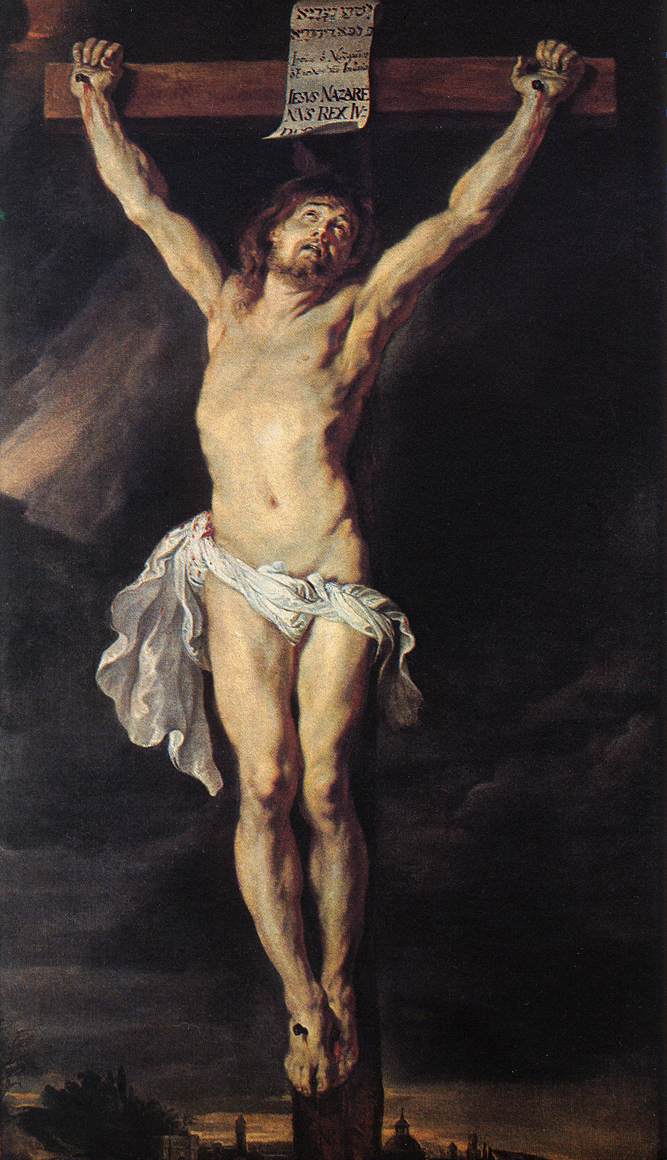
In the Old Testament, to a certain extent, we saw people lumped together with their sins. That was why there were prescriptions for stoning, banishments, ritual cleansing ceremonies, etc. for the Israelites, who, last I checked, were indeed sinners just like the rest of humanity, past and future. The sin was bound up with the sinner, the actor, and there was just no way to separate the two—not yet anyway.
When Christ came, His
sacrifice acted as a kind of “reverse epoxy” (as Peter Kreeft puts it): We could now repent, and be truly forgiven,
as Christ covered our infinite debt to the Father. He now pleads eternally before the Father,
advocating on our behalf and displaying His wounds as a never-ending display of
love and fidelity to us, thereby placating the Father’s just judgment.


So yes, Ms.
Hollenbeck. Loving the sinner but hating
the sin is Christlike. Sorry to rain on your parade. Now, to the rest of the op-ed.
She is definitely
correct when she writes, “you simply will find no instance where Jesus Christ
looks a gay person in the eye and tells him that he is going to hell.” Hell, I agree 110% with that statement (play on words most definitely intended). But I am
confused when she writes (not even one sentence earlier): “As a Christian, I am
floored when I hear people like Swayne claiming that while they are taught to
love and accept everyone, Jesus Christ teaches against homosexuality.” Why is this hard to believe, exactly?

Christ elevated marriage to the level of sacrament: an indissoluble union recognized by God as binding on both parties involved for all time. And Christ confirms the reality of the union as orthodox Christians now understand it when He says, “Have you not read that from the beginning the Creator ‘made them male and female’ … ‘For this reason a man shall leave his father and mother and be joined to his wife, and the two shall become one flesh’?”

Christ elevated marriage to the level of sacrament: an indissoluble union recognized by God as binding on both parties involved for all time. And Christ confirms the reality of the union as orthodox Christians now understand it when He says, “Have you not read that from the beginning the Creator ‘made them male and female’ … ‘For this reason a man shall leave his father and mother and be joined to his wife, and the two shall become one flesh’?”
It would seem that Ms. Hollenbeck
is attempting to make a case from Jesus’ silence on the issue of same-sex
marriage. “Since Jesus never preached
against homosexual unions,” her reasoning goes, “he must be in support of them,
or at the very least, neutral toward them.”
Well, Jesus never spoke out against genocide or racism, but I am
confident that Ms. Hollenbeck would say that Jesus would not support those
particulars ills. And one has to wonder
if Ms. Hollenbeck has ever considered the reality that Jesus likely never spoke
out against same-sex marriage because it was just so radical and
unrealistic—both politically and morally—that it just never crossed His mind to
explicitly condemn it—it was just understood implicitly as being out of
the question.
A parallel example
might look something like this: Jesus’ explicit condemnation of same-sex
marriage would be like a cultural elite or politician today condemning traditional
slavery in America. No one is
seriously advocating for it; if they are, they are not taken seriously; it is most
definitely not being practiced; and it has no real chance of making a comeback
(as far as I can tell, though I could be wrong). Essentially, it is so far removed from
reality that if, say, a 2016 presidential candidate called for us as a nation
to never again own slaves (in the sense of pre-Civil War America), we would
rightly ask if s/he needed his/her head checked. I can see it now. Aide: “Maybe some water and shade will do you
good Mr./Ms. Candidate? It is awfully
warm out here,” as he dials for a psychiatrist.
The rest of the op-ed
consists of thinly veiled attacks upon Christianity and intimations that faith
and religion should just be private endeavors and/or something that you leave
at the door of the church, synagogue, or mosque when you leave there at 10 am—“Swayne
is more than entitled to his opinion, and he has the right to practice his
faith as he sees fit. However,
considering the times, and particularly the state of affairs this season with
Michael Sam in the NFL, this message isn’t as innocuous as Swayne and others
may try to claim it is.” Because,
really, enlightened society is clearly not in your favor; how can you bear to
be so in the minority and actually
live out your faith considering “the times” (whatever the heck that means)? That’s so passé! So 12th century! Basically, you are entitled to your opinion
and can live out your religious faith and convictions… except where it matters:
in the public square. Because, really,
you’re making a scene and upsetting the children.
Next up, the conflation
of homosexuality and homosexual acts: “Being gay isn’t something you do. It’s something you are.” Here, she seems to imply that being gay is
one and the same as acting on those
impulses, as if gays and lesbians must
act upon them—that they have absolutely
no say in the matter. Not only does
Ms. Hollenbeck imply that these people have no self-control, but she also makes
a critical error: Christians do not oppose gays, never have, in fact. What we are
opposed to are homosexual acts, based upon natural law theory, a 2,500 year-old tradition of thought (ctrl/Command+F “2,500” for the tweet in question) and philosophy stretching all the way back to Sts.
Augustine and Aquinas, running through such titans as Plato, Aristotle, Cicero,
Locke, and Kant, and, recently, Dr. Martin Luther King Jr. Disagree with the theory or the thinkers’
employment of it if you so choose, but don’t insinuate that we don’t love gay
people as a way to take the moral high ground, Ms. Hollenbeck. Thank you, from Christians everywhere.
Ms. Hollenbeck ends her
op-ed with a reference to St. Paul’s description of love and a sobering
observation: “‘Love is patient, love is kind. It does not envy, it does not
boast, it is not proud. It does not dishonor others, it is not self-seeking, it
is not easily angered, it keeps no record of wrongs.’ You may love the homosexuals, Mr. Swayne, but
love with judgment isn’t love at all.”
Here’s the problem: I
would assume that she is appealing specifically to the “does not dishonor
others” bit of that passage in order to vindicate active homosexuals in their pursuit
of marital and moral “equality”/liberation and simultaneously disparage Christians who make life so difficult for these people by telling them what they think about their future goals.
That’s all well and good, except that Christians do no such thing when
they express the truth about human sexuality and its purpose, ordered toward married
life. Telling people the truth is part
of loving them, Ms. Hollenbeck; lying to them to keep them comfortable while
they do what is contrary to the moral order is not.
 |
| The man himself, ready to boss it up. |
As for her final
pronouncement, I would argue that love minus judgment is not only anti-love but
that for love to be true, it necessitates that judgment be involved. Judgment is
simply discrimination (selection and preference, not hate) among ideas,
actions, and persons. If I love you, I
will tell you when I believe that you are acting contrary to good sense and
upright moral behavior.
Let me know what you guys
think in the Comments section! And share this
post with your friends as well!
Follow @DeionKathawa





.jpg)


.JPG)

