• WELCOME!

    Read, comment, spread the word, come back for more!
Showing posts with label reason. Show all posts

10. “That Jew Died for You” Part 2


This is a follow-up post.  Read Part 1 here.

To start, I just want to state for the record that it’s nice to know that there are actually people reading what I write out there on the Internet.  It’s heartening to know that I am not simply mumbling to myself in a proverbial empty room!

Despite the fact that I received vehement—and apparently widespread—disagreement with the positions that I took in the last post (which, again, you can read here, in case you haven’t already), I am thoroughly convinced that it was for the wrong reasons.  I am of the mind that I received such intense backlash not for any legitimate disagreement with my position, which was indeed contrary to Jaclyn’s, but simply because I held a position contrary to Jaclyn’s.  I am also convinced that I was targeted so viciously because I defended, in some form or fashion, orthodox Christianity: Catholicism.

None of the well over four dozen negative comments that I received actually addressed the purpose of my argument, which was to simply cast doubt upon Jaclyn’s argument.  In short, essentially all dissenting comments raised straw men and proceeded to tear them down.  This, as you all know, is an illegitimate form of argumentative strategy.

For starters, let’s begin with the over-arching, central idea of the Part 1 post.  This commenter encapsulates the general misunderstanding and ill will toward my argument:


I was in no way putting forth my own argument.  Putting forth one’s own argument involves developing premises that most can mostly agree with, stringing them together, and demonstrating that a conclusion follows from them.  If you reread the last post, you will see that the content therein created a negative argument.  I was simply trying to show that Jaclyn’s argument had some major flaws.  I did not put forward my own positive argument that would also stand on its own merits.

With that out of the way, let’s continue with the main sticking points.

Use of the Bible


I get that you all don’t respect the Bible as serious scholarship, and that you also think that to use the Bible is to be automatically guilty of circular logic.  This is not always the case.  Regardless, I was never arguing for the reliability of the Bible in Part 1; that was not the point of the post.

Similarly, if you all detest the use of the Bible so much, then why, pray tell, are so many of the comments riddled with Bible references combatting my supposed “use of the Bible” to build my counterargument?  Don’t use the Bible in any way to combat my alleged “use” of the Bible if you think that the book cannot ever be used in any credible way in any situation.  That’s just inconsistent and poor argument strategy.

Case-in-point:


You have to wonder why this person calls the Bible an “outdated holy book” to shame my using it, but then turns around and quotes from it (“My God, [My God,] why hath thou forsaken me?”) to attack what he perceives to be my argument.

Also, that quotation comes from Psalm 22, which ends triumphantly, not in despair as you claim it does.

Another commenter had this to say:


Again, this person claims that the Bible has no legitimacy, yet he uses an idea from Jesus’ encounter with Pilate, present in the Bible itself, to somehow “take-down” my argument.  He is only attacking a straw man; however, since I never claimed to try and demonstrate Jesus’ divinity.

Reliability of the Bible

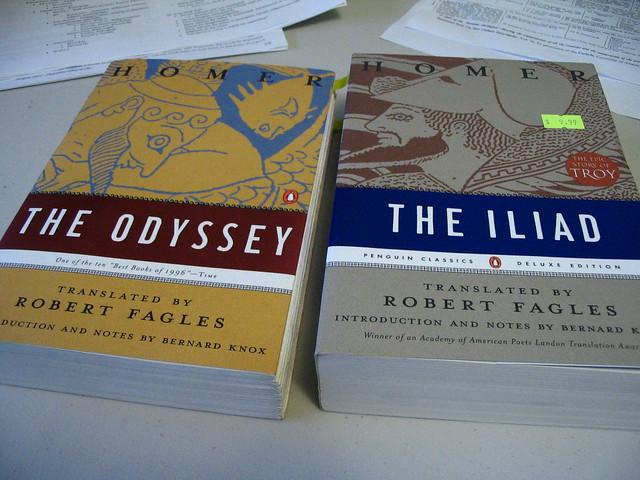
If we were to subject other historical documents to the same level of scrutiny that skeptics demand we subject the New Testament to, the fact of the matter is that we would know almost nothing about history.  We have more evidence for Jesus than we do for Alexander the Great or for Caesar’s crossing the Rubicon.  We have more copies of the New Testament than we do Homer’s Iliad, yet no one doubts that Homer wrote the Iliad or that we know what it says.

My theory is that people so resent the authenticity of the Bible and Jesus’ existence because this book, the Bible, and that person, Jesus, demand things of us that we are uncomfortable complying with.  From prohibitions on homosexuality to demands to love one’s enemies and to be perfect, Jesus and the Bible, one of His mouthpieces, demand much from us; Caesar, Alexander the Great, and the Iliad do no such thing.  We are comfortable with the latter because they demand nothing from us, no change at all; but we are uneasy with the former because they require much effort and discomfort from us.

Historicity of Jesus


I find it appalling and utterly anti-intellectual that Jaclyn could make the insinuation that Jesus might not have existed and that most of the commenters felt even surer than she that He did not exist.  It is a well-established fact that Jesus THE MAN existed.  This has nothing to do with His divine identity.  I was merely concerned with THE MAN in the last post when I said that He existed.

Now, on a somewhat lighter note, I get that clicking on in-text links is a burden and disrupts the flow of the post for the reader.  I’m totally on your guys’ side on this one.  I am guilty of it myself.  I often do not click in-text links—no doubt provided for my own enrichment on the current topic at hand—to my detriment, I’m sure.  However, if you are going to comment on a blogger’s post, and the specific place within the post that you are referencing has these links, perhaps they should be clicked on?

From the last post, I offered these two sources of evidence for the historicity of Jesus of Nazareth here and here.  If you need more, here are two more: here and here.

In short, just because you did not click on the evidential links that I provided in the Part 1 post for the existence of the historical Jesus does not mean that there is no such evidence. I am likewise guilty of not clicking on internal blog post links, but don’t not click on them and then act like I didn’t provide any evidence.

Identity of Jesus


Again, I never put forward my own argument concerning Jesus’ identity as the Son of God.  That was not the purpose of the post.  I was responding to Jaclyn, weaving a negative argument, not a positive one (where I defend premises that ultimately lead to a conclusion that we can either accept or reject).  I never wrote, and then subsequently defended the notion, that Jesus was the Son of God!  I made the assertion that even if Jesus was the Son of God—which Jaclyn was willing to concede in her video—what she ends up saying does not make Him look any worse for wear.  She tried to demean His ordeal—again, she is willing to concede this in her video (watch it again if you don’t remember)—and I simply demonstrated why she failed in the attempt.

Un-scientific Neanderthal?!

I also am very unsure why I was blasted for apparently knowing nothing about science.  That has nothing to do with the ideas I presented in the Part 1 post!  Stick to the topic at hand, and keep the ad hominem attacks to a zero, please.

In conclusion

There are four final commenters that I would like to address directly in this section of the post.  The first, Perseus, because he had a well-thought objection; the second, Karl Denton, because I am absolutely sure that he had mistaken me for someone else; the third, Chris Morris, because his point is so egregiously wrong that I felt obligated to correct it; and the fourth, a group of posters, for their illogical claim that the Holocaust is off-limits.

Perseus


I am actually a philosophy major so I know quite a bit about Descartes, Perseus.  His famous quote, “Cogito ergo sum” (“I think; therefore, I am”) is famous because it “proved” (insofar as something like this can be proved) that we do actually exist. Descartes demonstrated in a short sentence the profundity of the reality of our existence.  He demonstrated that to doubt one’s existence is not very logical.

Essentially, Descartes was of the opinion that one could not consistently doubt his own existence because doubting implies thinking, and thinking implies a thinker.  Here is where the issue many scholars have with his position.  What you leave out (either out of ignorance or on purpose, I do not know) is that his premise/famous line relied on a belief in God, whom he believed could be perceived clearly and distinctly—a priori—or without the benefit of experience or by a purely mental and logical effort.  He believed that things that could be perceived clearly and distinctly were true because God was not a deceiver and would not allow such clear and distinct perceptions to be inaccurate.  So your “champion” of premises actually believed something you do not (he was Jesuit educated), and therefore, advances your point nowhere.

Finally, I am not sure where I added the “God exists…” part to Descartes’ premise in my post.  I gave no premises, and you will see this clearly from what you should have read previously in this current post.

Karl Denton


You most definitely have me confused with someone else, and this is my attempt to set the record straight.  I have never been on YouTube, and I have most definitely never been kicked off the site!

Chris Morris


The growing number of atheists and non-theistic Christians, while surely interesting from a sociological and societal/cultural perspective, is immaterial to the truth of the matter at hand.  Basically, your point is that because a bunch of people believe something isn’t true, it just… isn’t.  I’m confused; since when was Truth up for a vote?

I’m sure that you would reject the idea that, because there are lots and lots of Creationists out there, evolution is false?  You would likely say that these people are wrong.  What about before it was scientifically verified that the Earth is not flat?  A bunch of people before that moment believed that it was.  Did that strongly held belief make the Earth flat?  In the same way, these peoples’ subjective feelings about the evidence and reality of Jesus’ existence has absolutely no bearing on whether or not Jesus existed.  A belief in something does not equate to that something’s truth, as I’ve said previously.

Finally, Jesus did in fact trash others’ beliefs.  (See all His interactions with the hypocritical and hard-of-heart Jewish leaders for more on this.)  I am also surprised that you would claim that He never forced His own beliefs onto others.  Wouldn’t you say that the notion that all who do not believe in Him will go to Hell is pretty forceful and pushy?  What about, “I am the Way, the Truth, and the Life; no one comes to Father except through me.”  That’s pretty forceful and exclusive, wouldn’t’cha say?

Others


You will see how silly this shared sentiment is with this example: so the Holocaust can never be used in any way to promote any kind of recruiting for anything whatsoever, huh?  Okay.  Well, what about U.S. military recruiting to stop the Holocaust?  Would the U.S. have been permitted to run ads displaying the cruelty of the Nazi Germany in order to marshal support to put a stop to the barbarism and blatant evil?  Your demand to keep the Holocaust separate from all conflicts or causes is disingenuous, illogical, and, most importantly, dangerous.

Well, I hope this cleared things up!  Stay tuned for the next post!


9. Y’all Just Don’t WANT God to Be Real


Have you ever been in a situation where you just did not want something to be true, and no matter how much evidence was brought before you, you would do whatever it took to ignore what was so plainly in front of you?  Maybe you had a vested interest in keeping whatever it was “false,” maybe you just could not bring yourself to accept the evidence, whatever; it really doesn’t matter why it happened, just that it happened.  I am not ashamed to say that I am part of this club; it’s an element of our behavior that makes us human: we have a hard time accepting new information and assimilating it into our existent worldview.  Now, I’m not saying that this stubbornness of not believing something based upon evidence presented plainly to one’s face completely and accurately describes our atheist friends, but its contemplation does bring up some interesting parallel scenarios.

Listening to the impassioned rantings nowadays of Internet and professional atheists alike, one gets the sense that they do not just disbelieve in God and disbelieve in the evidence and arguments provided for His existence, but that they really just do not want Him to be real!  It seems that they are willing to do and think anything to ensure that God “doesn’t exist” (as if their beliefs about His existence could make Him any more or less real).

The universe is too big!  Er, wait, or is it too small? I don’t know: it doesn’t matter!

Many atheists today will claim that the universe is simply too vast for God to care about us human beings and our well-being, beliefs, and actions.  “Why would this supreme Being care about a tiny speck of dust in the vastness of the universe?” is a very common inquiry.  As the Amazing Atheist once said in a video concerning the death of Fred Phelps, the founder of the Westboro Baptist Church: “Because God really cares about a bunch of primates on a backwater speck of a planet in the cosmos and where they stick their genitalia?!”

This strikes me as a false dichotomy though.  Theological complaints aside—specifically concerning the nature of God as Love Itself and the fact that from reality this stems all of the Catholic Church’s teachings on sex, end of life care, poverty, and a whole host of other issues (all worthy topics for future posts)—it seems as though the atheist’s position is merely one of stubbornness and not of reason; it appears internally inconsistent.  To prove my point, let’s take a parallel scenario and see where we end up.


Suppose everything in this new, alternate reality is exactly the same as it is now, except that our universe is only the size of our Milky Way galaxy, or even only as large as our solar system.  (This obviously calls for us to suspend our disbelief regarding the expansion of the universe and how science tells us that it actually needs to be this big for the force of gravity not to have collapsed the whole thing shortly after the Big Bang.)

Can anyone guess what the line from your typical aware-of-the-cosmology-debate atheist would be?  I have an idea: “Gee fellas.  You know what?  When I look at the universe, you know what I think?  I think that if the Christian God were real—this all-powerful, all-knowing, Supreme Being those whack-job Christians are constantly blathering on about—the universe would be bigger.  If He was real, He would have created a bigger, more majestic universe!”


Notice the problem: when the universe is too big, God is not real, because, well, why would this Divine Being care about lil old us, huh?  But, when the universe is too small?  Ah!  Isn’t this God I keep hearing about all-powerful?  Whaddup with this janky small-ish universe?  Shouldn’t He be proving to me that He is real with majesty and grandeur and whatnot?

It really seems to me that atheists are not thinking clearly when they say these things.  It seems to me that their responses are more akin to an emotional reaction whenever God is brought up and not grounded in any kind of sense.

You just wait and see: when we find aliens, you’ll realize that we’re not special at all.


Astronomers and physicists are obsessed with finding other planets with intelligent life.  It seems as though every other article I come across on my daily Internet strolling is about extraterrestrials and how we’re literally *this close* to discovering intelligent life *holds pointer finger and thumb really, really close together to demonstrate how close we really are*.  (No, for real though: it’ll be any day now, just you wait and see.)  This frenzy was even more fervent in the decades of old.  The Drake equation is a famous example. 


Developed by Dr. Frank Drake, an American astronomer and astrophysicist, it was designed to estimate the number of active, communicative extraterrestrial civilizations in the Milky Way galaxy.  These scientists’ insinuations were that if we found extraterrestrial life, then the meaning of human life and intelligence would be of less value and importance: after all, we would simply be one among many, and this was not even accounting for the many other billions of galaxies in the universe at large!

That equation was developed in 1961, and after all this time, guess how much intelligent life we’ve found in the Milky Way, or anywhere for that matter?  Nothing.  Zip.  Zero.  Nada.


This is not to say that no such life exists at all, only to contrast it with the mentality of today’s scientists and intellectuals.  (I personally would not be shocked one way or another: the Catholic Church’s teachings will not be contradicted one iota if there is intelligent life out there in the universe or if we are all alone; it really does not matter.)

Now, the thinking is much less optimistic.  Many scientists nowadays are conceding that we may very well be alone in the cosmos, though the recent discovery of Kepler-186f—a rocky exoplanet about 500 million light years away, roughly equivalent in size to Earth, and in the “Goldilock’s Zone (not too close and not too far from its sun)—is sparking new optimism in the search.


But again, you will notice the internal inconsistencies with atheists’ views on the matter of extraterrestrial life.  When we are confident in the 1960s and 1970s that we will indeed find intelligent life in the universe other than human beings, well, isn’t it terribly obvious?  We’re not special!  God did not create all this for us, and we do not have a special place in the grand scheme of things; we share the universe with a bunch of other intelligent beings.  But now, when the prospects of finding such extraterrestrial life are much more dismal, well, isn’t it obvious?  God obviously cannot exist!  He is not even powerful enough to create more than one species of intelligent life: some “Intelligent Designer” this shmuck is!


Again, this smacks of hypocrisy and doublethink, and I really cannot wrap my mind around how atheists get through their days holding these so obviously contradictory views.

You know what?  God doesn’t help people who are being raped or anything like that, so yeah: if He was all-powerful He would.

This is always a fun one.  Atheists look at the state of the world around them and they see suffering, evil, and death, and it is ugly—and I agree with them.  From this dismalness, however, atheists see a lack of God—they see God’s nonexistence, whereas I see God and His Providence bringing good even out of the most horrendous of evils.  This is a fundamental disagreement between the two camps, and not an issue that I wish to concern myself with in this particular post.  (Is it a topic for another post?  Most definitely.)  The point of this observation of how atheists respond to the evil so very present in the world around them is to contrast it with how they view the Old Testament.  In modern times, atheists see God’s lack of intervention in the sufferings endured and evils committed by men as proof of His nonexistence, yet this contrasts interestingly with how they view the God of the Old Testament, YAHWEH.

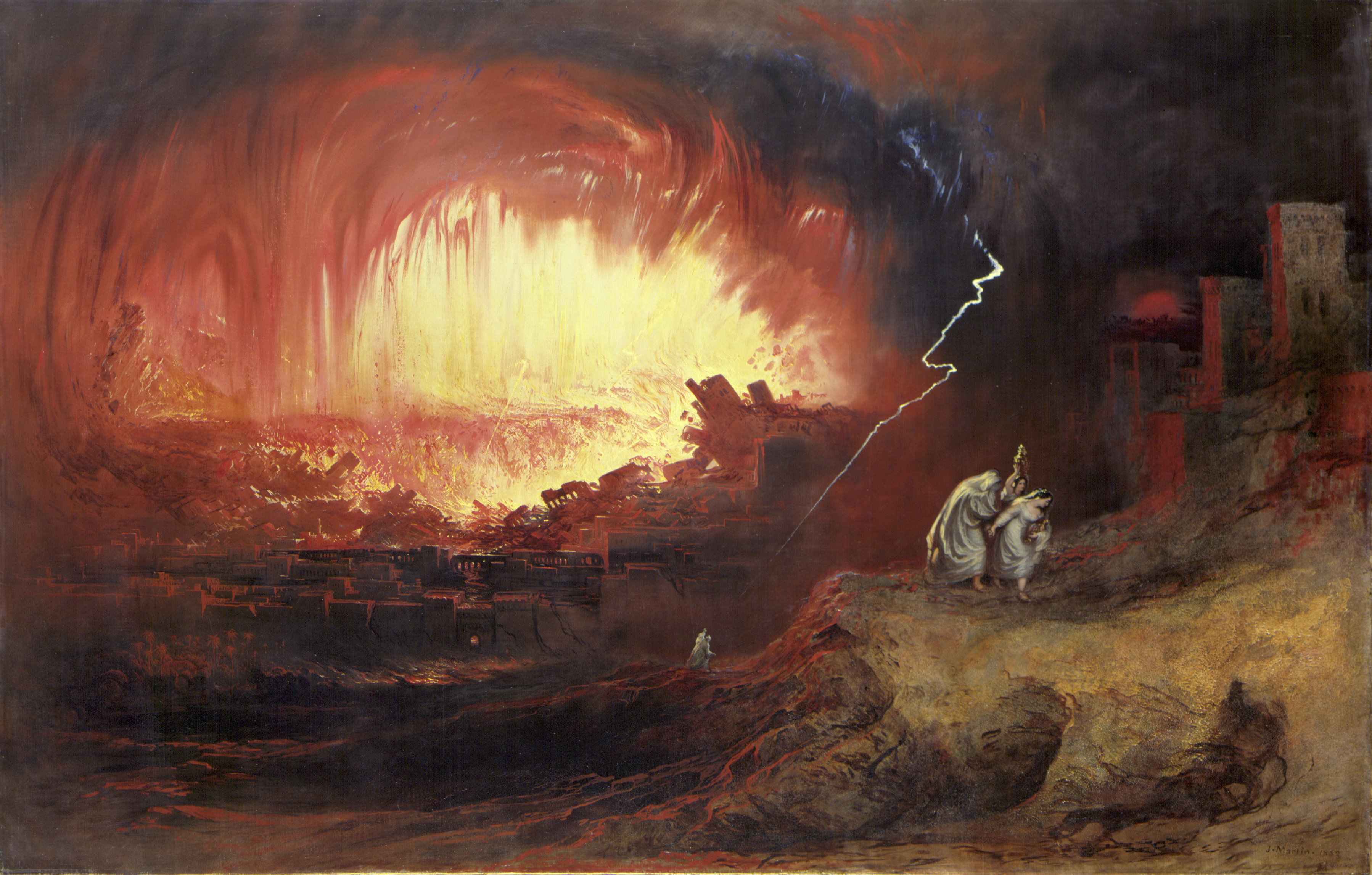
I have yet to hear of an atheist who did not complain about, have a major beef with, or cite the Old Testament as rock solid evidence attesting to the cruelty of YAHWEH, and why this prevents any so-called “rational” person from believing in the Christian God: hence, why they do not.  Now, this post does not concern itself with the information present in the Old Testament and how it fits into Christian Tradition (again though, a post for another time), but I cannot help but take notice of the irony of the situation.  These same atheists who complain that God is so very distant and inactive in our modern times then turn around and viciously condemn YAHWEH when He is near and active in righting wrongs committed by the people of Sodom and Gomorrah and in the heathen nations in the land of Canaan: nations which offered children in sacrifice, committed horrible offenses like infanticide, and ran rampant in sexual immoralities in their frequent participation in orgies and homosexuality, among others.


The bottom line is that these peoples were not very… “wholesome,” and that’s putting it mildly.

The point is that the atheist complains when God is seemingly distant (like today), but also complains when He is active and near to His people during Old Testament times.  Sounds like a recalcitrant child to me, and not an über-rational secular humanist or however it is that they identify.


The fundamental observation is this: the atheist is determined not to believe in God no matter what.  The universe is too big; therefore, God’s not real.  The universe is too small; therefore, God’s not real.  We’re gonna find so much life in the universe; therefore, God’s not real.  We’re probably alone in the vastness of space; therefore, God’s not real.  God allows rape; therefore, God’s not real.  God punishes deeply evil and immoral nations in the Old Testament; therefore, God’s not real.

In what scenario will atheists concede that God is real, I honestly do not know.  It seems to me that the atheists have crafted a kind of lose-lose situation for God: He’s damned if He does and damned if He doesn’t.  I think it is more likely that the atheist—who professes to keep an open mind about God—is really more in the business of avoiding God.

“The atheist can't find God for the same reason that a thief can't find a policeman.”

-Author Unknown

8. That Jew Died for You


Take a moment to watch the video below by Jaclyn Glenn.  (She doesn’t omit anything important from the original.)  I’ll wait.


Seriously, watch the video so that what you’re about to read makes sense.

Finished?  Good!

For starters, I am less disgusted with how she attempts to slander Christianity (extremely ineptly) and more disgusted with how poor her logic is in the attempt.  For a self-professed “logical” person (she even wears snazzy LOGIC tees for gosh sake’s) to use so many poor comparisons, poor logical connections between points of information, and just downright false information is astounding to me.  She should be ashamed of herself and strive to live up to her calling to be “logical” more faithfully next time around.

Now, for starters, it seems to me that her opening the video using the term “Christian propaganda” is just a ploy to indicate her disagreement with the message in the video.  I wonder if I would be similarly permitted to call her channel “atheist propaganda” because I disagree with the things that she says?  She simply tosses in the word “propaganda” (something with a blatantly negative connotation) and lets that word’s ugly subtext do her arguing for her, but this is disingenuous, and she knows it.

She should actually address the video instead of leading off her own video response by poisoning the entire discussion with a nasty (and in this case, untrue) word like “propaganda” when it so obviously doesn’t apply.

But on to her discussion.  She begins with this nonsense:

“I’m not saying that even if the Jesus character were real that He would have deserved a crucifixion, but what He did was an uprising against the government; anyone would have been killed for that!  It had nothing [she’s quite emphatic here] to do with who He was or who His followers thought He was.”

She then goes on to say:

“Oh, and not to mention that Holocaust victims are actually real people and so are Holocaust survivors’ descendants.”

Seems pretty real to me.  How about for you guys?

It seems to me that she is making the ludicrous assertion that Jesus is somehow less real than Holocaust victims.  Sorry to disappoint you, Jaclyn, but no one sane actually believes that Jesus never existed.  It is a widely accepted fact that the man was a historical figure who actually did roam the land of Galilee 2,000 years ago, and only the most foolish of lunatics believe otherwise.  In fact, Bart Ehrman, a former Fundamentalist Christian turned agnostic, wrote a book detailing how Jesus (a man) “became” God, but actually demonstrates that the man himself existed in order to build his case.

And yes, His execution totally did have something to do with who He claimed to be, who He was, and who His followers thought that He was.  The Sanhedrin (the council of Jewish leaders) had Him brought in at night to question Him, and when asked if He was the Christ, the Messiah, the Son of the Blessed One [God], Jesus replied “I AM.”  For this crime of blasphemy, the Jewish leaders had Him brought before Pilate to be killed.


Jaclyn’s main argument is that anyone would have been sentenced to death for causing unrest in the Empire, and she is probably right.  But here’s the problem with her “logic”: while it is most definitely true that Jesus was the source of much unrest in the land at this time, the primary reason that He was sent to Pilate to be crucified was because of who He claimed to be.  The unrest was a natural outgrowth of that assertion by Jesus and belief by His followers.  This is what caused the unrest, but that unrest would never have happened if He had not claimed to be the Son of God.  So, actually, His crucifixion did in fact have just about everything to do with who He claimed to be, who He was, and who His followers thought that He was.  Nice try Jaclyn; close, but no cigar.

Yet another gem from the powerful mind of Ms. Glenn:

“And just because His followers thought that He was saving them from sin, it doesn’t mean that He actually [again, super emphatic for whatever reason] saved them from anything.  A belief doesn’t make something a reality.”

And yet she does exactly this when she talks about Hitler later on in her video!  Hitler believed that he was acting in accord with Almighty God in exterminating the Jews, and he believed that this was in accord with Christian teaching and tradition, but the fact of the matter is that it was not—far from it, in fact.  She is right: belief in something does not necessarily equate to that something’s truth. She, however, ignores this obvious fact (one that she had just stated) and essentially makes this nonsensical assertion: when Jesus’ followers “believed” that He saved them from sin, they are crazy and worthy to be maligned and ridiculed as such, but when Hitler “believes” just as intensely that he is acting in a Christian way in starting WWII and the Holocaust, well, shit, he must be doing just that!  She contradicts herself big time here.

She then goes on a whole spiel about the death and Resurrection of Jesus (as if she actually knows a thing about Christianity other than what the Amazing Atheist’s Douchebag Bible has told her).  She says:

“Jesus—God Incarnate—knew what was going to happen.  He knew that He was going to *“die”* and then rise from the dead again three days later.  So… I’m sorry: He didn’t actually die; that’s not really that big of a sacrifice, knowing that you’re just gonna be in a coma for a few days and then wake up.  It’s not really the same thing as being dead.”

Well, you’re right on the first bit: congrats.  Jesus was, and is, fully God and fully man.  And yes, He did have divine foreknowledge concerning His eventual death and Resurrection.  How you start there and then jump to the next bit of your argument really is baffling to me, however.

So the fact that the Son of God, the Word, God Incarnate, “knew” that He would suffer, die, and rise again three days later somehow diminishes both 1.  His sufferings and 2.  His death?  I’m not buying it.

As for point number one: just because He knew that He would suffer and die, but then later rise, in no way diminishes the terrible pain and anguish that He underwent.  Remember: this is God we are talking about.  He had no need to come down and suffer and die for us: He is perfectly sufficient without us.  But the fact that He did so while we were set against God in our sins—enemies of God—is a testament to the true love and commitment that Jesus had for us.

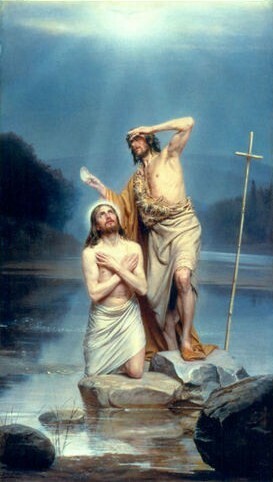
"And the Word became flesh and made his dwelling among us."
In addition, it seems that knowing in advance the agony and pain that awaited Him would be all the more reason to flee such a dismal future, right?  Doesn’t the fact that He persevered in the face of torture make His act even more praiseworthy than if He didn’t have foreknowledge of what was awaiting Him?

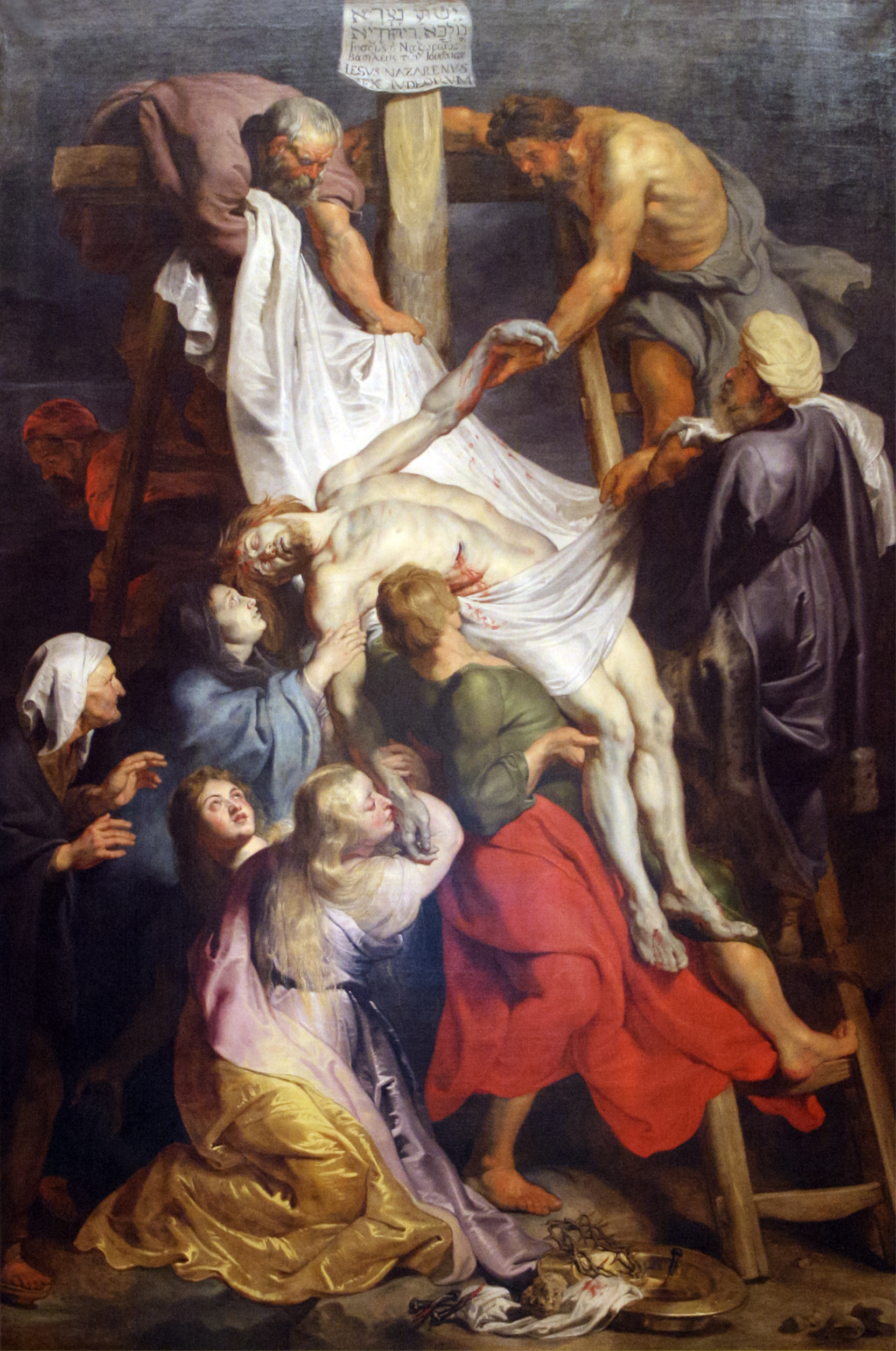
Jesus, just casually moving freely toward impending death.  But no biggie, right?

Finally, it seems that Jaclyn is forgetting the very important detail that Jesus was, and is, fully God and fully man. What man relishes the thought of his future prosecution, persecution, and eventual execution? None. What man wants to die a gruesome death? None. As a man, He feared death and pain just like any other man, yet He persevered. She is unfair in her criticism of the sufferings Jesus would have to undergo with attempted appeals to His foreknowledge (which in no way diminishes the act itself, and in fact, probably increases the laudability of it), and with her disregard of Jesus’ true humanity.


As for point two: I am honestly shocked that she could even say that He did not actually die!  So because He rose three days later, He was never actually dead before that...?  From what was He rising?  A nap?  He was dead, Jaclyn!  The Romans made sure that everyone they were charged to execute actually died; they were known for their record-keeping, organization, and dedication to seeing a job through.  People put on crosses always died, Jaclyn. The Roman soldiers would never have let live a man that the leaders of the Jews wanted dead so badly.  This is just plain silliness.


She also makes the claim that she does not want to get into an “elementary school level debate” about whether or not Hitler was an atheist or a Christian because she “gets annoyed” when people say that she “has so much in common with Hitler” when they find out that she’s a vegetarian because “apparently Hitler was also a vegetarian.”

It is funny how she absolves herself from any association with Hitler with both of them being vegetarians—“there is no possible way that this links me and Hitler together in any way” she thinks to herself—yet she will go on to slander an entire group of believing Christians for the actions of a single madman just because they allegedly share the same belief.  I smell hypocrisy: anyone else?

Having authentic black and white pictures of WWII scenes (especially with Hitler and the pope) while she voices-over does not give her “point” any more credibility, and I really do wonder why she thinks that it does any such thing.  Hitler’s being “baptized a Roman Catholic, being an altar boy, wanting to become a priest, attending Catholic monastery school, and later expressing his ‘Christian support’ to the German citizenry and soldiers” all have absolutely nothing to do with whether or not Hitler was actually a Christian.

Just like Jaclyn used to be Catholic and did all the things little Catholic kids do does not mean that she is today a Catholic, right?  In fact, I know that she would vehemently resent that label.  So why ignore this same reasoning with Hitler?  What’s the matter? Don’t wanna claim him as your fellow atheist?  Because that is what he was, Jaclyn: he rejected Christian teaching wholeheartedly.  It was just an effective way to galvanize power and support for himself in the early years of Naziism.


Notice when he did these things: was it in the early years or later years of his rise and rule?  He obviously needed to employ Christianity as he tried to gain power because he knew that people would gravitate toward it, since it was familiar.  After he had consolidated all the power of the State and had literally become the State, the teachings were never thereafter heeded in any serious manner but were kept in place as a mere convenience and prop for use by the Nazis.


Finally, she brings up Mein Kampf, Hitler’s autobiographical manifesto.  (I was wondering how long it would take her to do that.)  Here are the two quotes she utilizes: “Hence today I believe that I am acting in accordance with the will of the Almighty Creator: by defending myself against the Jew, I am fighting for the work of the Lord” and “We tolerate no one in our ranks who attacks the ideas of Christianity.  Our movement is Christian.”

This just goes back to my previous point about belief and the truth of a belief.  This was also Jaclyn’s point: “A belief doesn’t make something a reality.”  So Hitler believes that by exterminating Jews he is doing God’s will and that his Nazi movement is Christian… so what?  Who cares?  Does this mean that he is in fact doing God’s will and that the movement is in fact Christian?  Crazy people believe a lot of crazy things; do we regard every utterance by a sadistic madman as Truth Itself?  No, but apparently we’re willing to make an exception for Hitler because, well, because everyone hates Christianity, right?


I mean, who wouldn't believe everything this guy said, huh?
She closes with this utterly scathing remark: “How dare you use the death of millions of people to propagate your beliefs, especially whenever those beliefs—Christianity—is what played a major role in this happening to the Jewish people to begin with.  How dare you!”

I think that I have shown that this is not what happened in the video at all.  But I do have a counter remark: How dare you, Jaclyn Glenn, use a video that is attempting to evangelize as a prop to spread your hate, pettiness, and illogic.  You make this a habit: picking on people (and doing it poorly) in order to spread your vicious brand of atheism.  It’s time someone called you out on it.  This is the first time that I’ve been in a position to do so; otherwise, it would have come from me sooner.

Let me know what you guys think in the Comments section!  Was I off-base?  Is Jaclyn actually right, or am I?