• WELCOME!

    Read, comment, spread the word, come back for more!
Showing posts with label sacrifice. Show all posts

16. The Tragedy of Brittany Maynard


Regretfully, Brittany Maynard—the 29-year old woman diagnosed with glioblastoma (terminal brain cancer)—took her own life on November 1st.  She moved to Oregon from her home in California so that she could take advantage of the state’s “death with dignity” law, passed in 1997.  I will not convict Brittany Maynard of some irredeemable sin nor will I call her a coward.  But I will take to task the Christians who support this grisly, inhumane, and impersonal law and reprimand them for their moral cowardice in the face of the seductive platitudes and dishonest pressures of the world—all of which can ultimately be traced back to Satan, the “father of lies.”  I will also attempt to forge a solution to the plight of euthanasia—one that can be embraced and promoted by people of any religious faith (or no faith at all) and is consistent with our common, inherent, and immutable human dignity, properly understood.

Over at The Huffington Post, Reverend Chuck Currie wrote a piece called “BrittanyMaynard Made A Moral Choice.”  Yes, Maynard did make a “moral choice”—if by moral, he means “of a moral nature.”  If, however, he means that the choice was “moral”—as in “good”—then it is my duty to disagree wholeheartedly.  The piece is a quandary to me because the good reverend actually sympathizes with and endorses Maynard’s decision to kill herself!  His main claim reads as follows:

Death with dignity is not about freedom, at least not in the way Archbishop Sample understands it.  [The Archbishop holds the view that there is no freedom to be found in choosing death and that we need to accept death as a force beyond our control in order to experience true freedom.]  We cannot escape death.  There is no freedom to change the reality of human existence.  Too often we try to pretend there is by tying ourselves to machines and medicines that prolong both life and suffering.  Unimaginable human suffering need not precede eternal life.  Jesus sought to end suffering.  It is difficult to hear a Christian extol suffering as a virtue.

Why, pray tell, Rev. Currie, is it difficult to hear a Christian extol suffering as a virtue?  After all, it was not beneath God Himself to suffer for His creatures—rebellious and wicked ones at that—a gruesome, torturous, and ignoble death on a cross.  If suffering is not beneath even the Son of God, why is it that you believe that we, His mere creatures, have a right to simply “opt out” of life because it hurts?  It sounds to me as though we have a replay of the Garden of Eden on our hands: the reverend—out of a fear of death—has bought the serpent’s empty promise—“you will be like gods, who know good and evil”; euthanasia is the fruit of the tree of which we are forbidden to eat, and Man, yet again, is falling for the tempter’s lies and deceit.

Here’s the thing, reverend: life is always good; life is always intrinsically good, in fact.  Without life, all other rights and social goods of which we speak and to which we cling—rights to liberty, property, free speech, etc.—are merely illusory because life itself is the prerequisite—the ground, so to speak—for them all.  Life does not become “bad,” “evil,” “not worth living,” or “inherently worthless” just because suffering, grief, a loss of autonomy and/or rationality, or something else (or a thousand other something-elses) enter the picture.  Nor do pleasant and noble sounding euphemisms—“aid in dying,” “death with dignity,” “the right to die”—alter the reality that euthanasia is murder perpetrated upon a sick, scared, and “consenting” individual.  (Think about how desperately you desire—what you would not give—to end something as minor as a particularly nasty stomachache.  Consent?  Really?)  Problems, setbacks, and hardships in life only make an inherently good gift—life—more unpleasant or difficult to bear.  Yes, sometimes life is a cross, reverend, but it is always one that we should bear gladly for nothing other than sheer love of our Blessed Lord, supported and strengthened by His Divine graces, favor, and especially the Sacraments.  Jesus said it Himself: “Whoever does not carry his own cross and come after me cannot be my disciple” (Lk. 14:27).  For these people, this is their cross.  It is not to be thrown off and cast aside—none of them are, big or small.

Rev. Currie then proclaims that “[U]nimaginable human suffering need not precede eternal life,” but this is a false application of the reality of mercy, the virtue of courage, as well as a dubious view of God Himself.  Yes, God is a “god of love” as he says, and it is precisely because of this awesome reality (not in spite of it) that we should, in our sufferings, rest in God—who is Love Itself—not kill ourselves to escape His embrace.  Christians are called to be courageous, not commit suicide when the going gets rough.  Rev. Currie’s view would enshrine in the minds of people the notion de facto that only the truly “heroic” (in some Western, secularized sense of the word—think Superman) could suffer till natural death (i.e., without recourse to suicide drugs or some other means) what Maynard had suffered.  No, all Christians are called to a life of heroism in Christ, not just the “best ones.”  But Rev. Currie’s standard would implicitly lower that bar, signaling to Christians (and others) the world over that only the “heroes” can endure the entirety of end-of-life suffering.  Try telling that to the early martyrs (i.e., “regular” people) when they were being devoured by lions, reverend.

Additionally, no one is saying that we must endure all suffering, always.  We have access to very creative and effective pain management treatments nowadays.  Do they always work?  Probably not, but that fact actually makes no difference in this discussion.  Pain does not make suicide a viable option.  Pain is pain; it is not an excuse to kill oneself.  Extraordinary means of care need not be utilized, but ordinary means must be.  We are not permitted to kill ourselves to avoid discomfort (massive though that discomfort may be) when ordinary means may preserve our lives.  Try the Catechism on this one.

Now, as for what can be done to stem the tide in this particular flare-up of the broader culture war.  Obviously, the legislative process is a must: if we can keep laws like Oregon’s off of the books to begin with, then there is nothing to rail against or to support.  Media portrayal also needs to be monitored.  Coverage of stories like this cannot be allowed to be so sympathetic—at least not without a fight.  Brittany Maynard committed suicide.  In any other more “traditional” context (e.g., she hung herself), that fact would be regrettable and would be lamented with a thousand tears and a thousand wails.  Now, her action is hailed by society as “courageous,” as if it is the only viable option for someone in her situation, but this, as we will see, is wrong.

There are many good arguments against euthanasia—practical, legal, philosophical, and scientific.  Humanlife is inviolable because of our inherent and immutable human dignity.  The current “right to die” movement will slowly but surely morph into the ugly “obligation to die” movement.  The widespread proliferation and societal acceptance of euthanasia will lead to the abuse of the weakest and most vulnerable in our societies.  Euthanasia promotes a conception of radically autonomous freedom heretofore unseen in entirety of the drama that we call human history—one where the will and desire of the individual is absolute and comes at the expense of the traditional notion of Man as an interdependent and indispensable part of a community of persons.  Laws like Oregon’s will act as teacher, making it more likely that people seek out euthanization—something that they might have been less likely to choose otherwise—as the law conditionssociety to be more accepting toward euthanasia.  And, finally, the act itself—necessarily utilizing medical professionals whose formal charge is to (at the very least) “do no harm”—will create a warped perception of what medicine is for: life and healing, not death.  While all of these are worthy and powerful arguments, there is one in particular upon which I would like us to focus.

The most important thing for us to do as Christians (and any other people of faith and of good will who abhor suicide) is to love these peopleThese people do not want to dieThey want to be loved.  They want to not feel like burdens.  They want to be loved.  It is only when we enter into their suffering, mirroring Christ Himself who suffered for and with us, that the deathly pallor and utter despair that these people feel as they crawl toward death can be transfigured and so reflect the salvific nature of Christ’s Passion.  When we suffer with them, we participate in the divine economy of grace and mercy, mysteriously atoning in some invisible way (though in no way less real because of that) for the sins of Man.

A large majority of people (at least in Oregon) cite the “fear of being a burden” as the reason for their seeking euthanasia—not because of any unmanageable pain or existential crisis.  That should tell us something.  Love is the answer!  It is staring us right in the face, and we fail to see it.  Either that or we will not see it.  It is too pure and noble for our culture now, I fear.  As soon as something is inconvenient or makes demands of us, we run.  Marriages are delayed (in part) because they require sacrifice.  Abortions are had (in part) because babies are a burden, a hassle, a drag on resources and “free living.”  The societal ethos (typified currently by this euthanasia discussion) of avoiding suffering at all costs is poisonous and must be repudiated and beaten back.

It is time we step up to the plate and realize that Man is a social creature, made for community with his neighbor through and with God.  Man is made for love; indeed, it is his highest calling, given to him by Almighty God.  It is time we start showering the people in these terrible plights with all the love that we can possibly muster.

Love conquered the world once.  I am confident it will do so again.

After all, real people’s very lives depend on it.

11. THE Commandment


Everyone has heard of the Ten Commandments.  They have been lauded, mocked, and ignored.  They are the bedrock of Christian morality and a subset of now-orthodox Jewish morality.  Love ‘em or hate ‘em, they most likely inform a decent chunk of your morality too (or at least of the society in which you live).

“Thou shalt not kill” is a pretty important one, and just about everyone agrees that killing is wrong except in cases like abortion or euthanasia, but I digress.  “Thou shalt not bear false witness” at least still applies in our cultures in terms of court proceedings and the oath taken therein to “tell the truth, the whole truth, and nothing but the truth so help you God.”  “Thou shalt not steal” and “Thou shalt honor thy father and mother” are both pretty much universally accepted as well.

“Thou shalt not commit adultery” is basically ignored and derided as the result of—to us forward thinking and open-minded moderns—tiny-mindedness, jealousy, and general primitiveness of the ancient Israelites who were only concerned with keeping women as property and with no rights and on and on and on.  It is clear we no longer respect this very simple commandment when the Internet is littered with sites set up for the express purpose of facilitating adulterous affairs among married folk.

“Thou shalt not covet thy neighbor’s wife” and “Thou shalt not covet thy neighbor’s goods” are probably largely ignored and superseded in today’s day-and-age by the fifth commandment (adultery) and the seventh commandment (stealing).  The word “covet” is largely lost on modern-day society, and is indeed different from the actual acts themselves.  But this distinction—subtle though it may be—is lost on modern man, who is most definitely not in the habit of censoring his thoughts when they turn out to be evil or ill intentioned.

We now come to worst treated of the lot: the first three commandments.  All of these have to do with our relationship to God.  And guess what?  Today’s typical educated, liberal Westerner does not believe in God as Catholics understand Him.  Sure, they might believe in some kind of vague “Force” pulsating with vitality throughout the universe.

Analogous to God, who supposedly tweaked the universe into
existence--like this watchmaker.
Maybe they even believe in a Deistic conception of God, a kind of cosmic Watchmaker; a God who, after the universe was made, just let it all run like a human watchmaker does with his watches.  More likely, however, is that this typical Westerner disbelieves in anything beyond the natural realm, by definition, what we would call the supernatural—and this would surely include God.


Unless it can be empirically proven, they say, it is not real; therefore, God is not real: plain and simple.

We Catholics, however, do not have this problem.  We have a healthy dose of respect for the supernatural, and we see it at work in our lives (at least when we are paying sufficient attention).  I would like to propose a way that we can consolidate all Ten Commandments; that with this one conception of God’s Law, we will be in right standing with Him, the world, our neighbor, and ourselves.


The commandment is simple.  In fact, it is the First Commandment: “I AM the LORD your GOD… you shall have no other gods before me.”

Guess what fellow Catholics (and Christians)?!  This is it!  This is the mother lode that you were all waiting for!


This commandment is the “skeleton key” unlocking all that we need ever do in order to follow God’s Law and be in as good a standing as we ever can as creatures now predisposed to sin.


Think about it: God is the sovereign Author of life, death, the universe, the angels, morality, roses, coffee, sunlight, everything.  Sin is the free rejection of this fact.  All sin is a rebellion of our wills against the reality that we owe God our will, lives, thoughts, bodies, everything, because everything that we have—all that we are, even—is a free gift from Him who IS perfect Goodness, Truth, and Beauty.

Imagine it.  If we all were acutely aware at all times of the fact that this is who God is and what we are to Him, creatures full of sin (though now adopted sons of the Father and joint-heirs with Christ by His Passion, death, and Resurrection), we would never sin.  The idea of sinning would never be heeded with any seriousness, let alone acted upon.  We would recognize that to steal, snap at our mothers, rape, or whatever, are all affronts to God: He who is offended by all sins.

All sin is disorder.  When we are in order, we are doing the will of God.  Sin is a disordering of our persons; it is putting the creature or created thing before the Creator, He who should be praised above all, for He gave all things being. Sin is, simply put, an “idolization” of that-which-is-not-God; and what could be worse than to adore, venerate, and worship a mere created thing in lieu of the Creator Himself?

Essentially, all sin is, in some way or another, a placing of ourselves above and ahead of God, He who deserves all of our very selves because it is Him alone who is worthy of any adoration as the sovereign Creator of everything.  He holds all things in being; without His constant willing of all things to have their being there would be nothing.  As St. Augustine wrote, These things [created things] kept me far from thee; even though they were not at all unless they were in thee.


St. Augustine thoroughly bossin' it up with his heart on fire for God.
He tried the zeal!

Pornography is the elevation of the naked form of human persons and their consequent sexual activity above God, who designed sex and the human person.  It removes love and goodness from the sexual act, divorcing it to invested third parties which seek to profit from the enslavement of men and women and the perversion of their sexuality; it is thus an affront to the Creator.

The Rape of Lucretia
Rape is the objectification of another person, placing one’s own selfish desires for sensual and carnal pleasures, as well as a disordered sense of power, ahead of the dignity of the raped.  S/He has this immutable dignity first and foremost because it is in God’s image and likeness that s/he is made.  Rape elevates power and sensuality above God and is thus an affront to the Creator.

Stealing deprives another of his right to have whatever it was that was stolen from him.  It is a lessening of another man’s dignity in his legitimate right to maintain his possession for the selfish furthering of our own ends.  It treats the person stolen from as less than a person made in God’s image and likeness and is thus an affront to the Creator.

To practice the illicit use of contraception is to place the pleasure of sexual intercourse ahead of one of the dual purposes of the act itself: bearing and rearing children.  It places selfish desires ahead of the God who designed sex to be selfless and is thus an affront to the Creator.

Abortion is a terrible evil because it robs a child of the right to life, a life given him by His Creator.  It makes man out to be a god, deciding if this or that person should live or not.  We have, at the time of an abortion, forgotten that we are mere stewards of the earth and our own lives, not the master of them.  Abortion taints Man’s purpose, elevating him above God on issues of life and death, and is thus an affront to the Creator.

Euthanasia is likewise an affront on the matter of life and death.  We have made ourselves out to be God, misusing our wills and rational natures in the pursuit of a perverted sense of the good.  We seek death for an elderly person and deprive them of the legitimate right to suffer and die with dignity.  Contrary to popular belief, suffering is not inherently wrong.  To suffer is to redeem, to sanctify, and to make whole once again.  Our own Lord and Savior Jesus Christ, the Son of God, was not Himself above suffering; why should we be?  Euthanasia is an affront to the natural process of God’s Law for a person to suffer and atone in some way for the sins of mankind by uniting his/her suffering with the Cross of Christ and is thus an affront to the Creator.

Homosexual acts place sex above God, who created sex and the human person.  It is an elevation of a created good to the point of perversion and vilenessfor it has been elevated far beyond its proper place.  We must never forget that sex is a created good, subordinate to God.  Homosexual acts are closed to the gift of life and do not proceed from genuine affective and sexual complementarity between the actors; they are a misuse of our sexual powers and are thus an affront to the Creator.

This movie was rife with fornicating teens.
Fornication is likewise offensive to the Most High because it disassociates the unitive, or lifelong, dimension of the sexual union from the procreative (because it is more often than not corrupted further by contraceptive agents and barriers).  Fornication treats the sexual act as that-which-is-to-be-desired for its own sake, or that which is good in itself.  Only God fulfills this desire in our lives.  Fornication places illicit, pre-marital sex before God who made the institution of marriage, sex, and the human person and is thus an affront to the Creator.

The list goes on forever and is as long as the possible sins that Man could ever commit. What is the underlying mechanism and commonality among the multitude, however?  It is that they all elevate Man or a created good above God, Him who deserves ALL of our attention, worship, and obedience.  Each and every sin is an affront to God because when we sin we mistake ourselves or a created good for God.  We confuse our relationship to the world and with God each and every time we sin.


St. Ignatius of Loyola (one of my personal favorites), at the outset of his Spiritual Exercises, also wrote on this principle.  (Just an aside, I probably love him more than is healthy for someone addressing the perils of placing something that is not God above God.)


First Principle and Foundation

Man is created to praise, reverence, and serve God our Lord, and by this means to save his soul,

The other things on the face of the earth are created for man to help him in attaining the end for which he is created.

Hence, man is to make use of them as far as they help him in the attainment of his end, and he must rid himself of them in as far they prove a hindrance to him.

Therefore, we must make ourselves indifferent to all created things, as far as we are allowed free choice and are not under any prohibition.  Consequently, as far as we are concerned, we should not prefer health to sickness, riches to poverty, honor to dishonor, a long life to a short life.  The same holds true for all other things.

Our one desire and choice should be what is more conducive to the end for which we are created.


9. Y’all Just Don’t WANT God to Be Real


Have you ever been in a situation where you just did not want something to be true, and no matter how much evidence was brought before you, you would do whatever it took to ignore what was so plainly in front of you?  Maybe you had a vested interest in keeping whatever it was false, maybe you just could not bring yourself to accept the evidence, whatever; it really doesn’t matter why it happened, just that it happened.  I am not ashamed to say that I am part of this club; it’s an element of our behavior that makes us human: we have a hard time accepting new information and assimilating it into our existent worldview.  Now, I’m not saying that this stubbornness of not believing something based upon evidence presented plainly to one’s face completely and accurately describes our atheist friends, but its contemplation does bring up some interesting parallel scenarios.

Listening to the impassioned rantings nowadays of Internet and professional atheists alike, one gets the sense that they do not just disbelieve in God and disbelieve in the evidence and arguments provided for His existence, but that they really just do not want Him to be real!  It seems that they are willing to do and think anything to ensure that God “doesn’t exist” (as if their beliefs about His existence could make Him any more or less real).

The universe is too big!  Er, wait, or is it too small? I don’t know: it doesn’t matter!

Many atheists today will claim that the universe is simply too vast for God to care about us human beings and our well-being, beliefs, and actions.  “Why would this supreme Being care about a tiny speck of dust in the vastness of the universe?” is a very common inquiry.  As the Amazing Atheist once said in a video concerning the death of Fred Phelps, the founder of the Westboro Baptist Church: “Because God really cares about a bunch of primates on a backwater speck of a planet in the cosmos and where they stick their genitalia?!”

This strikes me as a false dichotomy though.  Theological complaints aside—specifically concerning the nature of God as Love Itself and the fact that from reality this stems all of the Catholic Church’s teachings on sex, end of life care, poverty, and a whole host of other issues (all worthy topics for future posts)—it seems as though the atheist’s position is merely one of stubbornness and not of reason; it appears internally inconsistent.  To prove my point, let’s take a parallel scenario and see where we end up.


Suppose everything in this new, alternate reality is exactly the same as it is now, except that our universe is only the size of our Milky Way galaxy, or even only as large as our solar system.  (This obviously calls for us to suspend our disbelief regarding the expansion of the universe and how science tells us that it actually needs to be this big for the force of gravity not to have collapsed the whole thing shortly after the Big Bang.)

Can anyone guess what the line from your typical aware-of-the-cosmology-debate atheist would be?  I have an idea: “Gee fellas.  You know what?  When I look at the universe, you know what I think?  I think that if the Christian God were real—this all-powerful, all-knowing, Supreme Being those whack-job Christians are constantly blathering on about—the universe would be bigger.  If He was real, He would have created a bigger, more majestic universe!”


Notice the problem: when the universe is too big, God is not real, because, well, why would this Divine Being care about lil old us, huh?  But, when the universe is too small?  Ah!  Isn’t this God I keep hearing about all-powerful?  Whaddup with this janky small-ish universe?  Shouldn’t He be proving to me that He is real with majesty and grandeur and whatnot?

It really seems to me that atheists are not thinking clearly when they say these things.  It seems to me that their responses are more akin to an emotional reaction whenever God is brought up and not grounded in any kind of sense.

You just wait and see: when we find aliens, you’ll realize that we’re not special at all.


Astronomers and physicists are obsessed with finding other planets with intelligent life.  It seems as though every other article I come across on my daily Internet strolling is about extraterrestrials and how we’re literally *this close* to discovering intelligent life *holds pointer finger and thumb really, really close together to demonstrate how close we really are*.  (No, for real though: it’ll be any day now, just you wait and see.)  This frenzy was even more fervent in the decades of old.  The Drake equation is a famous example. 


Developed by Dr. Frank Drake, an American astronomer and astrophysicist, it was designed to estimate the number of active, communicative extraterrestrial civilizations in the Milky Way galaxy.  These scientists’ insinuations were that if we found extraterrestrial life, then the meaning of human life and intelligence would be of less value and importance: after all, we would simply be one among many, and this was not even accounting for the many other billions of galaxies in the universe at large!

That equation was developed in 1961, and after all this time, guess how much intelligent life we’ve found in the Milky Way, or anywhere for that matter?  Nothing.  Zip.  Zero.  Nada.


This is not to say that no such life exists at all, only to contrast it with the mentality of today’s scientists and intellectuals.  (I personally would not be shocked one way or another: the Catholic Church’s teachings will not be contradicted one iota if there is intelligent life out there in the universe or if we are all alone; it really does not matter.)

Now, the thinking is much less optimistic.  Many scientists nowadays are conceding that we may very well be alone in the cosmos, though the recent discovery of Kepler-186f—a rocky exoplanet about 500 million light years away, roughly equivalent in size to Earth, and in the “Goldilock’s Zone (not too close and not too far from its sun)—is sparking new optimism in the search.


But again, you will notice the internal inconsistencies with atheists’ views on the matter of extraterrestrial life.  When we are confident in the 1960s and 1970s that we will indeed find intelligent life in the universe other than human beings, well, isn’t it terribly obvious?  We’re not special!  God did not create all this for us, and we do not have a special place in the grand scheme of things; we share the universe with a bunch of other intelligent beings.  But now, when the prospects of finding such extraterrestrial life are much more dismal, well, isn’t it obvious?  God obviously cannot exist!  He is not even powerful enough to create more than one species of intelligent life: some “Intelligent Designer” this shmuck is!


Again, this smacks of hypocrisy and doublethink, and I really cannot wrap my mind around how atheists get through their days holding these so obviously contradictory views.

You know what?  God doesn’t help people who are being raped or anything like that, so yeah: if He was all-powerful He would.

This is always a fun one.  Atheists look at the state of the world around them and they see suffering, evil, and death, and it is ugly—and I agree with them.  From this dismalness, however, atheists see a lack of God—they see God’s nonexistence, whereas I see God and His Providence bringing good even out of the most horrendous of evils.  This is a fundamental disagreement between the two camps, and not an issue that I wish to concern myself with in this particular post.  (Is it a topic for another post?  Most definitely.)  The point of this observation of how atheists respond to the evil so very present in the world around them is to contrast it with how they view the Old Testament.  In modern times, atheists see God’s lack of intervention in the sufferings endured and evils committed by men as proof of His nonexistence, yet this contrasts interestingly with how they view the God of the Old Testament, YAHWEH.

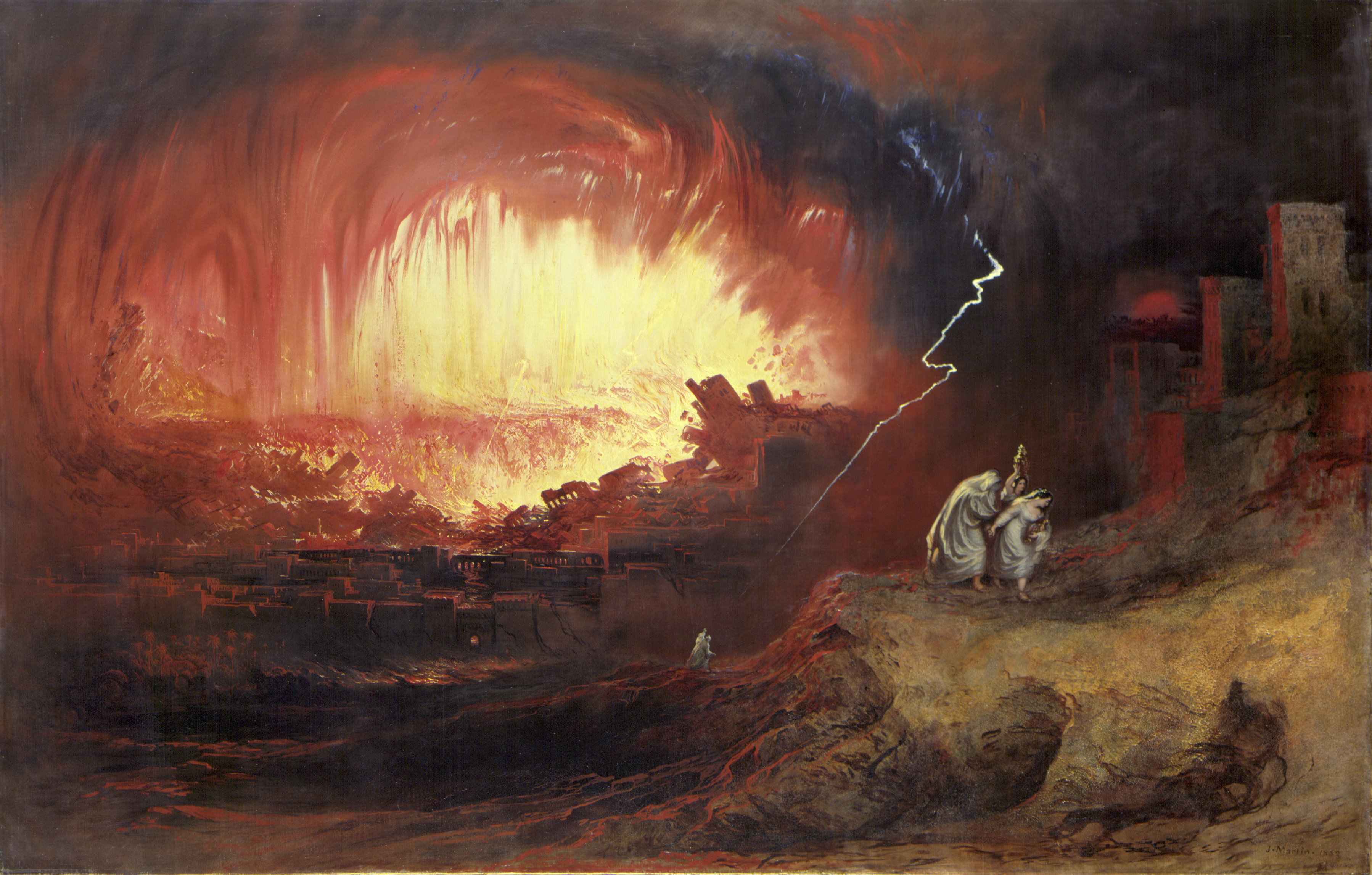
I have yet to hear of an atheist who did not complain about, have a major beef with, or cite the Old Testament as rock solid evidence attesting to the cruelty of YAHWEH, and why this prevents any so-called “rational” person from believing in the Christian God: hence, why they do not.  Now, this post does not concern itself with the information present in the Old Testament and how it fits into Christian Tradition (again though, a post for another time), but I cannot help but take notice of the irony of the situation.  These same atheists who complain that God is so very distant and inactive in our modern times then turn around and viciously condemn YAHWEH when He is near and active in righting wrongs committed by the people of Sodom and Gomorrah and in the heathen nations in the land of Canaan: nations which offered children in sacrifice, committed horrible offenses like infanticide, and ran rampant in sexual immoralities in their frequent participation in orgies and homosexuality, among others.


The bottom line is that these peoples were not very… “wholesome,” and that’s putting it mildly.

The point is that the atheist complains when God is seemingly distant (like today), but also complains when He is active and near to His people during Old Testament times.  Sounds like a recalcitrant child to me, and not an über-rational secular humanist or however it is that they identify.


The fundamental observation is this: the atheist is determined not to believe in God no matter what.  The universe is too big; therefore, God’s not real.  The universe is too small; therefore, God’s not real.  We’re gonna find so much life in the universe; therefore, God’s not real.  We’re probably alone in the vastness of space; therefore, God’s not real.  God allows rape; therefore, God’s not real.  God punishes deeply evil and immoral nations in the Old Testament; therefore, God’s not real.

In what scenario will atheists concede that God is real, I honestly do not know.  It seems to me that the atheists have crafted a kind of lose-lose situation for God: He’s damned if He does and damned if He doesn’t.  I think it is more likely that the atheist—who professes to keep an open mind about God—is really more in the business of avoiding God.

“The atheist can't find God for the same reason that a thief can't find a policeman.”

-Author Unknown

7. The 4 Things You Never Knew About Heaven


I would just like to start out by stating that I have much respect for the likes of Jaclyn Glenn, T.J. Kincaid (The Amazing Atheist), Hemant Mehta (The Friendly Atheist), and all the rest.  I am inspired by your commitment to spread what you believe to be the truth about God and religion based upon the evidence available to you and your perception of that same evidences value.  It takes a lot to put yourself and your ideas out there, and you guys do it fearlessly and with unique styles.

I would also like to apologize in advance because you guys are all fundamentally wrong about a crucial piece of the Christian worldview—and it concerns the nature and reality of Heaven.  (Did you really expect anything different from me?  I didn't think so.)  So, following is a brief list of common misconceptions/mental farts concerning Heaven (which y’all willingly—and eagerly, I might add—perpetuate).  I will be clarifying exactly what Christians believe concerning this portion of the afterlife and those misconceptions.  So let’s get to it, shall we?

Let’s start here.  I must make a desperate plea to all atheist, agnostic, and non-theistic persons out there on the Internet, in print media, wherever: stop listening to the Fundamentalists and Protestants (but especially the Fundamentalists)!  Fundamentalists give all Christians a bad name.  Pretty much no serious Christian takes them seriously, or even particularly likes them (at least, I don’t).

Fact of the matter is that it’s easy to rip on the Fundies for their views on Heaven (and just about everything else)!  (And youve all figured this out, and that’s why you do what you do: easy prey.)  It’s like taking candy from a baby!  They are not intellectually prepared for the hard scrutiny to which you all mercilessly subject them, and I applaud you for your bluntness.  Good on all of you for calling them out!

Now the bad news: I challenge you all to take on a real Christian intellectual.  Try John Lennox (professor of mathematics at Oxford), Peter Kreeft, (philosopher at Boston College), or Trent Horn (Catholic apologist), then tell me you think Heaven is a bunch of B.S.  Until then, let’s stick to what the true Christian church—the Catholic Church—says about Heaven, shall we?

1.  Faith Alone?

Your typical Fundamentalist Christian will claim that it is his faith in God that will get him to Heaven, and that it is your (the unbeliever’s) lack of faith which will invoke His ire and get you sent to Hell where “you’re going to burn in eternal hell-fire for ever and ever and torture and pain and misery” as I believe Jaclyn Glenn once said.

Fact of the matter is that they are just plain wrong.  It is not just faith that will get you into Heaven.  Furthermore, what really befuddles me is why atheists do not simply reference the Bible to shut the Fundies up. (Because—and I hear this constantlyatheists, agnostics, and skeptics have read that thing cover-to-cover, found every conceivable flaw and inconsistency therein, and know so much more about the Christians’ holy book than even the Christians themselves do!)

Point-in-fact: even a cursory reading of the Bible  will show, very clearly, that the only place the phrase “faith alone” appears in Scripture is in the Book of James, and it there that it is explicitly condemned!  Therefore, it is evident at least that our salvation comes *drum roll, please!* not by faith alone!  It does, however, come principally through the atoning sacrifice of Christ, and secondarily by faith and works, which are only made possible by God’s grace.  So yeah.  Catholics: 1, Fundies, Protestants, and atheists/agnostics/skeptics/non-theists: 0

2.  God is a dick who is going to send me to Hell against my will!

Again, wrong.  God is a just judge, yes.  A just judge gives us what we deserve, right?  Well, we merit what we have desired our entire lives.  Lives centered on pride, hatred, lust, disobedience—ourselves—merit us Hell; lives centered on humility, kindness, love, obedience—God—merit us Heaven.  The upright life merits Heaven; the dissolute life merits Hell.  We reap what we sow; it’s really that simple.  The basic fact of the matter is that God will not give us what we do not deserve, and what we deserve is what we’ve been telling God we’ve wanted our whole lives, by how we’ve lived our lives.  Unbelievers have been telling God all their lives that they reject Him by their thoughts, words, and deeds in this life.  They will separation from God.  In Eternity, we simply get what we have ultimately willed our whole lives.  The atheist merits eternal separation from God—Hell—while the Fundamentalist, no matter how misguided his Christian worldview, merits eternal communion with God—Heaven.  God, terrifyingly enough, will give us what we want.  How's that for a great dad?

3.  Yeah… I’m pretty sure I’d rather be in Hell.  It sounds like waaaaay more fun.

This is always an amusing one.  I’ve heard the argument made that Hell would be preferable to Heaven because there would be lots of cool people down there (e.g., famous atheists like Darwin).  In Heaven, it would just be a bunch of whack-job Christians with no brains praising a God that’s pretty much THE definitional standard of THE ultimate douchebag.  I have also heard some atheists say that in Heaven, your mind would simply break down; because for real though: how long until you ran out of things to do up there?  For how long can you really play board games, if you’re being honest with yourself?  100 years?  1,000 years?  How long, the atheist demands to know, before you degenerate into a pile of mush and your very self just gives out from the mental strain of simply existing for so long?


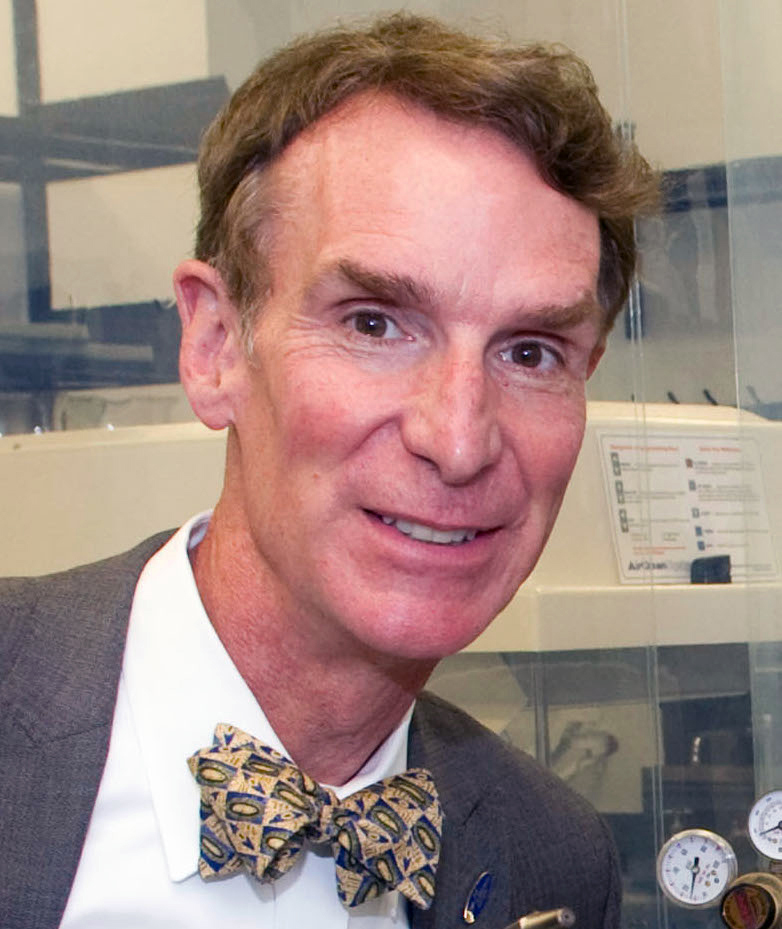
At least in Hell, the atheist argues, I can chat with all the God-hating intellectuals.  I just have to fight through the agonizing pain long enough to strike up a conversation with Bill Nye, maybe, and hope that he takes a fancy to me and agrees to chat about such-and-such.  In Hell, they argue, we would only last a week—if that.  They point to real-life scenarios where people break down from torture, and they extrapolate that out to the far more severe pains of Hell and draw the conclusion that we would somehow “get out of” the torture and misery of Hell, simply because we would not be able to handle it after a certain point.

Again, sorry to disappoint, but let’s just think this through briefly.  The atheist is willing to concede (for argument's sake) that Hell exists.  He then demands that all the same old Earthly rules apply there.  He is willing to believe that his mind will just “give out” after some finite period of time in Hell because it will have been too much for him to handle by Earths standards.  This makes absolutely no sense!  There is no such place as Hell on Earth, right?  Yet, the atheist is willing to believe that all the same rules of torture and breaking points must apply in Hell as they do on Earth, even though Hell is perhaps the most otherworldy thing that we can imagine!  What part of “eternal torture are they not grasping?  The very fact that we even posit a Hell (a place of which there literally is no compare and which, by definition, flies in the face of all that we currently know is possible, or even likely, about the natures of pain and time itself) presupposes that things probably don't work quite the same way there; but hey, I've been wrong before.

4.  You are all just robots in Heaven!

Nice try, but again, false, as are all the rest.  This seems perhaps the most plausible, however; I will grant them that.  I mean really: who would want to spend Eternity worshipping God?  He sounds like a narcissistic asshole, right?

Wrong.  In Heaven, we will worship God, first, because that is what we have willed to do our whole time on Earth—our lives were a prayer to and kind of active worship of Him—and second, because He is worthy of worship—in fact, the only thing worthy of praise and adoration.  He is every perfection desirable.  He is Goodness, Truth, and Beauty.  What better thing to worship than the Being who literally is Perfection Itself?

I do not lose my will in Heaven.  The choice to sin, odd enough as it seems to us now, is not a choice: not really anyway.  If only we knew, really knew, what we were rejecting when we sinned (our Ultimate end and joy), the suffering we caused Christ, and the damage we do to ourselves, we would never do it.  Sinning is a denial of our very selves, who we were made to be.  We reject the Designer's plan for His design when we sin.  In Heaven, this is made plain to us.  We will not sin for utter love and adoration and rapture of God.  Our choice to sin will be as stark to us now as our choice between eating our favorite meal in the company of our oldest and best friends... or getting mugged.  Or to have sex with the person of our heart’s deepest longing (our spouse)... or to step on a rusty nail on a cold November night.  It will be a no-brainer!  The deck is so stacked against sin and so in favor of God (infinitely more in his favor, actually) that sin loses every time—as it should.

Furthermore, we retain our freedom of will for sure, but we will also gain a new kind of freedom: freedom from sin.  The heavy rod of our taskmaster (Satan) will have been shattered, and we will no longer be subject to the various pressures and weaknesses and failings of Earth and our previous mode of existence.  We will have gained true freedom: freedom to be ourselves, the people God has called us to be from the consummation of the world, a place where God's will is done perfectly 1. because we all yearn and ache to do it (because we had prepared ourselves on earth) and 2. because we are truly free now to to do it always.  We will have gained interior freedom, a freedom that eliminates a divided mind, will, and heart. Doing the will of God will be what is always done because it is the only thing worth doingor even possible.  (Selfishness and disobedience seem like options, but in the Face of God, they melt away to nothing.)

I hope my atheist friends will reconsider their stances on the afterlife and consider seriously what Ive written here.  I hope they will look into some solid Catholic literature and live up to their call to intellectual honesty that they so strictly impose on all the rest of us.  I await their replies!