• WELCOME!

    Read, comment, spread the word, come back for more!
Showing posts with label supernatural. Show all posts

13. Atheists and Debate


I just had to get this off of my chest.  It’s been nagging at me for a while now, and I thought I should get it out into the open so that there can be the start of a legitimate dialogue on the subject: it’s about how atheists engage in argumentation.  It has struck me that atheists often do not have very good, solid arguments that actually address the Catholic position: they simply play off shallow crowd sentiment and popular perception of religion, the “minimum standard” of empiricism, or a circumvention of actual points in favor of straw men.  This is not to say that Catholics and other Christians do not do similar things during debates at times, only that I always see popular atheists like Sam Harris and Richard Dawkins do this quite frequently.


Sam Harris
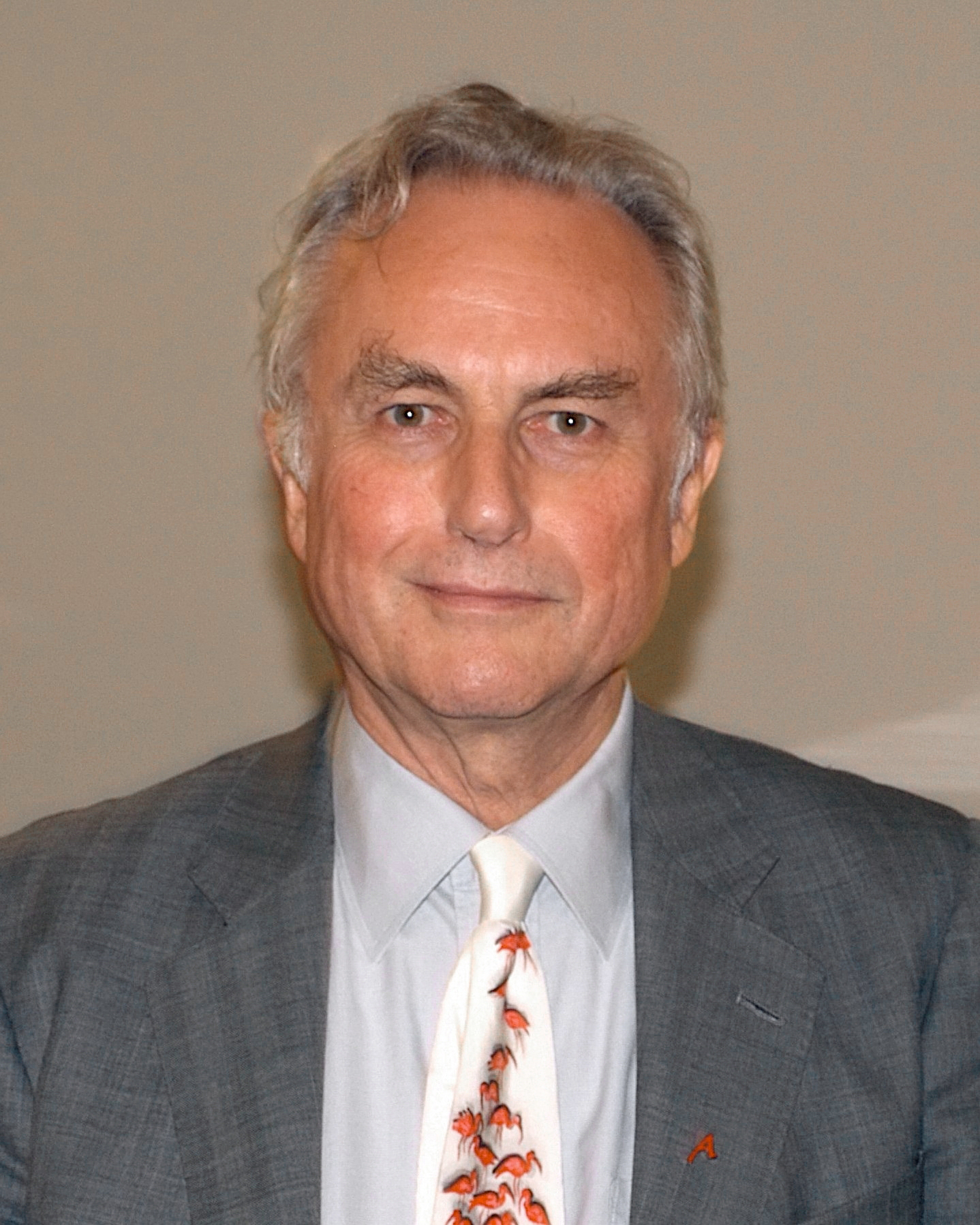
Professor Richard Dawkins


Shallow Crowd Sentiment and Popular Perception of Religion

You’ll notice in this clip of Sam Harris v. William Lane Craig that Harris simply makes emotional appeals in his attempt to “disprove” Christianity.  He says nothing of substance and only makes the standard non-believer’s appeal to mass suffering as evidence of God’s utter fakeness (didn’t’cha know?) as well as the supposed “impossibility” of transubstantiation, in the process dismissing Catholics as loons and morons.

He cares nothing for the explications of Augustine, and, more recently, of Dr. Peter Kreeft, on the so-called problem of evil, nor does he care for the rich exegesis of Scripture and long and rich theological tradition of the belief in transubstantiation.  Nope.  No sirree.  He is after the zinger.  The one line or two that’ll get the Internet fired up with irrational Catholic-bashing.  I suggest you watch the full debate.

Now, you will notice that Craig makes it known that Harris must meet certain benchmarks in order to make his case for atheism.  He must show that 1) Craig’s arguments are flawed—cast a negative pallor upon Christianity and Craig’s arguments—AND 2) put forward a positive argument FOR atheism.  Harris does neither.  He simply avoids Craig’s arguments and plays off of supposed “self-evident” truths about how stupid religious beliefs are.

Harris essentially latches on to something that appears “awful” or contradictory of God to do (“If you believe in the wrong god, you are doomed, in Dr. Craig’s universe.”) and then (metaphorically, of course) flaps his arms and exaggeratingly expresses his utter disbelief and disdain for the thing.  Imagine Harris, upon finding some doctrine or teaching or practice of Catholicism (like the Trinity or transubstantiation), yells really loudly in a drawn-out tone, “Hey guys [atheists, skeptics, agnostics, non-believers, et al]!  Look at how dumb this thing is!  I can’t believe any sane person actually believes in any of this mumbo jumbo. Haha!”


Harris, frantically flagging down his supporters so they can
all engage in a therapeutic religion bashing session together.
He allows his degrees and scientific background to speak for him, while playing off of a shallow and misinformed crowd hankering for its next superstitious idea to lambaste.  There’s only one problem, Harris: Catholicism is not a superstition or a myth: it is TRUE, and until you actually demonstrate otherwise, just cut the shenanigans.


Science Alone!

Another tactic atheists use nowadays is to demand that all knowledge must pass muster with *drum roll please!* the scientific method.


Here’s the problem with this worldview: atheists say that something must be proven via the scientific method for them to accept that that something is true.  There are two problems with this view:

1) The statement and standard, “I will only believe what science tells me is true” cannot itself be validated by science or by the scientific method.  Said another way, the statement, “The only true things are those which can be proven by science” can in no way be validated by precisely the only thing (supposedly) that can be trusted to give us accurate information: science.  How can atheists rely solely on science to lead them to truths if the only thing that can lead them to said truths cannot even tell them that it itself is indeed the only thing that can do so?  Methinks there’s a problem there….

2) The worldview is also circular in validation.  Atheists only accept scientific findings as true; therefore, anything outside of science is false.  This is obviously circular logic: I will only accept what science can prove as true, and science cannot prove anything outside of science; therefore, all things outside science are false.  Their worldview leaves no room for anything outside of science, but it was chosen essentially arbitrarily so as to rid themselves of the pesky reality of the supernatural.  Plain and simple: science can NEVER disprove God because He is, by definition, SUPERnatural: science can only deal with that-which-can-be-found-and-experimented-upon-in-the-natural-realm.

Furthermore, just because God cannot be tested for scientifically does not mean that He is not real.  That’s like using a ruler to measure the temperature of a pot of boiling water and then claiming with certainty that trees can swim because the ruler isn’t giving you a darned temperature reading.


That darn pot....
There are many things that science simply cannot speak to, or if it can, we don’t employ it for that purpose in practical matters.  For example, science cannot adequately explain, beyond the hormones and chemicals involved, love and beauty.  Why the two have almost transcendent elements intrinsic to them is beyond the scope of science.  Additionally, let’s assume science could speak to love.  Even if it could, what good is it, really?  Ask yourself: does Dawkins really go home every night, and before even speaking to or kissing his wife, perform the requisite scientific test to determine if she still loves him?  Of course not!  The bottom line is that this sole reliance on empiricism is a self-fulfilling prophecy: science will never find God.  I only trust science.  Therefore, God is not real.  Juvenile reasoning at best.


Avoiding the Actual Topic at Hand

Finally, a last favorite tactic of atheists is the simple circumvention of an actual point in favor of a foray into foggy emotionalism or simple wrong-headedness.  Some examples are in order.

First, we have the Kalām Cosmological Argument, popularized by Dr. Craig, which proceeds thusly:

Premise-1: Nothing can begin to exist without a cause.
Premsise-2: The universe began to exist (some 13.75 billion years ago).
Premise-3: Therefore, the cause of the universe would have to be something transcendent and extraordinarily—infinitely—powerful.  This being is classically referred to as God.

This argument relies on the “hidden” premise of the definition of God, or at least of one of His attributes.  God, as He has always been classically understood by Catholics, is He Who Must Exist, He Who Is Being Itself, He Who Cannot Not Exist, Ipsum Esse.


So, what do atheists love to do in the face of this argument?  Simply ask the wrong-headed question: “Well, then who or what created God?”  The problem here is that atheists fundamentally misunderstand WHAT God is.  They view Him as just another trumped up being or a really, really, really, powerful creature.  This is simply not the case.
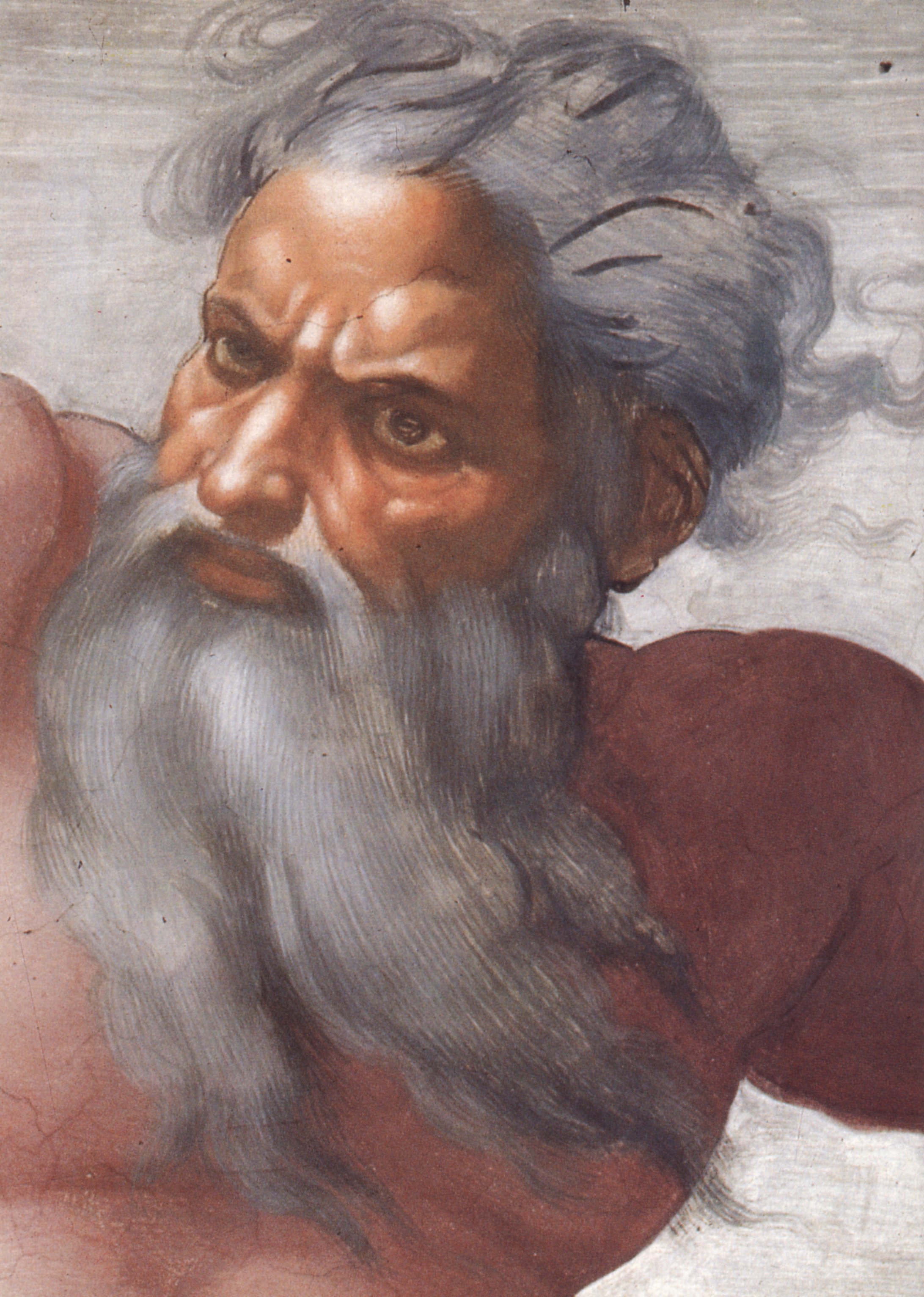
To ask, “What created God?” is as misguided and ignorant as asking, “Why can’t we have a five-sided triangle—in Euclidian geometry—with more or less than 180°?”  You can see why this is a nonsensical question: bound up in the definition, in the reality of a Euclidian triangle itself, is that it has exactly 180° and is three-sided: no more, no less.


If it were to have five sides, it would be a pentagon, not a triangle; if it were to have more or less than 180°, then it would lose one of its essential properties.  The same logic applies to God.  God must exist; it is His nature as much as it is the triangle’s “nature” to be three-sided and contain precisely 180°.

(Nota bene: this last line of reasoning also does not even speak to the impossibility of an infinite regress, a necessary fixture of metaphysics if God is removed from the picture.)


Dawkins has said:

“If you believe this is the only life you're going to get, it’s a precious life.  We should live to the full.  Where if you believe in another life, you don’t live this life to the full because you think you’re going to get another one.  That’s an awfully negative way to live a life.”

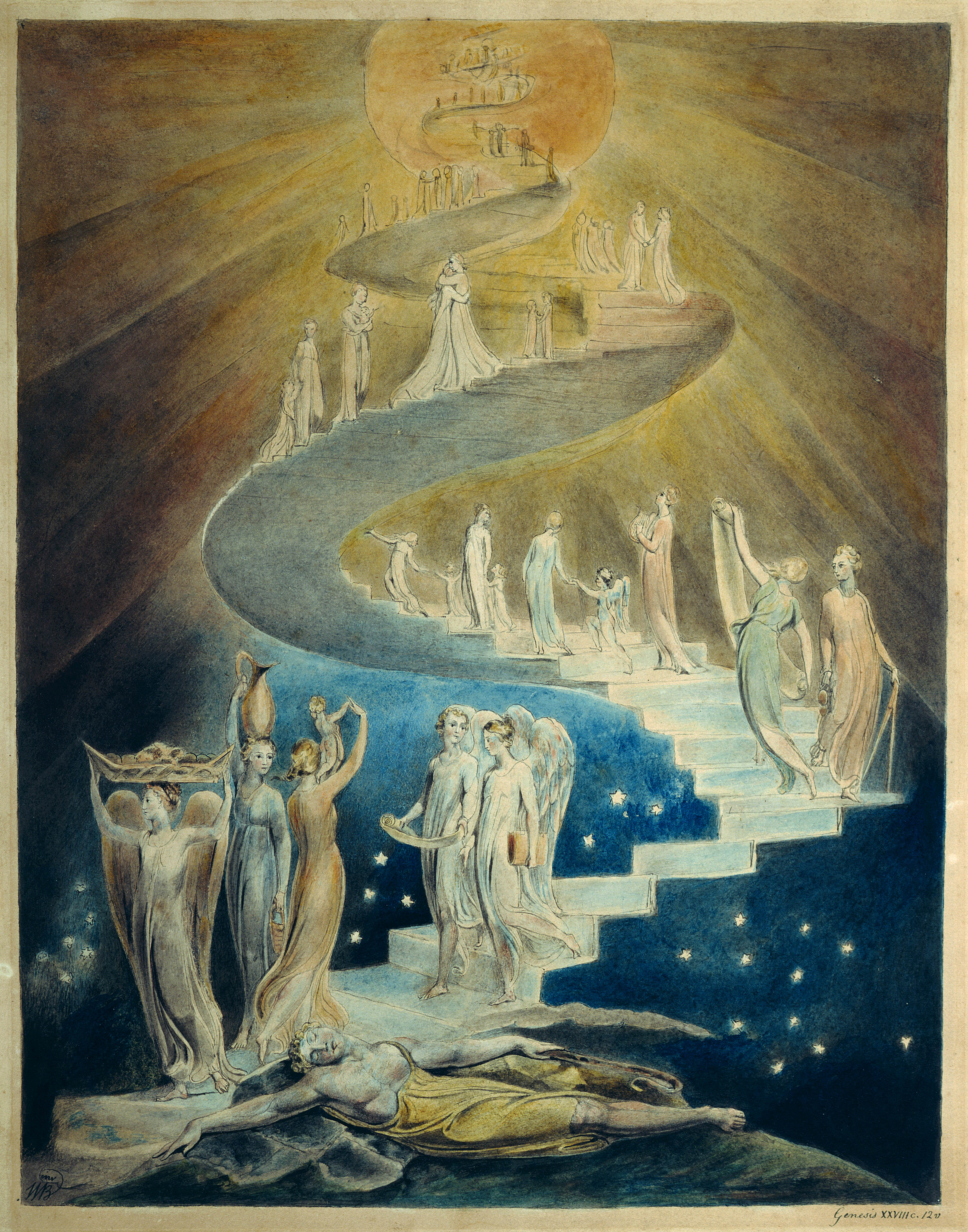
Here’s the problem: what Dawkins mistakenly believes (either willfully or out of ignorance, the world may never know) is that the afterlife is simply more of an Earthly existence, or perhaps that it is some kind of “cosmic do-over.”  He is fundamentally wrong on this point.  The afterlife is a quantum leap, so to speak, in degree of difference from Earth and this mortal life.


Jacob's Ladder
You can see all the ways Dawkins goes wrong in his assessment of the afterlife in this post regarding the nature of Heaven.  He simply avoids the necessary background study in Catholic theology and then makes bold, sweeping conclusions about the faith.  I suggest he study more of that which he is attempting to discredit and/or mock before he actually attempts to discredit and/or mock the thing.
So those were just some of the annoying bits of the ways atheists argue concerning God and religion.  Let me know what you guys think in the Comments section!  Did I miss anything?  Was I spot-on or nah?

11. THE Commandment


Everyone has heard of the Ten Commandments.  They have been lauded, mocked, and ignored.  They are the bedrock of Christian morality and a subset of now-orthodox Jewish morality.  Love ‘em or hate ‘em, they most likely inform a decent chunk of your morality too (or at least of the society in which you live).

“Thou shalt not kill” is a pretty important one, and just about everyone agrees that killing is wrong except in cases like abortion or euthanasia, but I digress.  “Thou shalt not bear false witness” at least still applies in our cultures in terms of court proceedings and the oath taken therein to “tell the truth, the whole truth, and nothing but the truth so help you God.”  “Thou shalt not steal” and “Thou shalt honor thy father and mother” are both pretty much universally accepted as well.

“Thou shalt not commit adultery” is basically ignored and derided as the result of—to us forward thinking and open-minded moderns—tiny-mindedness, jealousy, and general primitiveness of the ancient Israelites who were only concerned with keeping women as property and with no rights and on and on and on.  It is clear we no longer respect this very simple commandment when the Internet is littered with sites set up for the express purpose of facilitating adulterous affairs among married folk.

“Thou shalt not covet thy neighbor’s wife” and “Thou shalt not covet thy neighbor’s goods” are probably largely ignored and superseded in today’s day-and-age by the fifth commandment (adultery) and the seventh commandment (stealing).  The word “covet” is largely lost on modern-day society, and is indeed different from the actual acts themselves.  But this distinction—subtle though it may be—is lost on modern man, who is most definitely not in the habit of censoring his thoughts when they turn out to be evil or ill intentioned.

We now come to worst treated of the lot: the first three commandments.  All of these have to do with our relationship to God.  And guess what?  Today’s typical educated, liberal Westerner does not believe in God as Catholics understand Him.  Sure, they might believe in some kind of vague “Force” pulsating with vitality throughout the universe.

Analogous to God, who supposedly tweaked the universe into
existence--like this watchmaker.
Maybe they even believe in a Deistic conception of God, a kind of cosmic Watchmaker; a God who, after the universe was made, just let it all run like a human watchmaker does with his watches.  More likely, however, is that this typical Westerner disbelieves in anything beyond the natural realm, by definition, what we would call the supernatural—and this would surely include God.


Unless it can be empirically proven, they say, it is not real; therefore, God is not real: plain and simple.

We Catholics, however, do not have this problem.  We have a healthy dose of respect for the supernatural, and we see it at work in our lives (at least when we are paying sufficient attention).  I would like to propose a way that we can consolidate all Ten Commandments; that with this one conception of God’s Law, we will be in right standing with Him, the world, our neighbor, and ourselves.


The commandment is simple.  In fact, it is the First Commandment: “I AM the LORD your GOD… you shall have no other gods before me.”

Guess what fellow Catholics (and Christians)?!  This is it!  This is the mother lode that you were all waiting for!


This commandment is the “skeleton key” unlocking all that we need ever do in order to follow God’s Law and be in as good a standing as we ever can as creatures now predisposed to sin.


Think about it: God is the sovereign Author of life, death, the universe, the angels, morality, roses, coffee, sunlight, everything.  Sin is the free rejection of this fact.  All sin is a rebellion of our wills against the reality that we owe God our will, lives, thoughts, bodies, everything, because everything that we have—all that we are, even—is a free gift from Him who IS perfect Goodness, Truth, and Beauty.

Imagine it.  If we all were acutely aware at all times of the fact that this is who God is and what we are to Him, creatures full of sin (though now adopted sons of the Father and joint-heirs with Christ by His Passion, death, and Resurrection), we would never sin.  The idea of sinning would never be heeded with any seriousness, let alone acted upon.  We would recognize that to steal, snap at our mothers, rape, or whatever, are all affronts to God: He who is offended by all sins.

All sin is disorder.  When we are in order, we are doing the will of God.  Sin is a disordering of our persons; it is putting the creature or created thing before the Creator, He who should be praised above all, for He gave all things being. Sin is, simply put, an “idolization” of that-which-is-not-God; and what could be worse than to adore, venerate, and worship a mere created thing in lieu of the Creator Himself?

Essentially, all sin is, in some way or another, a placing of ourselves above and ahead of God, He who deserves all of our very selves because it is Him alone who is worthy of any adoration as the sovereign Creator of everything.  He holds all things in being; without His constant willing of all things to have their being there would be nothing.  As St. Augustine wrote, These things [created things] kept me far from thee; even though they were not at all unless they were in thee.


St. Augustine thoroughly bossin' it up with his heart on fire for God.
He tried the zeal!

Pornography is the elevation of the naked form of human persons and their consequent sexual activity above God, who designed sex and the human person.  It removes love and goodness from the sexual act, divorcing it to invested third parties which seek to profit from the enslavement of men and women and the perversion of their sexuality; it is thus an affront to the Creator.

The Rape of Lucretia
Rape is the objectification of another person, placing one’s own selfish desires for sensual and carnal pleasures, as well as a disordered sense of power, ahead of the dignity of the raped.  S/He has this immutable dignity first and foremost because it is in God’s image and likeness that s/he is made.  Rape elevates power and sensuality above God and is thus an affront to the Creator.

Stealing deprives another of his right to have whatever it was that was stolen from him.  It is a lessening of another man’s dignity in his legitimate right to maintain his possession for the selfish furthering of our own ends.  It treats the person stolen from as less than a person made in God’s image and likeness and is thus an affront to the Creator.

To practice the illicit use of contraception is to place the pleasure of sexual intercourse ahead of one of the dual purposes of the act itself: bearing and rearing children.  It places selfish desires ahead of the God who designed sex to be selfless and is thus an affront to the Creator.

Abortion is a terrible evil because it robs a child of the right to life, a life given him by His Creator.  It makes man out to be a god, deciding if this or that person should live or not.  We have, at the time of an abortion, forgotten that we are mere stewards of the earth and our own lives, not the master of them.  Abortion taints Man’s purpose, elevating him above God on issues of life and death, and is thus an affront to the Creator.

Euthanasia is likewise an affront on the matter of life and death.  We have made ourselves out to be God, misusing our wills and rational natures in the pursuit of a perverted sense of the good.  We seek death for an elderly person and deprive them of the legitimate right to suffer and die with dignity.  Contrary to popular belief, suffering is not inherently wrong.  To suffer is to redeem, to sanctify, and to make whole once again.  Our own Lord and Savior Jesus Christ, the Son of God, was not Himself above suffering; why should we be?  Euthanasia is an affront to the natural process of God’s Law for a person to suffer and atone in some way for the sins of mankind by uniting his/her suffering with the Cross of Christ and is thus an affront to the Creator.

Homosexual acts place sex above God, who created sex and the human person.  It is an elevation of a created good to the point of perversion and vilenessfor it has been elevated far beyond its proper place.  We must never forget that sex is a created good, subordinate to God.  Homosexual acts are closed to the gift of life and do not proceed from genuine affective and sexual complementarity between the actors; they are a misuse of our sexual powers and are thus an affront to the Creator.

This movie was rife with fornicating teens.
Fornication is likewise offensive to the Most High because it disassociates the unitive, or lifelong, dimension of the sexual union from the procreative (because it is more often than not corrupted further by contraceptive agents and barriers).  Fornication treats the sexual act as that-which-is-to-be-desired for its own sake, or that which is good in itself.  Only God fulfills this desire in our lives.  Fornication places illicit, pre-marital sex before God who made the institution of marriage, sex, and the human person and is thus an affront to the Creator.

The list goes on forever and is as long as the possible sins that Man could ever commit. What is the underlying mechanism and commonality among the multitude, however?  It is that they all elevate Man or a created good above God, Him who deserves ALL of our attention, worship, and obedience.  Each and every sin is an affront to God because when we sin we mistake ourselves or a created good for God.  We confuse our relationship to the world and with God each and every time we sin.


St. Ignatius of Loyola (one of my personal favorites), at the outset of his Spiritual Exercises, also wrote on this principle.  (Just an aside, I probably love him more than is healthy for someone addressing the perils of placing something that is not God above God.)


First Principle and Foundation

Man is created to praise, reverence, and serve God our Lord, and by this means to save his soul,

The other things on the face of the earth are created for man to help him in attaining the end for which he is created.

Hence, man is to make use of them as far as they help him in the attainment of his end, and he must rid himself of them in as far they prove a hindrance to him.

Therefore, we must make ourselves indifferent to all created things, as far as we are allowed free choice and are not under any prohibition.  Consequently, as far as we are concerned, we should not prefer health to sickness, riches to poverty, honor to dishonor, a long life to a short life.  The same holds true for all other things.

Our one desire and choice should be what is more conducive to the end for which we are created.


4. On the Validity of a Celibate Priesthood


The homosexual lobby, in response to Christian’s labeling homosexual acts and unions (so-called “marriages”) as unnatural, often fires back with their own claim that the Catholic tradition and discipline of a celibate priesthood is just as “unnatural”—if not more so.  Man, they claim, has sexual organs, and it is Man’s right, his duty, to use them to fulfill their obvious purpose: sex.  It is “unnatural,” in light of this readily present fact, for him to forgo sexual pleasure and fulfillment, these same people say.  It is especially unnatural, they further claim, for males to do this.  Because men are, after all, no more than insatiably red-blooded beasts when confronted with the slightest sexual provocation.  They almost never use their heads (the one perched atop their necks) and prefer to listen to the one between their legs (or at least, the popular media likes to portray them in this way).  I think that this is a disingenuous claim by the homosexual lobby.  The claim devalues the institution of the priesthood, males, and Man himself, all in the name of sodomy legitimization.  Not a very good trade-off in my opinion.

Now, I believe that it is both legitimate and sensible to stake the claim that Man is a composite of the natural and the supernatural.  There is no need to appeal to religious texts, clerics, or divine revelation to see this.  Now, for those who reject this assessment of the anthropology of Man, allow me to offer a few examples that will demonstrate strongly, though not prove outright, this reality.

Man creates music.  There is no animal on this earth that could create the glory of Bach, Mozart, and Beethoven’s symphonies.  Their music is beautiful in every sense of the word and seems to transcend this world and lift us up to something more.

Man creates art.  The beauty of the masterpieces of Michelangelo, Raphael, Donatello, da Vinci, Picasso, van Gogh, and many others is utterly astounding: show me an animal that can come even remotely close to producing anything so awe-inspiring and stir in us such powerful emotions!

Man can reason.  I have yet to encounter an animal which could deduce the laws of mathematics or logic.  Could a mere animal look up into the night sky in all its beauty and even wish to understand it, let alone devise an entirely new branch of mathematics to do so?  (Sir Isaac Newton invented calculus to do just that… then he turned 23.)

Man has a powerful intellect.  This intellect is similar in kind, though not in degree, to certain animals in the world.  Show me a single species of animal which can create an airplane, set-up a modern civilization, economy, or land on the moon: let alone all of these—and much, much more!

Lastly, and most importantly, Man can will.  Man can choose to love or to hate.  A man may remain in his anger, his addictions, his optimism, simply because he wills it.  He can choose to do that-which-is-detrimental-to-himself.  He can choose to starve himself, forgo meat, go without sleep, hold his breath indefinitely, or hop on one leg in the middle of a grocery store simply because, well, “why not?

Another example is in order: no animal chooses to rock climb simply because it relishes a challenge.  With animals, as evolutionary biology tells us, there is always a concrete and immediate purpose in performing an action.  Animals go out to hunt because they want food; they compete for mates in order to reproduce; they sleep because they are tired.  No animal abstracts a meaning onto its hunting trip.  The purpose is food, plain and simple.  The over-arching purpose to which all of these actions lead is for one purpose and one purpose alone: the transmission of advantageous traits based in an organisms genetic code.  Man, on the other hand, can choose to climb that same mound for no other reason than because the climb in and of itself is valuable to him.  The climb—during which he might die or become grievously injured—is its own reward!

It cannot then be argued that since animals can do these things to some extent, Man is suddenly not special.  Nonsense!  Of course animals can do some of the things that Man does to a lesser degree: I never claimed that Man was a completely supernatural creature; I said that he was a unique fusion of the natural and supernatural, the material and immaterial.  We too must eat, sleep, exercise, and keep hydrated.  Man is a part of the natural world.  It would be exceedingly odd, given this obvious scientific fact, if Man did not share certain qualities and characteristics with animals. But that’s the point: Man merely shares a portion and degree of these qualities with the animal kingdom.  His dominion over the animals in his possession of these qualities is not a simple 10x10 increase; it is more akin to a quantum leap: a 1010 increase in ability is more accurate.

In light of this assessment, I think it reasonable to state two things.  One, that Man is indeed a fusion of body and soul in psychosomatic (soul-body) union.  And two, that a Catholic priest is well within his rights to forgo sexual pleasure for a deeper union with and conformity to Christ, the first High Priest: He who was both priest and sacrifice upon the Cross.  The Catholic priest forsakes a wife and natural fatherhood for the privilege of wedding the Bride of Christ, the Church, and of being a spiritual father.  He has no earthly children to care for and devote his energies to so as to more readily nurture the spiritual children entrusted to him and to spend his days building up the Kingdom of God.

I think that it is quite safe to say that the homosexual lobby’s vicious assaults on the “perverse” nature of a celibate priesthood are unfounded and should not be heeded in light of this complete (though brief) anthropology of Man as a combination of spirit and matter.


And thank God for that.