

Everyone has heard of the Ten Commandments. They have been lauded, mocked, and
ignored. They are the bedrock of
Christian morality and a subset of now-orthodox Jewish morality. Love ‘em or hate ‘em, they most likely inform
a decent chunk of your morality too (or at least of the society in which you
live).
“Thou shalt not kill” is a pretty important one,
and just about everyone agrees that killing is wrong except in cases like
abortion or euthanasia, but I digress. “Thou
shalt not bear false witness” at least still applies in our cultures in terms
of court proceedings and the oath taken therein to “tell the truth, the whole
truth, and nothing but the truth so help you God.” “Thou shalt not steal” and “Thou shalt honor
thy father and mother” are both pretty much universally accepted as well.

“Thou shalt not commit adultery” is basically
ignored and derided as the result of—to us forward thinking and open-minded
moderns—tiny-mindedness, jealousy, and general primitiveness of the ancient
Israelites who were only concerned with keeping women as property and with no
rights and on and on and on. It is clear
we no longer respect this very simple commandment when the Internet is littered with sites set up for the express purpose of facilitating adulterous
affairs among married folk.
“Thou shalt not covet thy neighbor’s wife” and
“Thou shalt not covet thy neighbor’s goods” are probably largely ignored and
superseded in today’s day-and-age by the fifth commandment (adultery) and the
seventh commandment (stealing). The word
“covet” is largely lost on modern-day society, and is indeed different from the
actual acts themselves. But this
distinction—subtle though it may be—is lost on modern man, who is most
definitely not in the habit of censoring his thoughts when they turn out to be
evil or ill intentioned.
We now come to worst treated of the lot: the first
three commandments. All of these have to
do with our relationship to God. And
guess what? Today’s typical educated,
liberal Westerner does not believe in God as Catholics understand Him. Sure, they might believe in some kind of
vague “Force” pulsating with vitality throughout the universe.
 |
| Analogous to God, who supposedly tweaked the universe into existence--like this watchmaker. |
Maybe they even believe in a Deistic conception
of God, a kind of cosmic Watchmaker; a God who, after the universe was made, just let
it all run like a human watchmaker does with his watches. More likely, however, is that this typical
Westerner disbelieves in anything beyond the natural realm, by definition, what
we would call the supernatural—and this would surely include God.

Unless it
can be empirically proven, they say, it is not real; therefore, God is not
real: plain and simple.
We Catholics, however, do not have this
problem. We have a healthy dose of respect for
the supernatural, and we see it at work in our lives (at least when we are
paying sufficient attention). I would
like to propose a way that we can consolidate all Ten Commandments; that with
this one conception of God’s Law, we will be in right standing with Him, the
world, our neighbor, and ourselves.
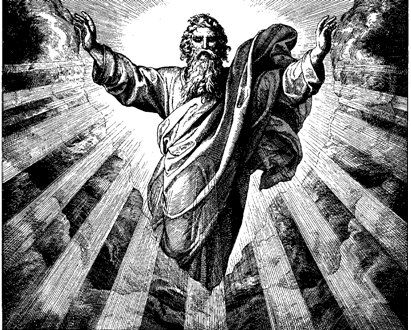
The commandment is simple. In fact, it is the First Commandment: “I AM
the LORD your GOD… you shall have no other gods before me.”
Guess what fellow Catholics (and
Christians)?! This is it! This is the mother lode that you were all
waiting for!

This commandment is the
“skeleton key” unlocking all that we need ever do in order to follow God’s Law
and be in as good a standing as we ever can as creatures now predisposed to
sin.

Think about it: God is the sovereign Author of
life, death, the universe, the angels, morality, roses, coffee, sunlight, everything. Sin is the free rejection of this fact. All sin is a rebellion of our wills against
the reality that we owe God our will, lives, thoughts, bodies, everything,
because everything that we have—all that we are, even—is a free gift from Him
who IS perfect Goodness, Truth, and Beauty.
Imagine it.
If we all were acutely aware at all times of the fact that this is who
God is and what we are to Him, creatures full of sin (though now adopted sons
of the Father and joint-heirs with Christ by His Passion, death, and Resurrection),
we would never sin. The idea of sinning would never be
heeded with any seriousness, let alone acted upon. We would recognize that to steal,
snap at our mothers, rape, or whatever, are all affronts to God: He who is
offended by all sins.
All sin is disorder. When we are in order, we are doing the will
of God. Sin is a disordering of our
persons; it is putting the creature or created thing before the Creator, He who
should be praised above all, for He gave all things being. Sin is, simply put,
an “idolization” of that-which-is-not-God; and what could be worse than to adore,
venerate, and worship a mere created thing in lieu of the Creator Himself?
Essentially, all sin is, in some way or another, a placing of ourselves above and ahead of God, He who deserves all of our very selves because it is Him alone who is worthy of any adoration as the sovereign Creator of everything. He holds all things in being; without His constant willing of all things to have their being there would be nothing. As St. Augustine wrote, “These things [created things] kept me far from thee; even though they were not at all unless they were in thee.”
Essentially, all sin is, in some way or another, a placing of ourselves above and ahead of God, He who deserves all of our very selves because it is Him alone who is worthy of any adoration as the sovereign Creator of everything. He holds all things in being; without His constant willing of all things to have their being there would be nothing. As St. Augustine wrote, “These things [created things] kept me far from thee; even though they were not at all unless they were in thee.”
 |
| St. Augustine thoroughly bossin' it up with his heart on fire for God. He tried the zeal! |

Pornography is the elevation of the naked form of
human persons and their consequent sexual activity above God, who designed sex
and the human person. It removes love and
goodness from the sexual act, divorcing it to invested third parties which seek
to profit from the enslavement of men and women and the perversion of their
sexuality; it is thus an affront to the Creator.
 |
| The Rape of Lucretia |
Rape is the objectification of another person,
placing one’s own selfish desires for sensual and carnal pleasures, as well as
a disordered sense of power, ahead of the dignity of the raped. S/He has this immutable dignity first and
foremost because it is in God’s image and likeness that s/he is made. Rape elevates power and sensuality above God and
is thus an affront to the Creator.

Stealing deprives another of his right to have
whatever it was that was stolen from him.
It is a lessening of another man’s dignity in his legitimate right to maintain
his possession for the selfish furthering of our own ends. It treats the person stolen from as less than
a person made in God’s image and likeness and is thus an affront to the
Creator.
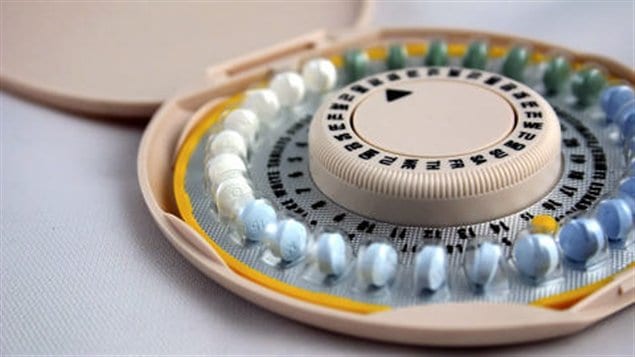
To practice the illicit use of contraception is to
place the pleasure of sexual intercourse ahead of one of the dual purposes of the
act itself: bearing and rearing children.
It places selfish desires ahead of the God who designed sex to be selfless
and is thus an affront to the Creator.
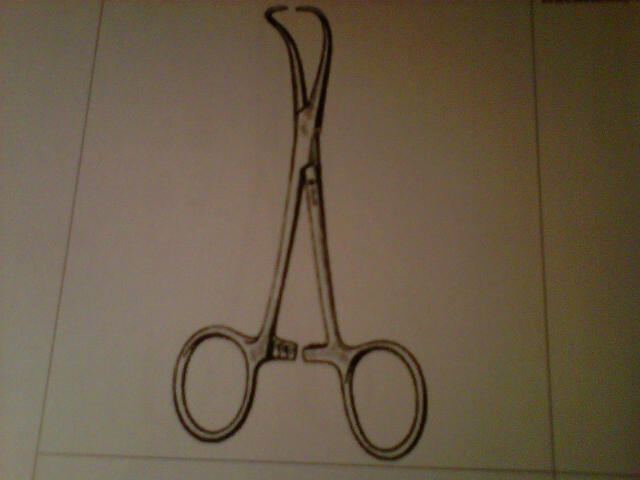
Abortion is a terrible evil because it robs a
child of the right to life, a life given him by His Creator. It makes man out to be a god, deciding if
this or that person should live or not.
We have, at the time of an abortion, forgotten that we are mere stewards
of the earth and our own lives, not the master of them. Abortion taints Man’s purpose, elevating him
above God on issues of life and death, and is thus an affront to the Creator.

Euthanasia is likewise an affront on the matter of
life and death. We have made ourselves out
to be God, misusing our wills and rational natures in the pursuit of a perverted
sense of the good. We seek death for an
elderly person and deprive them of the legitimate right to suffer and die with
dignity. Contrary to popular belief,
suffering is not inherently wrong. To
suffer is to redeem, to sanctify, and to make whole once again. Our own Lord and Savior Jesus Christ, the Son
of God, was not Himself above suffering; why should we be? Euthanasia is an affront to the natural
process of God’s Law for a person to suffer and atone in some way for the
sins of mankind by uniting his/her suffering with the Cross of Christ and is
thus an affront to the Creator.

Homosexual acts place sex above God, who created
sex and the human person. It is an
elevation of a created good to the point of perversion and vileness—for it has
been elevated far beyond its proper place.
We must never forget that sex is a created good, subordinate to
God. Homosexual acts are closed to the
gift of life and do not proceed from genuine affective and sexual complementarity between the
actors; they are a misuse of our sexual powers and are thus an affront to the Creator.
 |
| This movie was rife with fornicating teens. |
The list goes on forever and is as long as the
possible sins that Man could ever commit. What is the underlying mechanism and
commonality among the multitude, however?
It is that they all elevate Man or a created good above God, Him who
deserves ALL of our attention, worship, and obedience. Each and every sin is an affront to God
because when we sin we mistake ourselves or a created good for God. We confuse our relationship to the world and with God each and every time we sin.

St. Ignatius of Loyola (one of my personal
favorites), at the outset of his Spiritual Exercises, also wrote on this principle. (Just an aside, I probably love him more than is healthy for someone addressing the perils of placing something that is not God above God.)

First Principle and Foundation
Man is created to praise, reverence, and serve God our
Lord, and by this means to save his soul,
The other things on the face of the earth are created for
man to help him in attaining the end for which he is created.
Hence, man is to make use of them as far as they help him
in the attainment of his end, and he must rid himself of them in as far they
prove a hindrance to him.
Therefore, we must make ourselves indifferent to all
created things, as far as we are allowed free choice and are not under any prohibition. Consequently, as far as we are concerned, we
should not prefer health to sickness, riches to poverty, honor to dishonor, a
long life to a short life. The same
holds true for all other things.
Our one desire and choice should be what is more conducive to the end for which we are created.


.jpg)



.JPG)
